

A Short Story Podcast Series

Amazon - Apple - Audible - Castbox - Deezer - fyyd - GoodPods - Headliner - iHeartRadio - Instagram - JioSaavn - Listen Notes - Pandora - PlayerFM - Podcast Radio - Podcast Republic - Podchaser - Podverse - PocketCasts - Spotify - Stitcher - Youtube
Link to Podcast Library - or - Scroll for Daily Feed
-
Open Educational Use
Interesting Things with JC is made available for anyone to use in the service of education. Teachers, students, parents, homeschool families, librarians, tutors, and lifelong learners are free to download, copy, share, print, adapt, and reuse the episodes and curriculum materials in any way that helps people learn.
If it supports teaching, learning, or helping others understand the world better, it is allowed.
One exception applies: Episode #509, “Harry Chapin and Jim Connors,” is not included under this open educational permission.
Curriculum Availability
Full curriculum support begins with Episode #1235: “Three Turns to Freedom.” Earlier episodes without curriculum may be prioritized by request. Educators may contact JimConnors LLC, and a matching curriculum module will be created and added.
What You Are Free to Do
You may:
Download and store the audio, transcripts, and curriculum
Copy and share materials with students, families, or learning groups
Print, remix, edit, and adapt lessons for your own educational use
Upload content to learning management systems (LMS), class websites, or internal school platforms
Integrate the material into lessons, assignments, tutoring, homeschool programs, libraries, and community education
No permission is required. Credit to Interesting Things with JC is appreciated when possible, but the priority is helping people learn.
What Is Not Allowed
This openness is for education, not commercial use. The content may not be:
Sold, licensed, or packaged as a product or subscription
Rebranded or presented as original third-party work
Used as part of a paid course, monetized program, or commercial platform
Redistributed as a standalone product for profit
Any commercial, branded, or revenue-generating use requires prior written permission from JimConnors LLC. Episode #509 remains excluded from open educational use.
Rights and Intent
All content remains the intellectual property of JimConnors LLC. The intent is simple:
Use it freely to educate, teach, explain, and help people.
Just do not sell it, repackage it for profit, or claim it as your own.
Summary:
Use it.
Download it.
Copy it.
Share it.
Teach with it.
Adapt it for students, kids, classrooms, homeschools, libraries, and lifelong learning.
Click on the curriculum frame, copy the full merged curriculum standards, use them in your own GPT, iterate and improve them, and share back!
Just don’t sell it, rebrand it, or turn it into a product. Episode #509 is excluded. All rights reserved © JimConnors LLC.
-
Interesting Things with JC has previously been included in curated podcast programming on Podcast Radio formats in both the United Kingdom and the United States. Podcast Radio was launched as a 24-hour broadcast concept designed to showcase podcasts on digital radio and online streaming platforms.
In the United States, the Podcast Radio US brand continues to maintain an online presence and app availability, and has been associated with radio simulcasts on licensed AM and FM signals in selected markets, though live broadcast availability may vary.
Streaming Access
Podcast Radio US and related branded streams provide online listening through their websites and mobile applications, allowing audiences worldwide to hear selected podcast programming.On-Demand Platforms
Interesting Things with JC is available across major podcast directories, including Amazon Music, Apple Podcasts, Audacy, Audible, Castbox, Deezer, fyyd, GoodPods, iHeartRadio, JioSaavn, Listen Notes, Pandora, PlayerFM, PocketCasts, Podcast Republic, Podchaser, Podverse, Spotify, Stitcher, and YouTube.The series is also accessible through podcast apps that index the Apple Podcasts catalog and the open podcast directory ecosystem, including TuneIn, Podcast Addict, Overcast, Castro, Podcast Index–based apps, Podbean, iVoox, Podtail, Podyssey, Podcloud, Bullhorn, AudioBoom directories, and Breaker (legacy).
Social & Video Platforms
Listeners can also follow and view content on Facebook, Instagram, X (Twitter), TikTok, and YouTube. -
Classroom Use
Start class with a short, clear story students can follow from the first sentence. Play an episode of Interesting Things with JC and use the accompanying free curriculum to guide a complete lesson with questions, activities, applied reasoning, and independent analysis.
Every episode from #1235 forward contains a modular micro-lesson engineered for 30 to 90 minute instructional blocks, adaptable to secondary classrooms, international schools, homeschools, tutoring programs, and lifelong learning environments.
At the bottom of each episode page, expandable sections organize all instructional assets in a structured format for educators, parents, and independent learners.
Instructional Architecture of Each Episode
Each episode is designed as a self-contained instructional unit, integrating narrative, academic standards, assessment models, and accessibility requirements into a single deliverable.
Core Instructional Components
Lesson overview with instructional title, grade band, subject classification, and learning objectives
Vocabulary architecture with phonetic spelling, discipline-specific terminology, and plain-language definitions
Primary narrative content constructed through the Precise Storytelling Framework for coherence, sequencing, and conceptual layering
Full verbatim transcript for reading analysis, accessibility, and text-based instruction
Student learning activities including comprehension tasks, analytical writing, synthesis prompts, and evidence-based reasoning exercises
Teacher implementation guide with pacing models, instructional strategies, differentiation guidance, and discussion structures
Assessment instruments including quizzes, performance tasks, formative checks, and rubric-aligned evaluation tools
Standards crosswalks mapping content and skills across U.S., UK, and international academic frameworks
ADA-compliant instructional media with alt text, accessibility tagging, and inclusive design
Primary-source documentation linking directly to verified historical, scientific, legal, and academic references
Homeschool and modular scheduling guidance for flexible implementation
All materials are developed through the Narrative Intelligence System, ensuring factual integrity, instructional coherence, accessibility, and age-appropriate presentation. Lessons are non-ideological and restricted to academic content.
Unified Curriculum Integration Model
Every episode is constructed using a multi-framework integration model, in which:
Narrative structure
Disciplinary content
Cognitive skill development
Assessment design
Accessibility standards
Cross-curricular competencies
are deliberately merged into a single instructional object, rather than appended as afterthoughts. This means each episode simultaneously functions as:
A structured story
A content lesson
A literacy and reasoning exercise
A research and source-evaluation activity
An assessment artifact
A standards-aligned instructional unit
United States Curriculum Architecture (Full Integration)
National Frameworks Embedded
Next Generation Science Standards (NGSS)
Scientific practices, data analysis, modeling, systems thinking, evidence evaluation
Common Core State Standards (CCSS) – ELA & Mathematics
Close reading, argumentative writing, research synthesis, quantitative reasoning
College, Career, and Civic Life (C3) Framework
Disciplinary inquiry, historical sourcing, civic knowledge, geographic reasoning
International Society for Technology in Education (ISTE)
Digital citizenship, computational thinking, information fluency
National Core Arts Standards (NCAS)
Interpretation, critique, interdisciplinary expression, creative analysis
Career and Technical Education (CTE) Career Clusters
Applied technical knowledge, workplace reasoning, real-world problem solving
Association of College and Research Libraries (ACRL)
Research literacy, source evaluation, information ethics, academic inquiry
Bloom’s Taxonomy
Cognitive progression from comprehension to analysis, synthesis, and evaluation
Universal Design for Learning (UDL)
Multiple means of representation, engagement, and expression for inclusive instruction
Cross-Disciplinary U.S. Competencies Embedded in Every Episode
Academic literacy (reading, writing, argumentation)
Quantitative literacy and data reasoning
Media and information literacy
Digital and computational literacy
Civic knowledge and constitutional literacy (knowledge-based, non-ideological)
Research methodology and evidence verification
Critical thinking, analytical writing, and structured problem solving
Additional U.S. Integration Layers
State-level academic standards where applicable
Financial literacy and employability skills
Social-emotional competencies as academic behaviors (persistence, self-regulation, metacognition)
English language development and world-language vocabulary support
United Kingdom Curriculum Architecture (Full Integration)
National Curriculum Structure
Key Stage 3 (ages 11–14)
Key Stage 4 (GCSE)
Key Stage 5 (A-Level / Sixth Form)
Disciplinary domains mapped across episodes:
English language and literature (analysis, argument, rhetorical structure)
Mathematics (numeracy, quantitative interpretation)
Science (evidence, explanation, evaluation)
History and Geography (source criticism, contextual reasoning)
Citizenship (knowledge-based civic education)
Computing and digital literacy
Arts and humanities integration
Examination Frameworks
AQA
OCR
Pearson Edexcel
Assessment alignment includes:
Command terms and performance descriptors
Extended analytical writing
Evidence-based responses
Cross-disciplinary synthesis
International Academic Programmes Integrated
International Baccalaureate (IB)
Primary Years Programme (PYP)
Middle Years Programme (MYP)
Diploma Programme (DP)
Cambridge Assessment International Education
Cambridge IGCSE
Cambridge AS & A Level
Shared instructional architecture:
Inquiry-based learning
Conceptual understanding
Global context framing
Criterion-referenced assessment
Research projects and analytical writing
Cross-Curricular Frameworks Embedded by Design
Oracy across the curriculum
Literacy across disciplines
Numeracy across subjects
Digital and computational literacy
Citizenship and civic knowledge (non-ideological)
Research methodology and information literacy
Interdisciplinary synthesis
Global Academic Equivalency Structures
European Qualifications Framework (EQF) alignment for secondary and pre-university levels
OECD competency domains (literacy, numeracy, analytical reasoning, problem solving)
International standards-referenced assessment models used across secondary education systems
Pedagogical & Assessment Architecture
Knowledge-to-application curriculum sequencing
Evidence-based reasoning and academic writing
Primary-source analysis and citation practices
Formative, summative, and performance-based assessment models
Rubric-aligned evaluation and feedback structures
Universal accessibility and inclusive instructional design
Access, Use, and OER Licensing
All instructional materials are released as Open Educational Resources (OER) and may be used, printed, adapted, or shared for teaching in classrooms, homeschools, tutoring programs, and independent study environments. Materials are provided for educational use under fair use and may not be resold or redistributed commercially.
Episodes from #1235 forward include complete curriculum packages. Older episodes without micro-lessons can be prioritized for conversion. Beginning with Episode #1307, each MP3 page in the RSS feed includes open instructional text for direct access to transcripts and curriculum materials.
Educator and homeschool feedback is actively incorporated to refine instructional clarity, alignment, and usability. Please do not hesitate to reach out - or iterate upon these instructions to improve the framework. Please share open iterations back for continual improvement.

260: "A Horse A Piece"
Interesting Things with JC #260: "A Horse A Piece" means six of one, half a dozen of the other. If you've never heard the phrase before, let's learn about it together right now!
259: "Does Time Exist?"
Interesting Things with JC #259: "Does time exist” - When initially looking into emerging theories that remove time from quantum equations, you quickly learn it's been an interesting path of discovery through theory. To start, it's difficult to establish a quantum theory of gravity. Physicists want to grasp the concepts of both general relativity and quantum mechanics and create a new theory of "quantum gravity" to replace them.
For more information please visit https://www.sciencealert.com/time-may-not-exist-according-to-physics-but-that-could-be-okay-for-us

256: "Enchiladas"
Interesting Things with JC #256: "Enchiladas" are a traditional Mexican dish. The word comes from enchilar, which means add Chili peppers to something. The basis for the enchilada is tortilla made from maize, and they date back to the Mayans!

254: "Arctic Circle Daylight"
Interesting Things with JC #254: "Arctic Circle Daylight". In summertime, the sun is always above the horizon at the North Pole, circling the Pole once every day. It is highest in the sky at the Summer Solstice, after which, the sun starts to sink towards the horizon, until it falls below the horizon, at the Fall Equinox.

253: "Lamb vs Mutton"
Interesting Things with JC #253: "Lamb vs Mutton". Both are domestic sheep, just at different times of their life cycles. Lamb is a sheep that is typically less than 1 year old. Mutton refers to an adult sheep that is over one year old, but preferably 3 years of age. Lamb is popular premium meat in the US, Europe, and the Middle East. In remote parts of the world, thin strips of fatty mutton can be cut into a substitute for bacon, called macon.

251: "Space Weather"
Interesting Things with JC #251: "Space Weather" refers to the variable conditions on the sun and in space that can influence life on earth, as well as impact technology. It's believed that short-lived solar explosions don’t influence weather events like heat waves, but longer-term variations in solar output might affect Earth’s climate.

250: "Samar Island"
Interesting Things with JC #250: "Samar Island" - was the first island of the Philippines sighted by the Spanish expedition led by Ferdinand Magellan. It's home to Asia’s 2nd largest cave system – the Langon-Gobingob Caves in Calbiga. Samar features some of the best foods in the region!

249: "The Brevard Zoo"
Interesting Things with JC #249: "The Brevard Zoo" is a 75-acre nonprofit facility located in Melbourne, Florida, United States, that is home to more than 800 animals representing more than 180 species from Florida, South America, Africa, Asia, and Australia. It is the largest community-built zoo in the world. Please visit https://brevardzoo.org/ for more information!

248: "The Space Coast"
Interesting Things with JC #248: "The Space Coast" is a region in the U.S. state of Florida around the Kennedy Space Center (KSC) and Cape Canaveral Space Force Station. One reason rockets are launched in Florida has to do with the Earth's rotation. From rockets to surfing, salt to searching for the fountain of youth, the SpaceCoast of Florida is a treasure to behold. Click to Listen!

247: "Melbourne Florida"
Interesting Things with JC #247: "Melbourne Florida”. Originally known as Crane Creek, this area was inhabited in 1878, and shortly afterward the community got renamed to Melbourne. Melbourne continued to thrive economically and the early 1950s saw the city get to even newer heights. A space complex was constructed to the north at Cape Canaveral and subsequently, there was an influx of other aerospace industries. There's the world renown historic bone bed and the childhood home of Jim Morrison is also in Melbourne!

246: "The Sullivan Brothers"
Interesting Things with JC #246: “The Sullivan Brothers” - The five Sullivan brothers were World War II sailor brothers of Irish American descent who, serving together on the light cruiser USS Juneau, were all killed in action in and shortly after its sinking around November 13, 1942.

245: “42 Round Boxing Match”
Interesting Things with JC #245: “42 Round Boxing Match” - April 17, 1860 — The first “world championship” boxing match took place on this day – not in a grand stadium like New York’s Madison Square Garden that was to host later famous battles, but in an open field…in southern England!
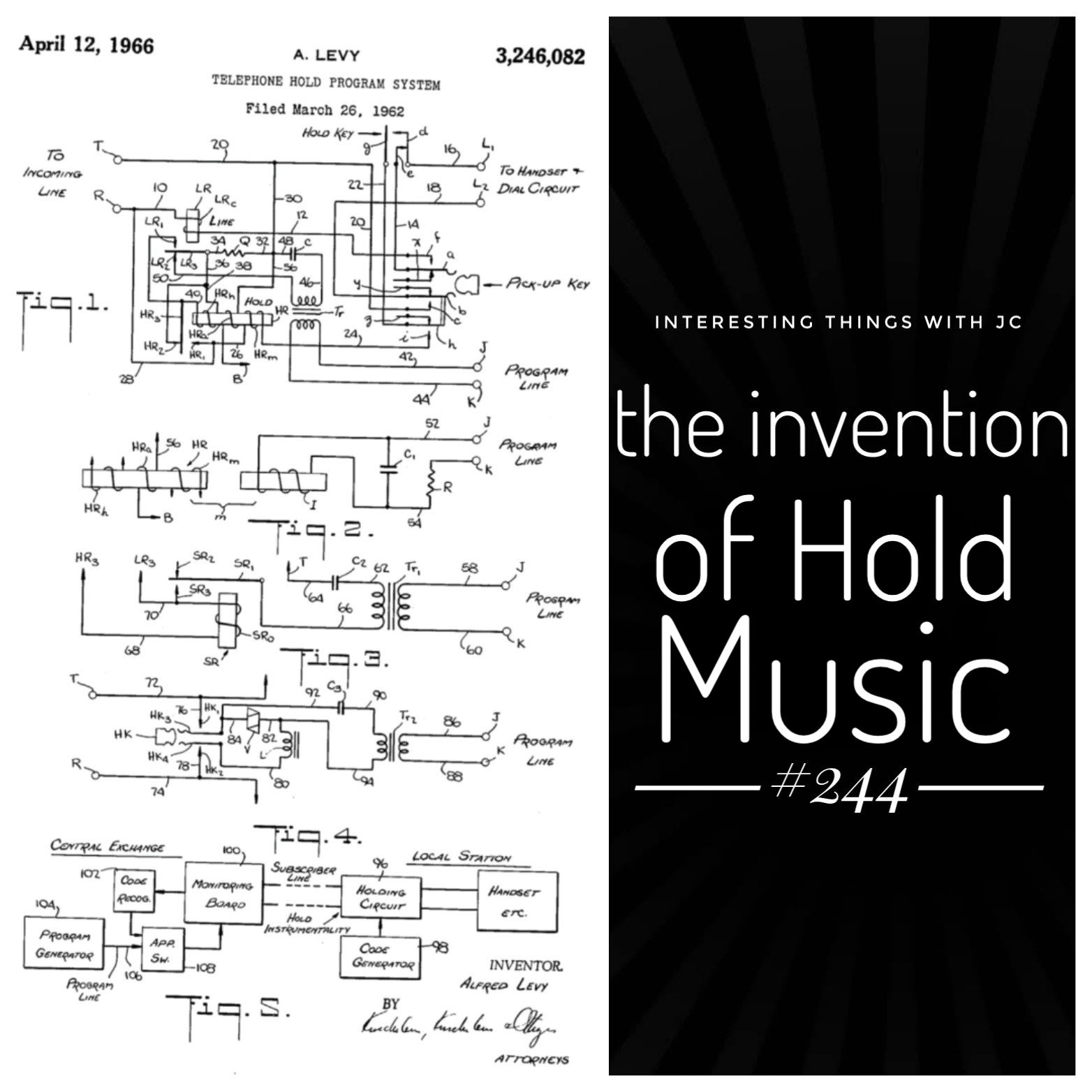
244: "Alfred Levy and the Invention of Hold Music"
Interesting Things with JC #244: "Alfred Levy and the Invention of Hold Music” - Music on hold was born out of an accidental discovery by factory owner Alfred Levy in the early 1960s. The phone lines in his factory were somehow picking up a radio signal from the radio station nearby, and callers could hear music when they were put on hold.

243: "Shrek the Sheep"
Interesting Things with JC #243: "Shrek the Sheep" - After evading humans for years, on April 15th 2004 in a cave in New Zealand, Shrek the Sheep was finally caught. The merino sheep had grown an amazing 27kg or 60lbs worth of fleece during this time.

242: "Charles Lightoller"
Interesting Things with JC #242: "Charles Lightoller" was trapped underwater after helping save people as the Titanic sank. A boiler exploded and sent him rushing back to the surface where he helped 30 more people. In WW2 he helped save another 127 people at Dunkirk.

241: "The Flying Scotsman"
Interesting Things with JC #241: “The Flying Scotsman” - Mr. Alan Pegler brought the "Flying Scotsman" with a train of three British passenger cars, to the United States in 1968, traveling from Coast to Coast as an exhibition to promote global British exports. The details of the trip would forever change Pegler, as the fate of the train was unknown at the time!

240: "Belgian Waffles"
Interesting Things with JC #240: “Belgian Waffles” - There are many different types of Belgian waffles, there is no such thing as a singular Belgian Waffle. The two most popular types of waffles that you'll find are Brussels waffles and Liege waffles.

238: "Player Piano”
Interesting Things with JC #238: "Player Piano”. The player piano system was invented by Edwin Votey in 1895, & the first player piano was introduced by Melville Clark in 1900. It was driven by song specific piano rolls, which are continuous rolls of paper with holes punched into them. The holes let air get sucked into the system, & when the roll goes over a hole on the tracker bar, a specific note is played.

237: "Lee's Legendary Marbles of York Nebraska"
Interesting Things with JC #237: "Lee's Legendary Marbles" is in the amazing and quaint town of York Nebraska and is one of the most unique places to visit. Lee started the collection in 1954, and even has uranium glass marbles from the early 20th century.

236: "Locked-in Syndrome and the Miracle Microchip"
Interesting Things with JC #236: "Locked-in Syndrome and the Miracle Microchip”. Locked-in Syndrome is a rare neurological disorder characterized by complete paralysis of voluntary muscles in all parts of the body except for those that control eye movement. Emerging technology provides a brain-computer interface to help people who are locked-in communicate freely again.