

A Short Story Podcast Series

Amazon - Apple - Audible - Castbox - Deezer - fyyd - GoodPods - Headliner - iHeartRadio - Instagram - JioSaavn - Listen Notes - Pandora - PlayerFM - Podcast Radio - Podcast Republic - Podchaser - Podverse - PocketCasts - Spotify - Stitcher - Youtube
Link to Podcast Library - or - Scroll for Daily Feed
-
Open Educational Use
Interesting Things with JC is made available for anyone to use in the service of education. Teachers, students, parents, homeschool families, librarians, tutors, and lifelong learners are free to download, copy, share, print, adapt, and reuse the episodes and curriculum materials in any way that helps people learn.
If it supports teaching, learning, or helping others understand the world better, it is allowed.
One exception applies: Episode #509, “Harry Chapin and Jim Connors,” is not included under this open educational permission.
Curriculum Availability
Full curriculum support begins with Episode #1235: “Three Turns to Freedom.” Earlier episodes without curriculum may be prioritized by request. Educators may contact JimConnors LLC, and a matching curriculum module will be created and added.
What You Are Free to Do
You may:
Download and store the audio, transcripts, and curriculum
Copy and share materials with students, families, or learning groups
Print, remix, edit, and adapt lessons for your own educational use
Upload content to learning management systems (LMS), class websites, or internal school platforms
Integrate the material into lessons, assignments, tutoring, homeschool programs, libraries, and community education
No permission is required. Credit to Interesting Things with JC is appreciated when possible, but the priority is helping people learn.
What Is Not Allowed
This openness is for education, not commercial use. The content may not be:
Sold, licensed, or packaged as a product or subscription
Rebranded or presented as original third-party work
Used as part of a paid course, monetized program, or commercial platform
Redistributed as a standalone product for profit
Any commercial, branded, or revenue-generating use requires prior written permission from JimConnors LLC. Episode #509 remains excluded from open educational use.
Rights and Intent
All content remains the intellectual property of JimConnors LLC. The intent is simple:
Use it freely to educate, teach, explain, and help people.
Just do not sell it, repackage it for profit, or claim it as your own.
Summary:
Use it.
Download it.
Copy it.
Share it.
Teach with it.
Adapt it for students, kids, classrooms, homeschools, libraries, and lifelong learning.
Click on the curriculum frame, copy the full merged curriculum standards, use them in your own GPT, iterate and improve them, and share back!
Just don’t sell it, rebrand it, or turn it into a product. Episode #509 is excluded. All rights reserved © JimConnors LLC.
-
Interesting Things with JC has previously been included in curated podcast programming on Podcast Radio formats in both the United Kingdom and the United States. Podcast Radio was launched as a 24-hour broadcast concept designed to showcase podcasts on digital radio and online streaming platforms.
In the United States, the Podcast Radio US brand continues to maintain an online presence and app availability, and has been associated with radio simulcasts on licensed AM and FM signals in selected markets, though live broadcast availability may vary.
Streaming Access
Podcast Radio US and related branded streams provide online listening through their websites and mobile applications, allowing audiences worldwide to hear selected podcast programming.On-Demand Platforms
Interesting Things with JC is available across major podcast directories, including Amazon Music, Apple Podcasts, Audacy, Audible, Castbox, Deezer, fyyd, GoodPods, iHeartRadio, JioSaavn, Listen Notes, Pandora, PlayerFM, PocketCasts, Podcast Republic, Podchaser, Podverse, Spotify, Stitcher, and YouTube.The series is also accessible through podcast apps that index the Apple Podcasts catalog and the open podcast directory ecosystem, including TuneIn, Podcast Addict, Overcast, Castro, Podcast Index–based apps, Podbean, iVoox, Podtail, Podyssey, Podcloud, Bullhorn, AudioBoom directories, and Breaker (legacy).
Social & Video Platforms
Listeners can also follow and view content on Facebook, Instagram, X (Twitter), TikTok, and YouTube. -
Classroom Use
Start class with a short, clear story students can follow from the first sentence. Play an episode of Interesting Things with JC and use the accompanying free curriculum to guide a complete lesson with questions, activities, applied reasoning, and independent analysis.
Every episode from #1235 forward contains a modular micro-lesson engineered for 30 to 90 minute instructional blocks, adaptable to secondary classrooms, international schools, homeschools, tutoring programs, and lifelong learning environments.
At the bottom of each episode page, expandable sections organize all instructional assets in a structured format for educators, parents, and independent learners.
Instructional Architecture of Each Episode
Each episode is designed as a self-contained instructional unit, integrating narrative, academic standards, assessment models, and accessibility requirements into a single deliverable.
Core Instructional Components
Lesson overview with instructional title, grade band, subject classification, and learning objectives
Vocabulary architecture with phonetic spelling, discipline-specific terminology, and plain-language definitions
Primary narrative content constructed through the Precise Storytelling Framework for coherence, sequencing, and conceptual layering
Full verbatim transcript for reading analysis, accessibility, and text-based instruction
Student learning activities including comprehension tasks, analytical writing, synthesis prompts, and evidence-based reasoning exercises
Teacher implementation guide with pacing models, instructional strategies, differentiation guidance, and discussion structures
Assessment instruments including quizzes, performance tasks, formative checks, and rubric-aligned evaluation tools
Standards crosswalks mapping content and skills across U.S., UK, and international academic frameworks
ADA-compliant instructional media with alt text, accessibility tagging, and inclusive design
Primary-source documentation linking directly to verified historical, scientific, legal, and academic references
Homeschool and modular scheduling guidance for flexible implementation
All materials are developed through the Narrative Intelligence System, ensuring factual integrity, instructional coherence, accessibility, and age-appropriate presentation. Lessons are non-ideological and restricted to academic content.
Unified Curriculum Integration Model
Every episode is constructed using a multi-framework integration model, in which:
Narrative structure
Disciplinary content
Cognitive skill development
Assessment design
Accessibility standards
Cross-curricular competencies
are deliberately merged into a single instructional object, rather than appended as afterthoughts. This means each episode simultaneously functions as:
A structured story
A content lesson
A literacy and reasoning exercise
A research and source-evaluation activity
An assessment artifact
A standards-aligned instructional unit
United States Curriculum Architecture (Full Integration)
National Frameworks Embedded
Next Generation Science Standards (NGSS)
Scientific practices, data analysis, modeling, systems thinking, evidence evaluation
Common Core State Standards (CCSS) – ELA & Mathematics
Close reading, argumentative writing, research synthesis, quantitative reasoning
College, Career, and Civic Life (C3) Framework
Disciplinary inquiry, historical sourcing, civic knowledge, geographic reasoning
International Society for Technology in Education (ISTE)
Digital citizenship, computational thinking, information fluency
National Core Arts Standards (NCAS)
Interpretation, critique, interdisciplinary expression, creative analysis
Career and Technical Education (CTE) Career Clusters
Applied technical knowledge, workplace reasoning, real-world problem solving
Association of College and Research Libraries (ACRL)
Research literacy, source evaluation, information ethics, academic inquiry
Bloom’s Taxonomy
Cognitive progression from comprehension to analysis, synthesis, and evaluation
Universal Design for Learning (UDL)
Multiple means of representation, engagement, and expression for inclusive instruction
Cross-Disciplinary U.S. Competencies Embedded in Every Episode
Academic literacy (reading, writing, argumentation)
Quantitative literacy and data reasoning
Media and information literacy
Digital and computational literacy
Civic knowledge and constitutional literacy (knowledge-based, non-ideological)
Research methodology and evidence verification
Critical thinking, analytical writing, and structured problem solving
Additional U.S. Integration Layers
State-level academic standards where applicable
Financial literacy and employability skills
Social-emotional competencies as academic behaviors (persistence, self-regulation, metacognition)
English language development and world-language vocabulary support
United Kingdom Curriculum Architecture (Full Integration)
National Curriculum Structure
Key Stage 3 (ages 11–14)
Key Stage 4 (GCSE)
Key Stage 5 (A-Level / Sixth Form)
Disciplinary domains mapped across episodes:
English language and literature (analysis, argument, rhetorical structure)
Mathematics (numeracy, quantitative interpretation)
Science (evidence, explanation, evaluation)
History and Geography (source criticism, contextual reasoning)
Citizenship (knowledge-based civic education)
Computing and digital literacy
Arts and humanities integration
Examination Frameworks
AQA
OCR
Pearson Edexcel
Assessment alignment includes:
Command terms and performance descriptors
Extended analytical writing
Evidence-based responses
Cross-disciplinary synthesis
International Academic Programmes Integrated
International Baccalaureate (IB)
Primary Years Programme (PYP)
Middle Years Programme (MYP)
Diploma Programme (DP)
Cambridge Assessment International Education
Cambridge IGCSE
Cambridge AS & A Level
Shared instructional architecture:
Inquiry-based learning
Conceptual understanding
Global context framing
Criterion-referenced assessment
Research projects and analytical writing
Cross-Curricular Frameworks Embedded by Design
Oracy across the curriculum
Literacy across disciplines
Numeracy across subjects
Digital and computational literacy
Citizenship and civic knowledge (non-ideological)
Research methodology and information literacy
Interdisciplinary synthesis
Global Academic Equivalency Structures
European Qualifications Framework (EQF) alignment for secondary and pre-university levels
OECD competency domains (literacy, numeracy, analytical reasoning, problem solving)
International standards-referenced assessment models used across secondary education systems
Pedagogical & Assessment Architecture
Knowledge-to-application curriculum sequencing
Evidence-based reasoning and academic writing
Primary-source analysis and citation practices
Formative, summative, and performance-based assessment models
Rubric-aligned evaluation and feedback structures
Universal accessibility and inclusive instructional design
Access, Use, and OER Licensing
All instructional materials are released as Open Educational Resources (OER) and may be used, printed, adapted, or shared for teaching in classrooms, homeschools, tutoring programs, and independent study environments. Materials are provided for educational use under fair use and may not be resold or redistributed commercially.
Episodes from #1235 forward include complete curriculum packages. Older episodes without micro-lessons can be prioritized for conversion. Beginning with Episode #1307, each MP3 page in the RSS feed includes open instructional text for direct access to transcripts and curriculum materials.
Educator and homeschool feedback is actively incorporated to refine instructional clarity, alignment, and usability. Please do not hesitate to reach out - or iterate upon these instructions to improve the framework. Please share open iterations back for continual improvement.
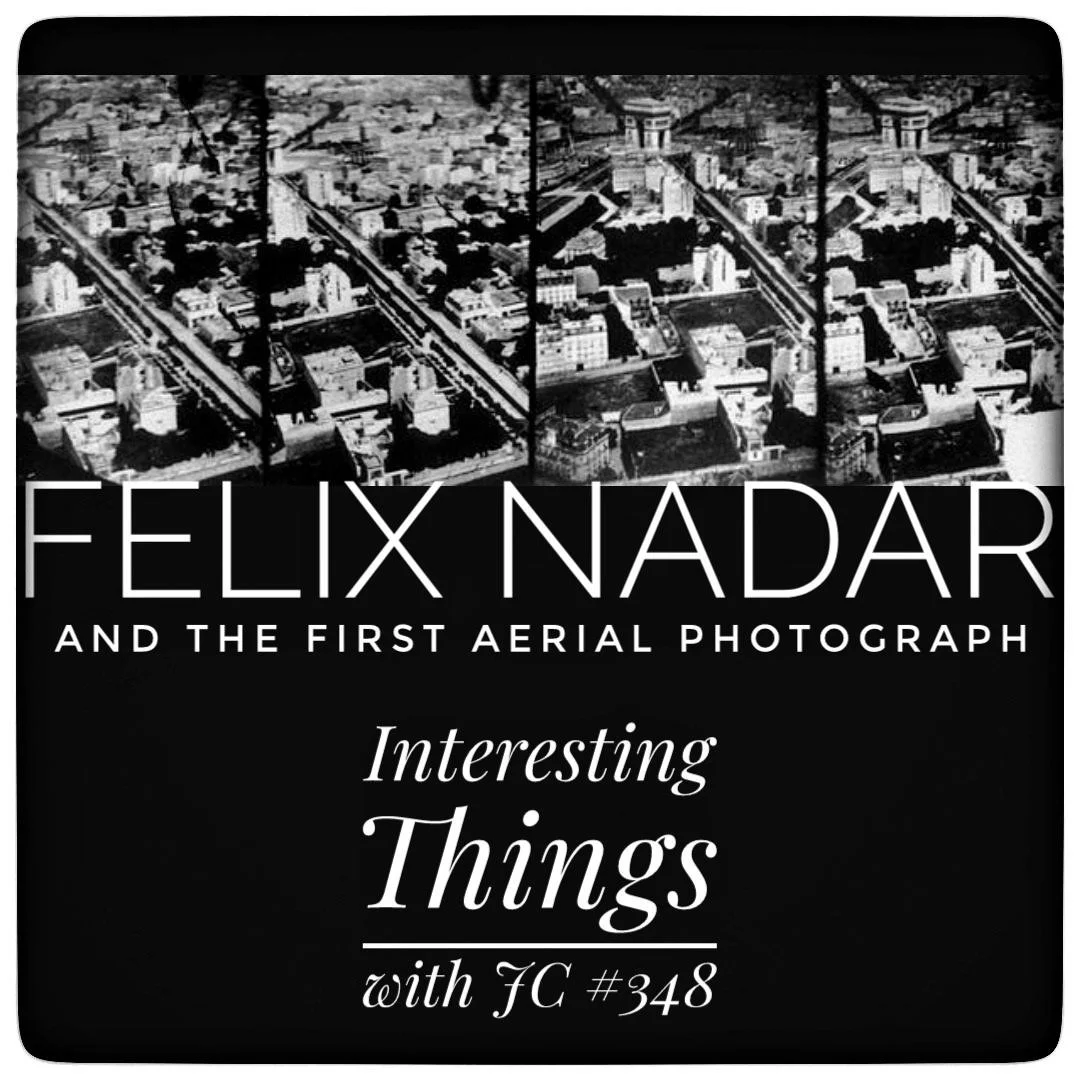
348: "Felix Nadar and the First Aerial Photograph"
Interesting Things with JC #348: "Felix Nadar and the First Aerial Photograph" - In 1858, Felix Nadar, a French balloonist and photographer, took the first known photograph from the sky!

347: "The Tower of London's Famous Ravens"
Interesting Things with JC #347: "The Tower of London's Famous Ravens" - The kingdom of England and the Tower of London are said to be doomed if the six ravens who live there ever leave. The Tower is currently inhabited by nine ravens.

346: "Fire Hydrants"
Interesting Things with JC #346: "Fire Hydrants" - The true inventor of the fire hydrant is unknown, though. A fire destroyed the patents for the fire hydrants in Philadelphia.

344: "Shizo Kanakuri"
Interesting Things with JC #344: "Shizo Kanakuri" was a pioneer in Japanese marathon running and track and field. To the Japanese, he is the "father of the marathon." Interestingly, the world record marathon time he was most famous for was 54 years, 8 months, 6 days, 5 hours, 32 minutes, and 200.379 seconds.

343: "Tecumseh"
Interesting Things with JC #343: "Tecumseh" was founded in 1934 by Raymond Wesley Herrick and Charles Floyd Sage in Tecumseh, Michigan. Herrick & Sage were both tool and die maker-machinists at their own companies, which came together to create the Tecumseh Products Company.

342: "Phantom Towns"
Interesting Things with JC #342: "Phantom Towns" are places that exist solely on paper maps but have no physical presence in the real world. All of them are either blunders or deliberate attempts to break the law.

341: "Blueberries"
Interesting Things with JC #341: "Blueberries" - Native Americans in North America gave blueberries the name "star fruits" due to the star shape formed by the blossom end of the berry. In a given year, a single blueberry bush can yield up to six thousand berries. The highbush blueberry crop in British Columbia is the world's largest.
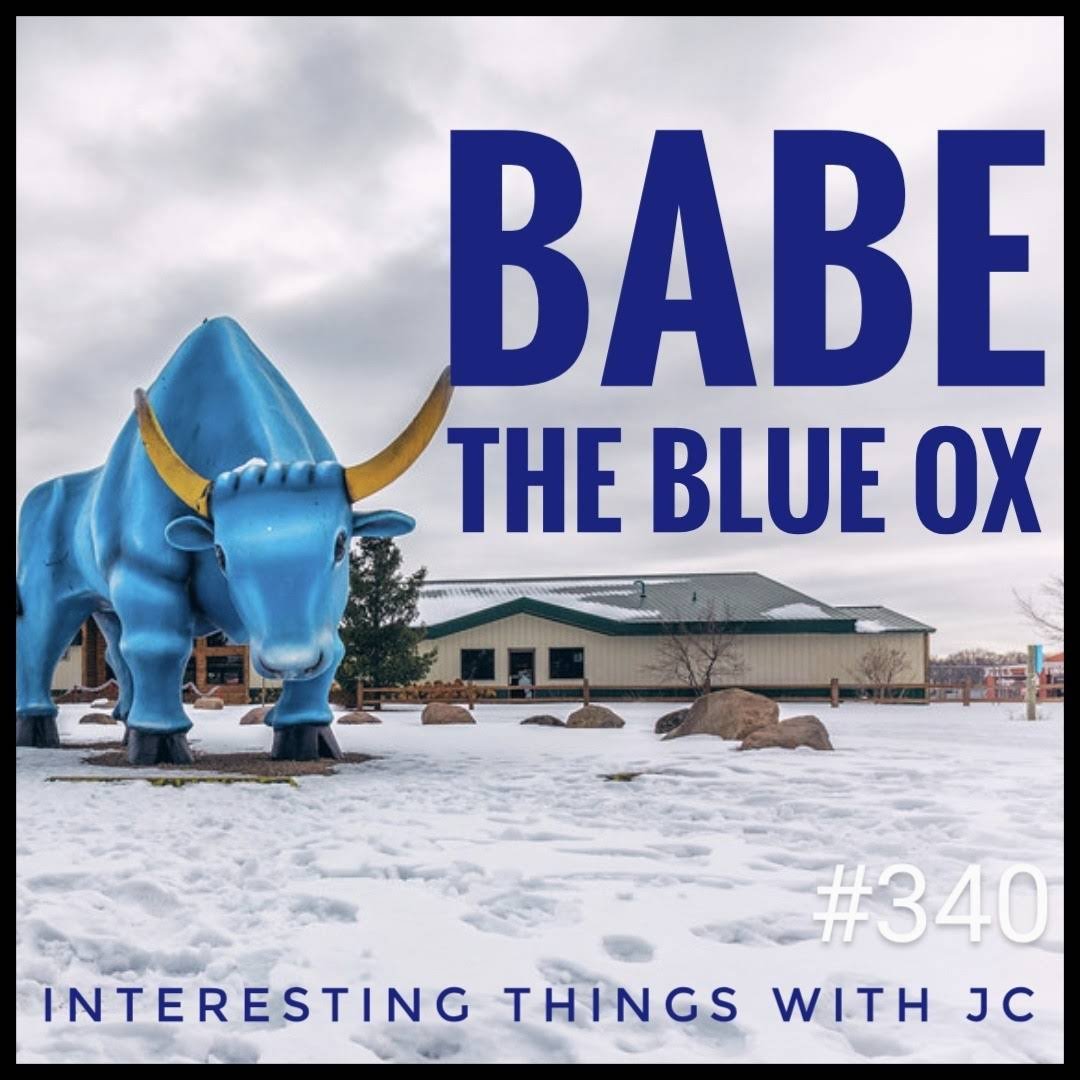
340: "Babe the Blue Ox"
Interesting Things with JC #340: "Babe the Blue Ox" — Paul Bunyan took a stroll during the Blue Snow Winter. While he was up to his knees in icy blue snow, he heard a noise that sounded like a bleat snort. Looking down, he noticed a small blue bull snorting angrily and bouncing around in the snow.

339: "Paul Bunyan"
Interesting Things with JC #339: "Paul Bunyan" - Once upon a time, a large man named Paul Bunyan existed. Bunyan was a lumberjack who traversed the country with his blue ox, Babe. Paul Bunyan's tales are legendary and an integral part of American folklore.

338: "More Dangerous than Shark Attacks"
Interesting Things with JC #338: "More Dangerous than Shark Attacks" - An inquisitive short story podcast topic that was submitted by one of our loyal but yet anonymous listeners! (5min podcast)
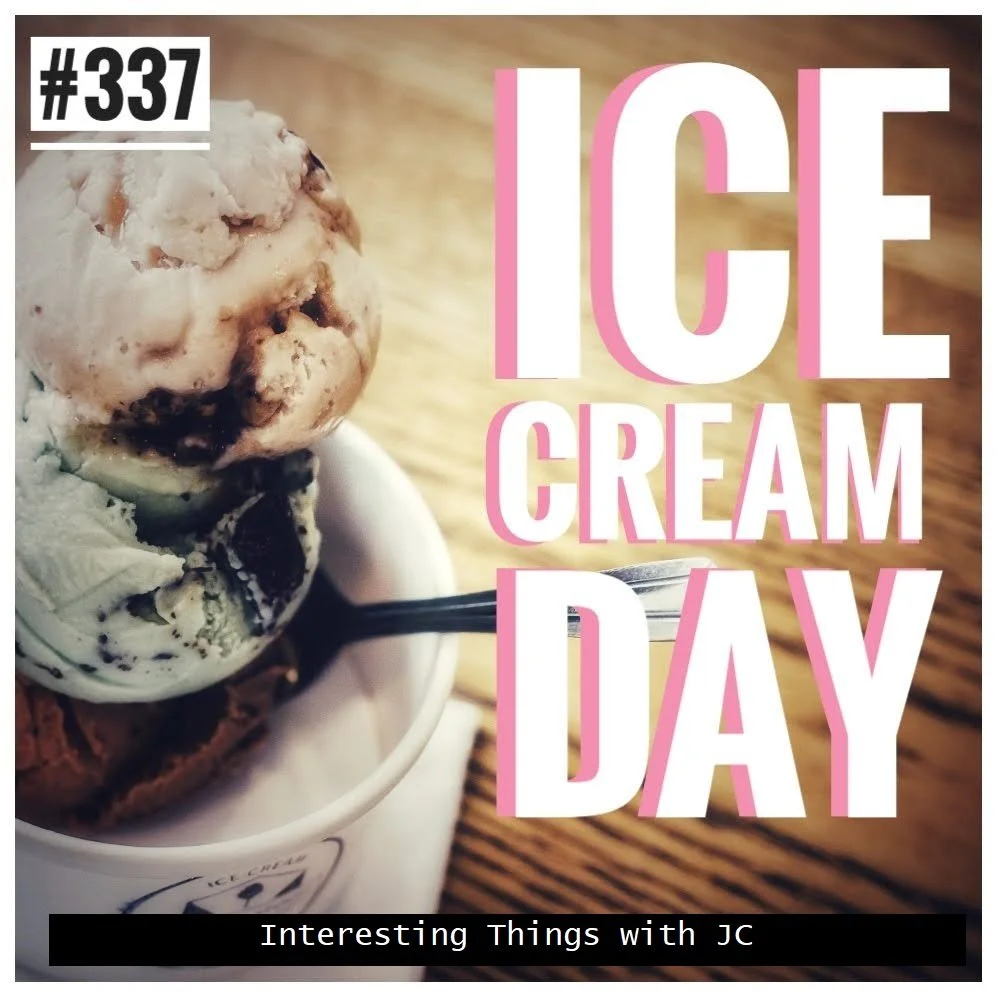
337: "The Abbreviated History of Ice Cream"
Interesting Things with JC #337: "The Abbreviated History of Ice Cream" - President Ronald Reagan instituted National Ice Cream Day, which is observed annually on the third Sunday of July (July 17 this year). Let’s take a look at the history of this beloved treat!

336: "Room 307, Gilman Hall, UC Berkley"
Interesting Things with JC #336: "Room 307, Gilman Hall, UC Berkley" - The first chemical identification of element 94, took place here. It was declared a National Historic Landmark in 1966 on the 25th anniversary of the discovery of plutonium. All of Gilman Hall was designated a National Historic Chemical Landmark in 1997, followed by its listing in the National Register of Historic Places in 2003.

335: "Point Bonita Lighthouse"
Interesting Things with JC #335: "Point Bonita Lighthouse" sits near the end of Bonita Cove in the Marin Headlands, just 20 minutes from the southern end of the Golden Gate Bridge. It's a historic location and the only lighthouse in the United States that is reached by a suspension bridge!

334: "Vicki Adams"
Interesting Things with JC #334: "Vicki Adams" - Vicki Adams' horsemanship, innovative flare, and horse-training expertise have enthralled rodeo fans worldwide for half a century. Vicki is one of the world's top “trick-riders” and has been recognized in countless halls of fame.

333: "Garden Joy"
Interesting Things with JC #333: "Garden Joy" - Born from a one-acre plot on Main Street in Ripon, California, this volunteer organization provides thousands of pounds of organic vegetables for the community as well as offers classes, tours, and facilitates field trips for hundreds of local youth.
By encouraging home gardening and providing educational programs to promote positive social contact and recreation, they are making a long-lasting impact on the community's nutritional knowledge and the people's eating habits.
Please visit gardenjoyca.com for more information.
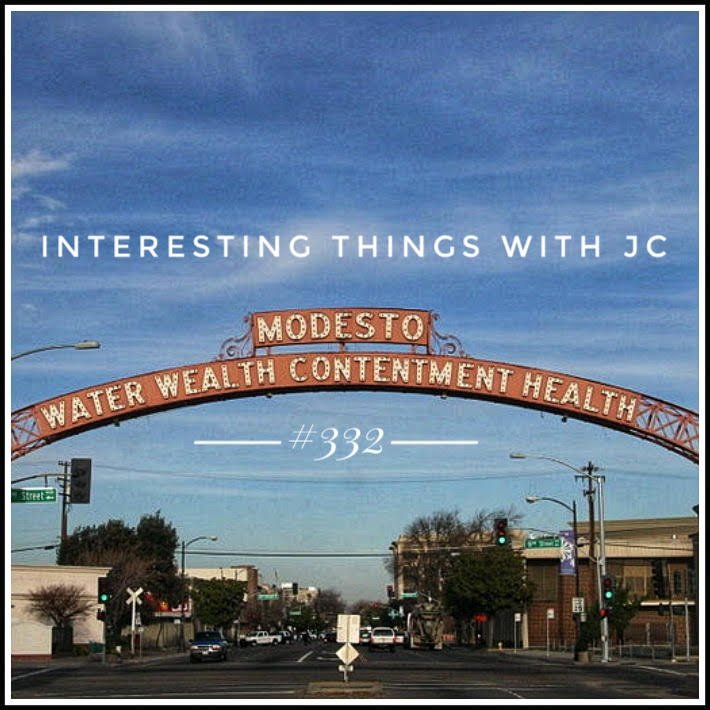
332: "Modesto"
Interesting Things with JC #332: "Modesto" - The Central Pacific Railroad established the city of Modesto in the 1860s. William Chapman Ralston, a railway director, was meant to be honored by having the city bear his name, but he graciously rejected it. Workers who spoke Spanish and attended the naming ceremony for the city found this quite humble of him. The city was thus given the name Modesto.

331: "California Wine"
Interesting Things with JC #331: "California Wine" - Join me as I take you on a journey through the history of this legendary region, beginning in 1769 and continuing to the present day.

330: "Orangemen's Day"
Interesting Things with JC #330: "Orangemen's Day"-William of Orange and James II fought in Ireland in July 1690. It was the last fight between the crowned kings of England, Scotland, and Ireland. William of Orange won and dominated Ireland for years. It is a public holiday in Newfoundland and Labrador, so most schools and businesses are closed and most people have the day off. By the end of the 1800s, Orangemen's parades were a regular thing in many Newfoundland towns.

329: "Mt. Diablo"
Interesting Things with JC #329: "Mt. Diablo” is one of the most prominent landforms in northern California, located in the San Francisco Bay Area to the east of Walnut Creek. In 1851, it was chosen as the starting point for the Mount Diablo Base Line and Meridian, which were used to measure land in two-thirds of California and all of Nevada. At the top of the mountain, there are amazing views in all directions.

327: "The Sites Reservoir"
Interesting Things with JC #327: "The Sites Reservoir" The California Department of Water Resources intends to construct the $5.2-billion off-stream Sites Reservoir west of Colusa in the Sacramento Valley of northern California, presenting an untapped opportunity to store significant amounts of water generated by stormwater and flood flows. Further strengthening the backbone of this world renown agricultural region.