

A Short Story Podcast Series

Amazon - Apple - Audible - Castbox - Deezer - fyyd - GoodPods - Headliner - iHeartRadio - Instagram - JioSaavn - Listen Notes - Pandora - PlayerFM - Podcast Radio - Podcast Republic - Podchaser - Podverse - PocketCasts - Spotify - Stitcher - Youtube
Link to Podcast Library or Scroll for Daily Feed
-
Open Educational Use
Interesting Things with JC is made available for anyone to use in the service of education. Teachers, students, parents, homeschool families, librarians, tutors, and lifelong learners are free to download, copy, share, print, adapt, and reuse the episodes and curriculum materials in any way that helps people learn.
If it supports teaching, learning, or helping others understand the world better, it is allowed.
One exception applies: Episode #509, “Harry Chapin and Jim Connors,” is not included under this open educational permission.
Curriculum Availability
Full curriculum support begins with Episode #1235: “Three Turns to Freedom.” Earlier episodes without curriculum may be prioritized by request. Educators may contact JimConnors LLC, and a matching curriculum module will be created and added.
What You Are Free to Do
You may:
Download and store the audio, transcripts, and curriculum
Copy and share materials with students, families, or learning groups
Print, remix, edit, and adapt lessons for your own educational use
Upload content to learning management systems (LMS), class websites, or internal school platforms
Integrate the material into lessons, assignments, tutoring, homeschool programs, libraries, and community education
No permission is required. Credit to Interesting Things with JC is appreciated when possible, but the priority is helping people learn.
What Is Not Allowed
This openness is for education, not commercial use. The content may not be:
Sold, licensed, or packaged as a product or subscription
Rebranded or presented as original third-party work
Used as part of a paid course, monetized program, or commercial platform
Redistributed as a standalone product for profit
Any commercial, branded, or revenue-generating use requires prior written permission from JimConnors LLC. Episode #509 remains excluded from open educational use.
Rights and Intent
All content remains the intellectual property of JimConnors LLC. The intent is simple:
Use it freely to educate, teach, explain, and help people.
Just do not sell it, repackage it for profit, or claim it as your own.
Summary:
Use it.
Download it.
Copy it.
Share it.
Teach with it.
Adapt it for students, kids, classrooms, homeschools, libraries, and lifelong learning.
Click on the curriculum frame, copy the full merged curriculum standards, use them in your own GPT, iterate and improve them, and share back!
Just don’t sell it, rebrand it, or turn it into a product. Episode #509 is excluded. All rights reserved © JimConnors LLC.
-
Interesting Things with JC has previously been included in curated podcast programming on Podcast Radio formats in both the United Kingdom and the United States. Podcast Radio was launched as a 24-hour broadcast concept designed to showcase podcasts on digital radio and online streaming platforms.
In the United States, the Podcast Radio US brand continues to maintain an online presence and app availability, and has been associated with radio simulcasts on licensed AM and FM signals in selected markets, though live broadcast availability may vary.
Streaming Access
Podcast Radio US and related branded streams provide online listening through their websites and mobile applications, allowing audiences worldwide to hear selected podcast programming.On-Demand Platforms
Interesting Things with JC is available across major podcast directories, including Amazon Music, Apple Podcasts, Audacy, Audible, Castbox, Deezer, fyyd, GoodPods, iHeartRadio, JioSaavn, Listen Notes, Pandora, PlayerFM, PocketCasts, Podcast Republic, Podchaser, Podverse, Spotify, Stitcher, and YouTube.The series is also accessible through podcast apps that index the Apple Podcasts catalog and the open podcast directory ecosystem, including TuneIn, Podcast Addict, Overcast, Castro, Podcast Index–based apps, Podbean, iVoox, Podtail, Podyssey, Podcloud, Bullhorn, AudioBoom directories, and Breaker (legacy).
Social & Video Platforms
Listeners can also follow and view content on Facebook, Instagram, X (Twitter), TikTok, and YouTube. -
Classroom Use
Start class with a short, clear story students can follow from the first sentence. Play an episode of Interesting Things with JC and use the accompanying free curriculum to guide a complete lesson with questions, activities, applied reasoning, and independent analysis.
Every episode from #1235 forward contains a modular micro-lesson engineered for 30 to 90 minute instructional blocks, adaptable to secondary classrooms, international schools, homeschools, tutoring programs, and lifelong learning environments.
At the bottom of each episode page, expandable sections organize all instructional assets in a structured format for educators, parents, and independent learners.
Instructional Architecture of Each Episode
Each episode is designed as a self-contained instructional unit, integrating narrative, academic standards, assessment models, and accessibility requirements into a single deliverable.
Core Instructional Components
Lesson overview with instructional title, grade band, subject classification, and learning objectives
Vocabulary architecture with phonetic spelling, discipline-specific terminology, and plain-language definitions
Primary narrative content constructed through the Precise Storytelling Framework for coherence, sequencing, and conceptual layering
Full verbatim transcript for reading analysis, accessibility, and text-based instruction
Student learning activities including comprehension tasks, analytical writing, synthesis prompts, and evidence-based reasoning exercises
Teacher implementation guide with pacing models, instructional strategies, differentiation guidance, and discussion structures
Assessment instruments including quizzes, performance tasks, formative checks, and rubric-aligned evaluation tools
Standards crosswalks mapping content and skills across U.S., UK, and international academic frameworks
ADA-compliant instructional media with alt text, accessibility tagging, and inclusive design
Primary-source documentation linking directly to verified historical, scientific, legal, and academic references
Homeschool and modular scheduling guidance for flexible implementation
All materials are developed through the Narrative Intelligence System, ensuring factual integrity, instructional coherence, accessibility, and age-appropriate presentation. Lessons are non-ideological and restricted to academic content.
Unified Curriculum Integration Model
Every episode is constructed using a multi-framework integration model, in which:
Narrative structure
Disciplinary content
Cognitive skill development
Assessment design
Accessibility standards
Cross-curricular competencies
are deliberately merged into a single instructional object, rather than appended as afterthoughts. This means each episode simultaneously functions as:
A structured story
A content lesson
A literacy and reasoning exercise
A research and source-evaluation activity
An assessment artifact
A standards-aligned instructional unit
United States Curriculum Architecture (Full Integration)
National Frameworks Embedded
Next Generation Science Standards (NGSS)
Scientific practices, data analysis, modeling, systems thinking, evidence evaluation
Common Core State Standards (CCSS) – ELA & Mathematics
Close reading, argumentative writing, research synthesis, quantitative reasoning
College, Career, and Civic Life (C3) Framework
Disciplinary inquiry, historical sourcing, civic knowledge, geographic reasoning
International Society for Technology in Education (ISTE)
Digital citizenship, computational thinking, information fluency
National Core Arts Standards (NCAS)
Interpretation, critique, interdisciplinary expression, creative analysis
Career and Technical Education (CTE) Career Clusters
Applied technical knowledge, workplace reasoning, real-world problem solving
Association of College and Research Libraries (ACRL)
Research literacy, source evaluation, information ethics, academic inquiry
Bloom’s Taxonomy
Cognitive progression from comprehension to analysis, synthesis, and evaluation
Universal Design for Learning (UDL)
Multiple means of representation, engagement, and expression for inclusive instruction
Cross-Disciplinary U.S. Competencies Embedded in Every Episode
Academic literacy (reading, writing, argumentation)
Quantitative literacy and data reasoning
Media and information literacy
Digital and computational literacy
Civic knowledge and constitutional literacy (knowledge-based, non-ideological)
Research methodology and evidence verification
Critical thinking, analytical writing, and structured problem solving
Additional U.S. Integration Layers
State-level academic standards where applicable
Financial literacy and employability skills
Social-emotional competencies as academic behaviors (persistence, self-regulation, metacognition)
English language development and world-language vocabulary support
United Kingdom Curriculum Architecture (Full Integration)
National Curriculum Structure
Key Stage 3 (ages 11–14)
Key Stage 4 (GCSE)
Key Stage 5 (A-Level / Sixth Form)
Disciplinary domains mapped across episodes:
English language and literature (analysis, argument, rhetorical structure)
Mathematics (numeracy, quantitative interpretation)
Science (evidence, explanation, evaluation)
History and Geography (source criticism, contextual reasoning)
Citizenship (knowledge-based civic education)
Computing and digital literacy
Arts and humanities integration
Examination Frameworks
AQA
OCR
Pearson Edexcel
Assessment alignment includes:
Command terms and performance descriptors
Extended analytical writing
Evidence-based responses
Cross-disciplinary synthesis
International Academic Programmes Integrated
International Baccalaureate (IB)
Primary Years Programme (PYP)
Middle Years Programme (MYP)
Diploma Programme (DP)
Cambridge Assessment International Education
Cambridge IGCSE
Cambridge AS & A Level
Shared instructional architecture:
Inquiry-based learning
Conceptual understanding
Global context framing
Criterion-referenced assessment
Research projects and analytical writing
Cross-Curricular Frameworks Embedded by Design
Oracy across the curriculum
Literacy across disciplines
Numeracy across subjects
Digital and computational literacy
Citizenship and civic knowledge (non-ideological)
Research methodology and information literacy
Interdisciplinary synthesis
Global Academic Equivalency Structures
European Qualifications Framework (EQF) alignment for secondary and pre-university levels
OECD competency domains (literacy, numeracy, analytical reasoning, problem solving)
International standards-referenced assessment models used across secondary education systems
Pedagogical & Assessment Architecture
Knowledge-to-application curriculum sequencing
Evidence-based reasoning and academic writing
Primary-source analysis and citation practices
Formative, summative, and performance-based assessment models
Rubric-aligned evaluation and feedback structures
Universal accessibility and inclusive instructional design
Access, Use, and OER Licensing
All instructional materials are released as Open Educational Resources (OER) and may be used, printed, adapted, or shared for teaching in classrooms, homeschools, tutoring programs, and independent study environments. Materials are provided for educational use under fair use and may not be resold or redistributed commercially.
Episodes from #1235 forward include complete curriculum packages. Older episodes without micro-lessons can be prioritized for conversion. Beginning with Episode #1307, each MP3 page in the RSS feed includes open instructional text for direct access to transcripts and curriculum materials.
Educator and homeschool feedback is actively incorporated to refine instructional clarity, alignment, and usability. Please do not hesitate to reach out - or iterate upon these instructions to improve the framework. Please share open iterations back for continual improvement.
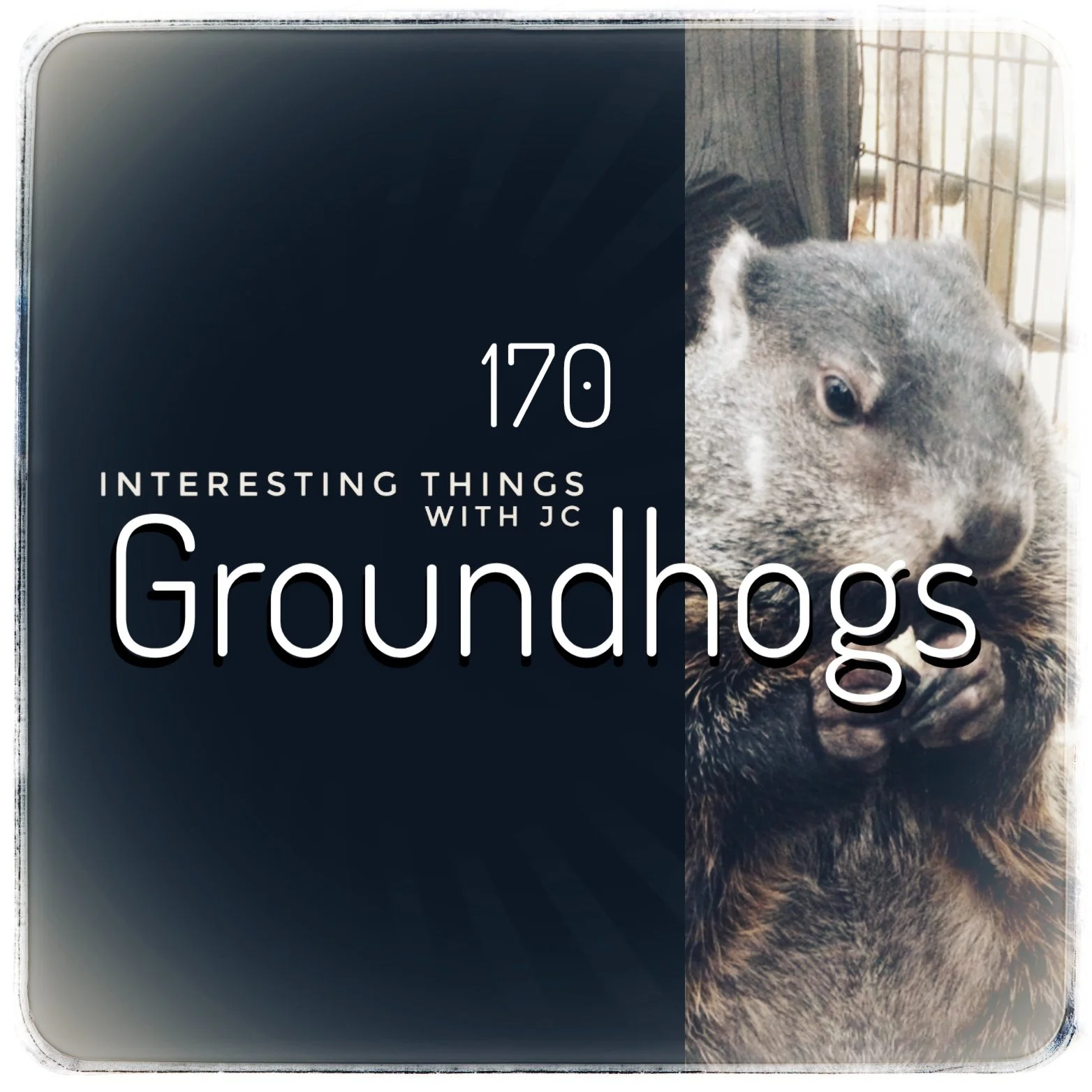
170 Interesting Things - Groundhogs
Groundhogs are the largest species in the squirrel family. Other names for groundhogs include woodchucks, whistle-pigs and land-beavers. On average groundhogs are 20" long with 6-7" tail, and weigh about 6-12 lbs. Their average lifespan in the Wild is 3-6 years.
Let's learn more!
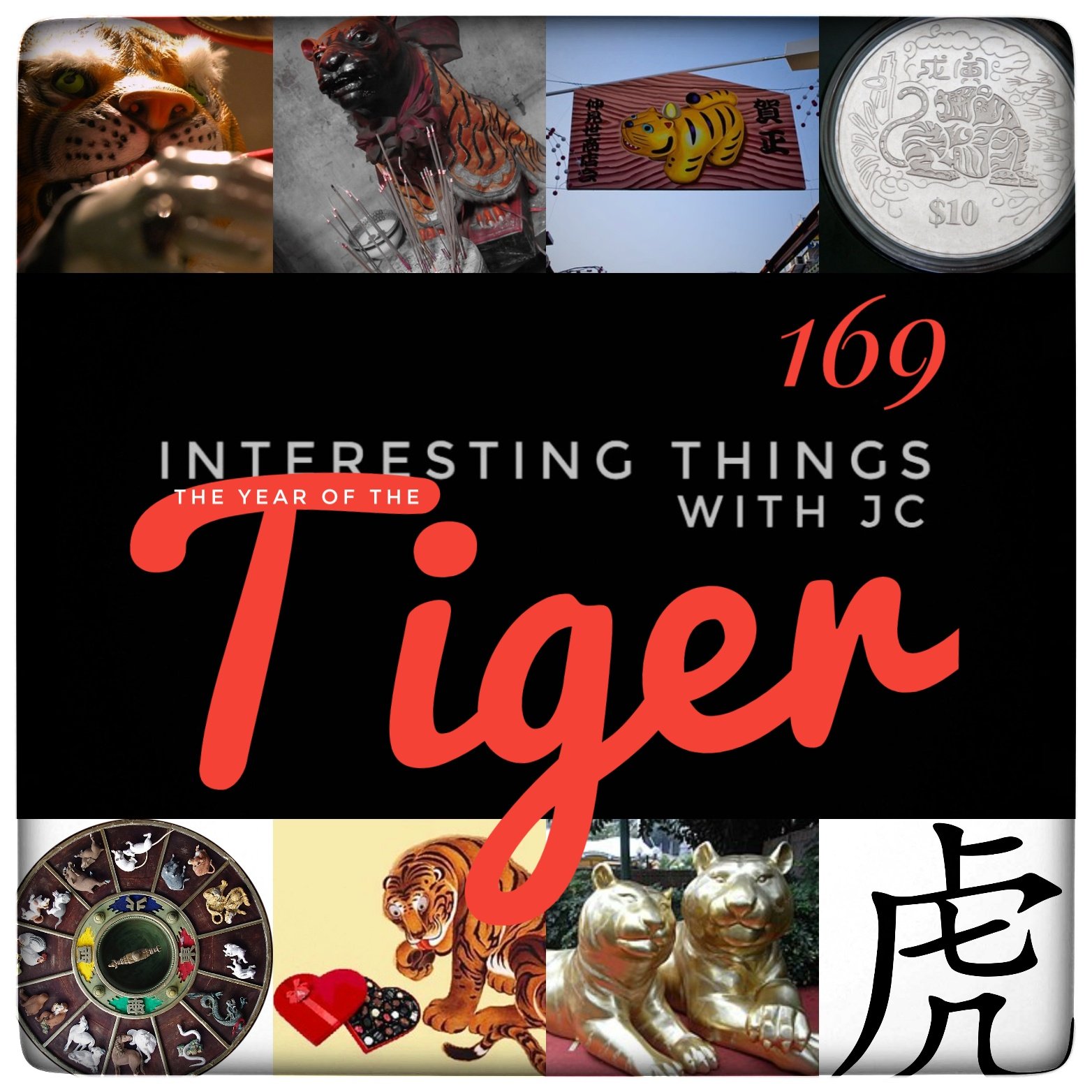
169 Interesting Things - Year of the Tiger
The Chinese New Year, or Lunar New Year, is always celebrated on the second new moon after the Winter Solstice. In 2022 this falls on February 1st, when we will usher in the Year of the Water Tiger.
In ancient times, the Chinese legend goes, the Jade Emperor held a race among all the animals. The 12 first animals to cross the finish line would get to be honored forever as the 12 animals of the Chinese zodiac.
Tigers are known as a symbol of strength and bravery, and people born in the year of the Tiger are said to have these traits as well. 2022 is going to be a good year for Tigers to get married, fall in love, or get promoted!

168 Interesting Things - STS-107 Space Shuttle Columbia
STS-107 was the disastrous 113th flight of the Space Shuttle program, and the 28th and final flight of Space Shuttle Columbia. The mission launched from Kennedy Space Center in Florida on 16 January 2003 and during its 15 days, 22 hours, 20 minutes, 32 seconds in orbit.
On February 1st, Columbia began re-entry as planned, but the heat shield was compromised due to damage sustained during the initial ascent. The heat of re-entry was free to spread into the damaged portion of the orbiter, ultimately causing its disintegration and the loss of all on board.
Columbia was delivered to the Kennedy Space Center in March 1979. Two years later, April 12, 1981, it lifted off from the Kennedy Space Center to become the first shuttle to fly in orbit.
The crew of its final voyage were 3 Mission Specialists; David Brown, Kalpana Chawla, Laurel Clark, a Payload Specialist and Commander; Ilan Ramon and Michael Anderson, Shuttle Commander; Rick Husband, and Shuttle Pilot; William McCool.
Arlington National Cemetery is the home of a Columbia memorial which is dated and has an outline of a Shuttle.
167 Interesting Things - Laughter
Laughing synchronizes the brains of both speaker and listener so that they become emotionally attuned. It also relaxes the whole body, even just watching people laugh activates the brain to prepare facial muscles to join in!
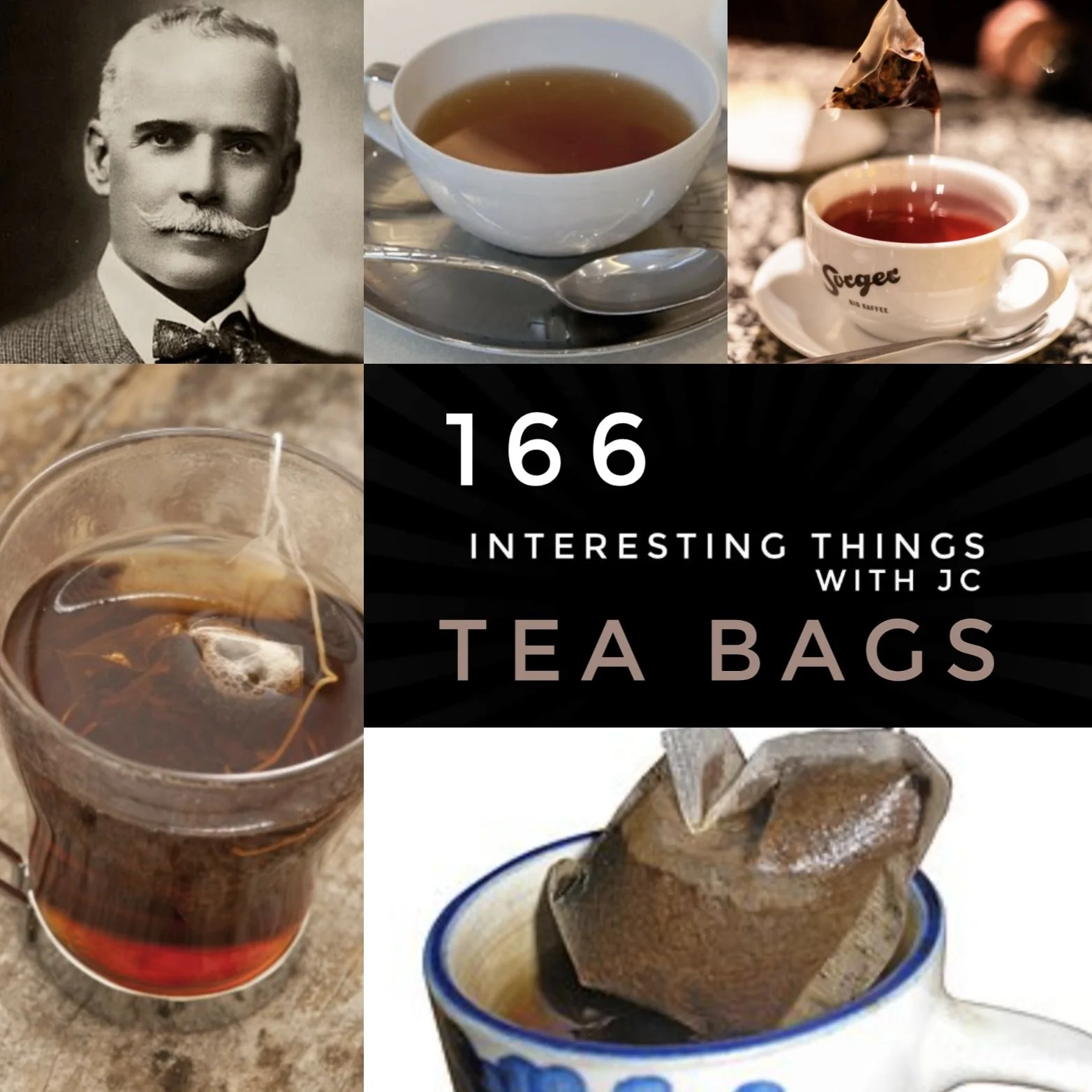
166 Interesting Things - Tea Bags
The tea bag was invented accidentally when New York merchant Thomas Sullivan sent out tea samples in silk bags and customers put them directly into teapots.

165 Interesting Things - Falling Iguanas of South Florida
When temperatures dip into the 40s and 30s green iguanas in south Florida fall from the trees.. It's become such a concern that there are falling iguana warnings on the news! Iguanas can grow up to 6ft and 26lbs, so this isn't a small concern!! (3min audio)

164 Interesting Things - 29,000 Rubber Duckies Lost at Sea
January 10th, 1992 - A container ship from Hong Kong was trapped in a terrible storm. As the waves tossed the ship around, 29,000 rubber duckies escaped their container but were reclaimed by Davey Jones. Believed to have been lost at sea, they began washing ashore, and they are still finding land all over the world 30 years later!

163 Interesting Things - Pine Cones
Pine cones can stay on tree for more than 10 years before dropping to the ground. We can eat approximately 20 types of pine nuts. They are said to have a buttery taste. They are soft, white seeds found inside pine cones. Pine nuts aren’t usually eaten raw. They are toasted to make them crunchy. Only 20 varieties of pine tree worldwide produce cones with large enough pine nuts for harvesting.

162 Interesting Things - Cat Toes
Cats have fewer toes on their back paws. They have five toes on the front, their foreleg. One of these toes is the dewclaw which sits higher up on the foot and does not actually come into contact with the ground. Some cats can have more toes than you can count!

161 Interesting Things - Less Gravity in Canada
Hudson Bay has less gravity as compared to the rest of the world. You will officially weigh less than you would anywhere else in the world.

160 Interesting Things - Agent 355
Agent 355 was a female spy who worked directly for George Washington during the American Revolution, and was one of the first spies for the United States. Her real identity is still unknown to this day.

159 Interesting Things - The Ozarks and the Blue Man
The Ozarks are an incredible region of the United States, popularized by tourism and the Netflix series. It's home to a rich history as well as vast and unique population, with interesting local folklore. One such story is that of the Blue Man who is believed to have made this region home.

158 Interesting Things - S O U N D
The speed and the physical characteristics of sound vary with the change in its ambient conditions. Our ears are capable of hearing sound waves which lie in the range between 20 and 20,000 vibrations per second. Sound waves travel through solid matter, such as iron, stone, and steel, must faster than it moves through the air. Let's find out more!

157 Interesting Things - Whistling Village of KongThong
KongThong is located in a beautiful lush region of Meghalaya. It's in this village that a unique language based on music exists. When a child is about to be born, the mother starts preparing a unique tone for her child. No two people have the same tone and is inspired by the sounds of birds and nature. They use this for their whole life to communicate.
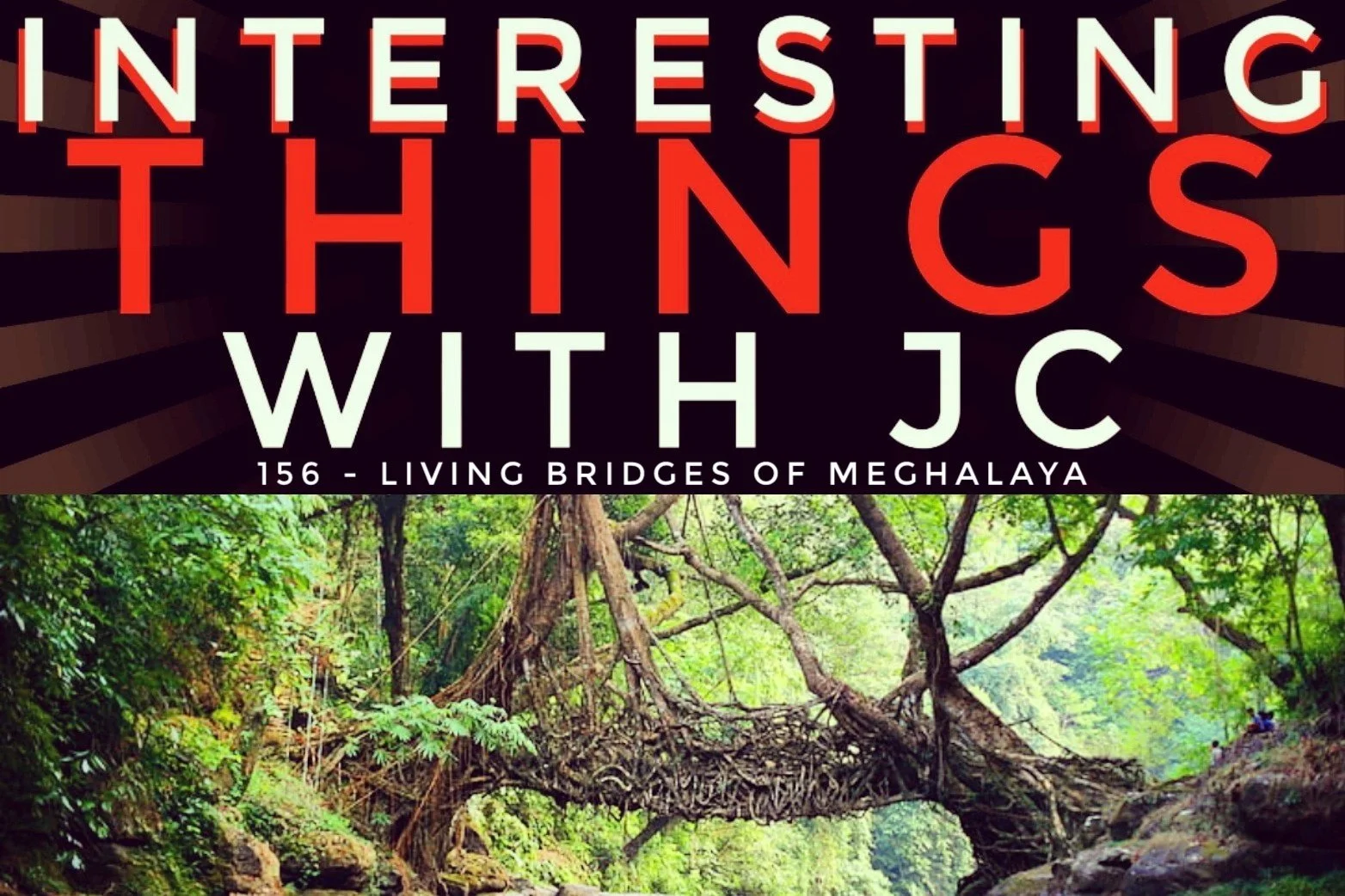
156 Interesting Things - Living Bridges of Meghalaya
The living root bridges of Meghalaya are a wonder of the world. The roots of rubber trees are put into hollow betel nut plant trunks and positioned to grow over rivers. Once to the other side, the roots are fortified and a natural bridge continues to grow!

155 Interesting Things - Meghalya
Meghalaya is home to some of the most gorgeous lakes, hiking trails, mysterious caves and beautiful waterfalls. The state has a flourishing tourism industry, with around 1.28 million annual visitors, and has won the Guinness world record title for the wettest place on Earth with about 11,873 milliliters of rain annually.

154 Interesting Things - Canary Islands
Although the Canary Islands are an autonomous region of Spain, they are 62 miles away from Morocco but 1,700 miles from mainland Spain. The island is not named after the wild canary bird, the bird was named after the islands!

153 Interesting Things - SnowFlakes
On average it takes about an hour for snow to leave its cloud and finally reach the ground. There are stories of giant snowflakes falling all over the globe, measuring anywhere from two to 15 inches across. (03:45)

152 Interesting Things - Chorizo
Chorizo is made from coarsely chopped pork and fat, with chilli spice, paprika, and garlic. Recipe ingredients might vary a bit. While the basic recipe remains the same, there are literally thousands of varieties across the globe. The legendary Chorizo Iberíco is made from the highly prized meat of Iberian pigs specially farmed in oak forests feasting almost exclusively on acorns!
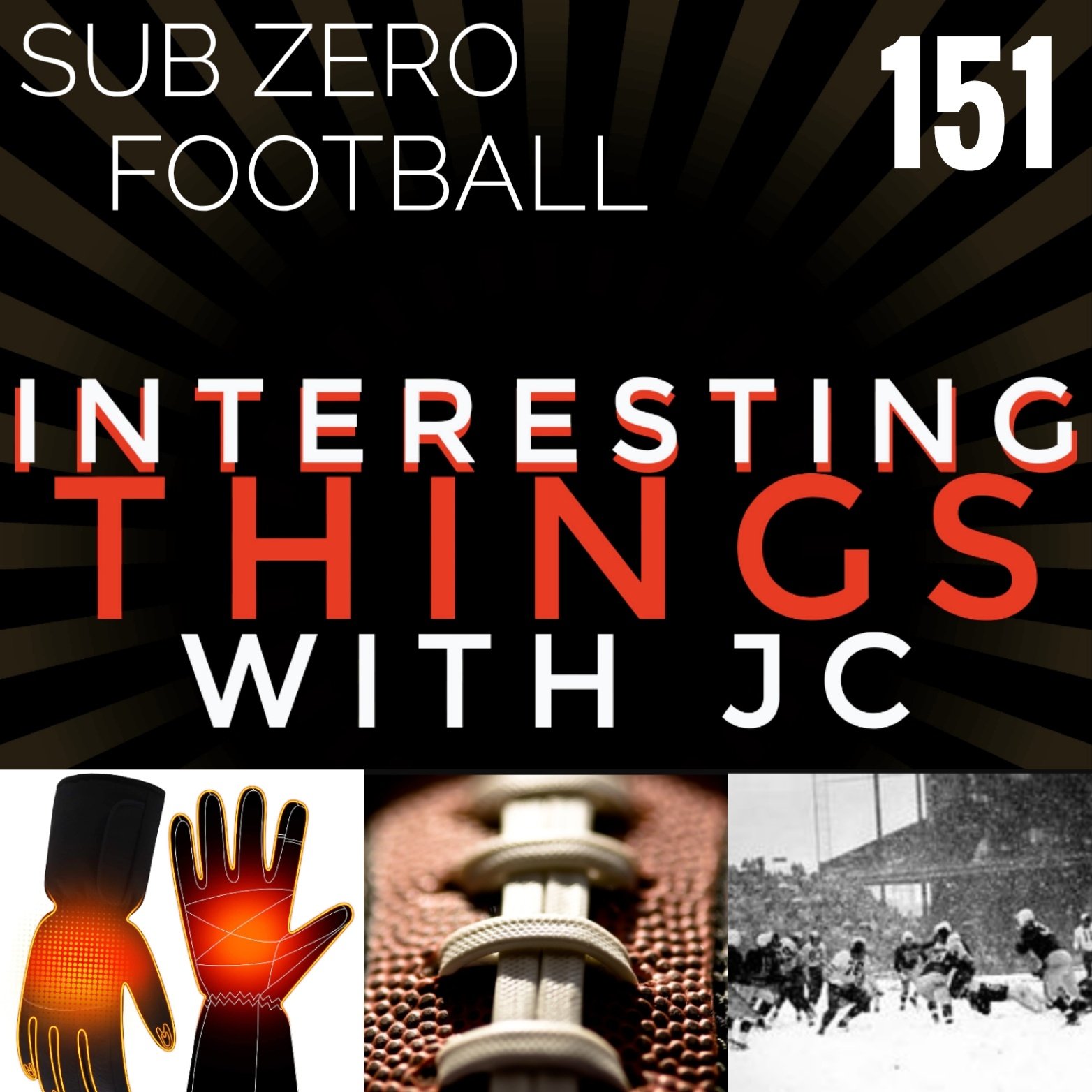
151 Interesting Things - Sub Zero Football
When it's so cold your shadow freezes to the pavement, it might be a little bit tougher to play a game of football. Did you know that when temperatures drop below 10 degrees F, there is a 52% chance that there will be turnovers? Let's dissect football and the risk of sub zero temperatures!