

A Short Story Podcast Series

Amazon - Apple - Audible - Castbox - Deezer - fyyd - GoodPods - Headliner - iHeartRadio - Instagram - JioSaavn - Listen Notes - Pandora - PlayerFM - Podcast Radio - Podcast Republic - Podchaser - Podverse - PocketCasts - Spotify - Stitcher - Youtube
Link to Podcast Library - or - Scroll for Daily Feed
-
Open Educational Use
Interesting Things with JC is made available for anyone to use in the service of education. Teachers, students, parents, homeschool families, librarians, tutors, and lifelong learners are free to download, copy, share, print, adapt, and reuse the episodes and curriculum materials in any way that helps people learn.
If it supports teaching, learning, or helping others understand the world better, it is allowed.
One exception applies: Episode #509, “Harry Chapin and Jim Connors,” is not included under this open educational permission.
Curriculum Availability
Full curriculum support begins with Episode #1235: “Three Turns to Freedom.” Earlier episodes without curriculum may be prioritized by request. Educators may contact JimConnors LLC, and a matching curriculum module will be created and added.
What You Are Free to Do
You may:
Download and store the audio, transcripts, and curriculum
Copy and share materials with students, families, or learning groups
Print, remix, edit, and adapt lessons for your own educational use
Upload content to learning management systems (LMS), class websites, or internal school platforms
Integrate the material into lessons, assignments, tutoring, homeschool programs, libraries, and community education
No permission is required. Credit to Interesting Things with JC is appreciated when possible, but the priority is helping people learn.
What Is Not Allowed
This openness is for education, not commercial use. The content may not be:
Sold, licensed, or packaged as a product or subscription
Rebranded or presented as original third-party work
Used as part of a paid course, monetized program, or commercial platform
Redistributed as a standalone product for profit
Any commercial, branded, or revenue-generating use requires prior written permission from JimConnors LLC. Episode #509 remains excluded from open educational use.
Rights and Intent
All content remains the intellectual property of JimConnors LLC. The intent is simple:
Use it freely to educate, teach, explain, and help people.
Just do not sell it, repackage it for profit, or claim it as your own.
Summary:
Use it.
Download it.
Copy it.
Share it.
Teach with it.
Adapt it for students, kids, classrooms, homeschools, libraries, and lifelong learning.
Click on the curriculum frame, copy the full merged curriculum standards, use them in your own GPT, iterate and improve them, and share back!
Just don’t sell it, rebrand it, or turn it into a product. Episode #509 is excluded. All rights reserved © JimConnors LLC.
-
Interesting Things with JC has previously been included in curated podcast programming on Podcast Radio formats in both the United Kingdom and the United States. Podcast Radio was launched as a 24-hour broadcast concept designed to showcase podcasts on digital radio and online streaming platforms.
In the United States, the Podcast Radio US brand continues to maintain an online presence and app availability, and has been associated with radio simulcasts on licensed AM and FM signals in selected markets, though live broadcast availability may vary.
Streaming Access
Podcast Radio US and related branded streams provide online listening through their websites and mobile applications, allowing audiences worldwide to hear selected podcast programming.On-Demand Platforms
Interesting Things with JC is available across major podcast directories, including Amazon Music, Apple Podcasts, Audacy, Audible, Castbox, Deezer, fyyd, GoodPods, iHeartRadio, JioSaavn, Listen Notes, Pandora, PlayerFM, PocketCasts, Podcast Republic, Podchaser, Podverse, Spotify, Stitcher, and YouTube.The series is also accessible through podcast apps that index the Apple Podcasts catalog and the open podcast directory ecosystem, including TuneIn, Podcast Addict, Overcast, Castro, Podcast Index–based apps, Podbean, iVoox, Podtail, Podyssey, Podcloud, Bullhorn, AudioBoom directories, and Breaker (legacy).
Social & Video Platforms
Listeners can also follow and view content on Facebook, Instagram, X (Twitter), TikTok, and YouTube. -
Classroom Use
Start class with a short, clear story students can follow from the first sentence. Play an episode of Interesting Things with JC and use the accompanying free curriculum to guide a complete lesson with questions, activities, applied reasoning, and independent analysis.
Every episode from #1235 forward contains a modular micro-lesson engineered for 30 to 90 minute instructional blocks, adaptable to secondary classrooms, international schools, homeschools, tutoring programs, and lifelong learning environments.
At the bottom of each episode page, expandable sections organize all instructional assets in a structured format for educators, parents, and independent learners.
Instructional Architecture of Each Episode
Each episode is designed as a self-contained instructional unit, integrating narrative, academic standards, assessment models, and accessibility requirements into a single deliverable.
Core Instructional Components
Lesson overview with instructional title, grade band, subject classification, and learning objectives
Vocabulary architecture with phonetic spelling, discipline-specific terminology, and plain-language definitions
Primary narrative content constructed through the Precise Storytelling Framework for coherence, sequencing, and conceptual layering
Full verbatim transcript for reading analysis, accessibility, and text-based instruction
Student learning activities including comprehension tasks, analytical writing, synthesis prompts, and evidence-based reasoning exercises
Teacher implementation guide with pacing models, instructional strategies, differentiation guidance, and discussion structures
Assessment instruments including quizzes, performance tasks, formative checks, and rubric-aligned evaluation tools
Standards crosswalks mapping content and skills across U.S., UK, and international academic frameworks
ADA-compliant instructional media with alt text, accessibility tagging, and inclusive design
Primary-source documentation linking directly to verified historical, scientific, legal, and academic references
Homeschool and modular scheduling guidance for flexible implementation
All materials are developed through the Narrative Intelligence System, ensuring factual integrity, instructional coherence, accessibility, and age-appropriate presentation. Lessons are non-ideological and restricted to academic content.
Unified Curriculum Integration Model
Every episode is constructed using a multi-framework integration model, in which:
Narrative structure
Disciplinary content
Cognitive skill development
Assessment design
Accessibility standards
Cross-curricular competencies
are deliberately merged into a single instructional object, rather than appended as afterthoughts. This means each episode simultaneously functions as:
A structured story
A content lesson
A literacy and reasoning exercise
A research and source-evaluation activity
An assessment artifact
A standards-aligned instructional unit
United States Curriculum Architecture (Full Integration)
National Frameworks Embedded
Next Generation Science Standards (NGSS)
Scientific practices, data analysis, modeling, systems thinking, evidence evaluation
Common Core State Standards (CCSS) – ELA & Mathematics
Close reading, argumentative writing, research synthesis, quantitative reasoning
College, Career, and Civic Life (C3) Framework
Disciplinary inquiry, historical sourcing, civic knowledge, geographic reasoning
International Society for Technology in Education (ISTE)
Digital citizenship, computational thinking, information fluency
National Core Arts Standards (NCAS)
Interpretation, critique, interdisciplinary expression, creative analysis
Career and Technical Education (CTE) Career Clusters
Applied technical knowledge, workplace reasoning, real-world problem solving
Association of College and Research Libraries (ACRL)
Research literacy, source evaluation, information ethics, academic inquiry
Bloom’s Taxonomy
Cognitive progression from comprehension to analysis, synthesis, and evaluation
Universal Design for Learning (UDL)
Multiple means of representation, engagement, and expression for inclusive instruction
Cross-Disciplinary U.S. Competencies Embedded in Every Episode
Academic literacy (reading, writing, argumentation)
Quantitative literacy and data reasoning
Media and information literacy
Digital and computational literacy
Civic knowledge and constitutional literacy (knowledge-based, non-ideological)
Research methodology and evidence verification
Critical thinking, analytical writing, and structured problem solving
Additional U.S. Integration Layers
State-level academic standards where applicable
Financial literacy and employability skills
Social-emotional competencies as academic behaviors (persistence, self-regulation, metacognition)
English language development and world-language vocabulary support
United Kingdom Curriculum Architecture (Full Integration)
National Curriculum Structure
Key Stage 3 (ages 11–14)
Key Stage 4 (GCSE)
Key Stage 5 (A-Level / Sixth Form)
Disciplinary domains mapped across episodes:
English language and literature (analysis, argument, rhetorical structure)
Mathematics (numeracy, quantitative interpretation)
Science (evidence, explanation, evaluation)
History and Geography (source criticism, contextual reasoning)
Citizenship (knowledge-based civic education)
Computing and digital literacy
Arts and humanities integration
Examination Frameworks
AQA
OCR
Pearson Edexcel
Assessment alignment includes:
Command terms and performance descriptors
Extended analytical writing
Evidence-based responses
Cross-disciplinary synthesis
International Academic Programmes Integrated
International Baccalaureate (IB)
Primary Years Programme (PYP)
Middle Years Programme (MYP)
Diploma Programme (DP)
Cambridge Assessment International Education
Cambridge IGCSE
Cambridge AS & A Level
Shared instructional architecture:
Inquiry-based learning
Conceptual understanding
Global context framing
Criterion-referenced assessment
Research projects and analytical writing
Cross-Curricular Frameworks Embedded by Design
Oracy across the curriculum
Literacy across disciplines
Numeracy across subjects
Digital and computational literacy
Citizenship and civic knowledge (non-ideological)
Research methodology and information literacy
Interdisciplinary synthesis
Global Academic Equivalency Structures
European Qualifications Framework (EQF) alignment for secondary and pre-university levels
OECD competency domains (literacy, numeracy, analytical reasoning, problem solving)
International standards-referenced assessment models used across secondary education systems
Pedagogical & Assessment Architecture
Knowledge-to-application curriculum sequencing
Evidence-based reasoning and academic writing
Primary-source analysis and citation practices
Formative, summative, and performance-based assessment models
Rubric-aligned evaluation and feedback structures
Universal accessibility and inclusive instructional design
Access, Use, and OER Licensing
All instructional materials are released as Open Educational Resources (OER) and may be used, printed, adapted, or shared for teaching in classrooms, homeschools, tutoring programs, and independent study environments. Materials are provided for educational use under fair use and may not be resold or redistributed commercially.
Episodes from #1235 forward include complete curriculum packages. Older episodes without micro-lessons can be prioritized for conversion. Beginning with Episode #1307, each MP3 page in the RSS feed includes open instructional text for direct access to transcripts and curriculum materials.
Educator and homeschool feedback is actively incorporated to refine instructional clarity, alignment, and usability. Please do not hesitate to reach out - or iterate upon these instructions to improve the framework. Please share open iterations back for continual improvement.
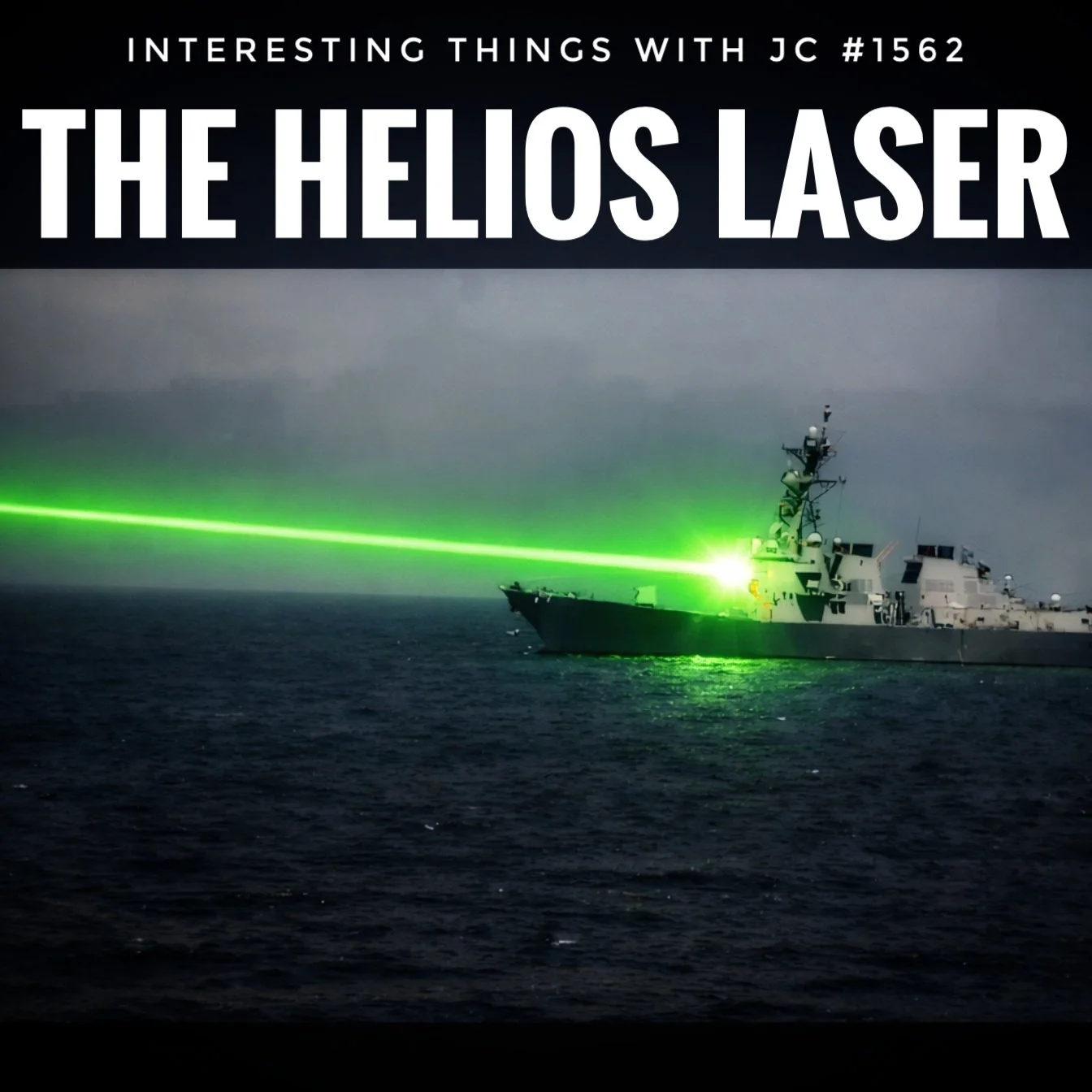
1562: "The Helios Laser"
Interesting Things with JC #1562: "The Helios Laser" – A $4 million missile… or a beam of light. On the deck of USS Preble, the U.S. Navy flipped the cost of war with 60 kilowatts of focused energy traveling at the speed of light. For the first time, naval firepower depends on power generation, not ammunition.
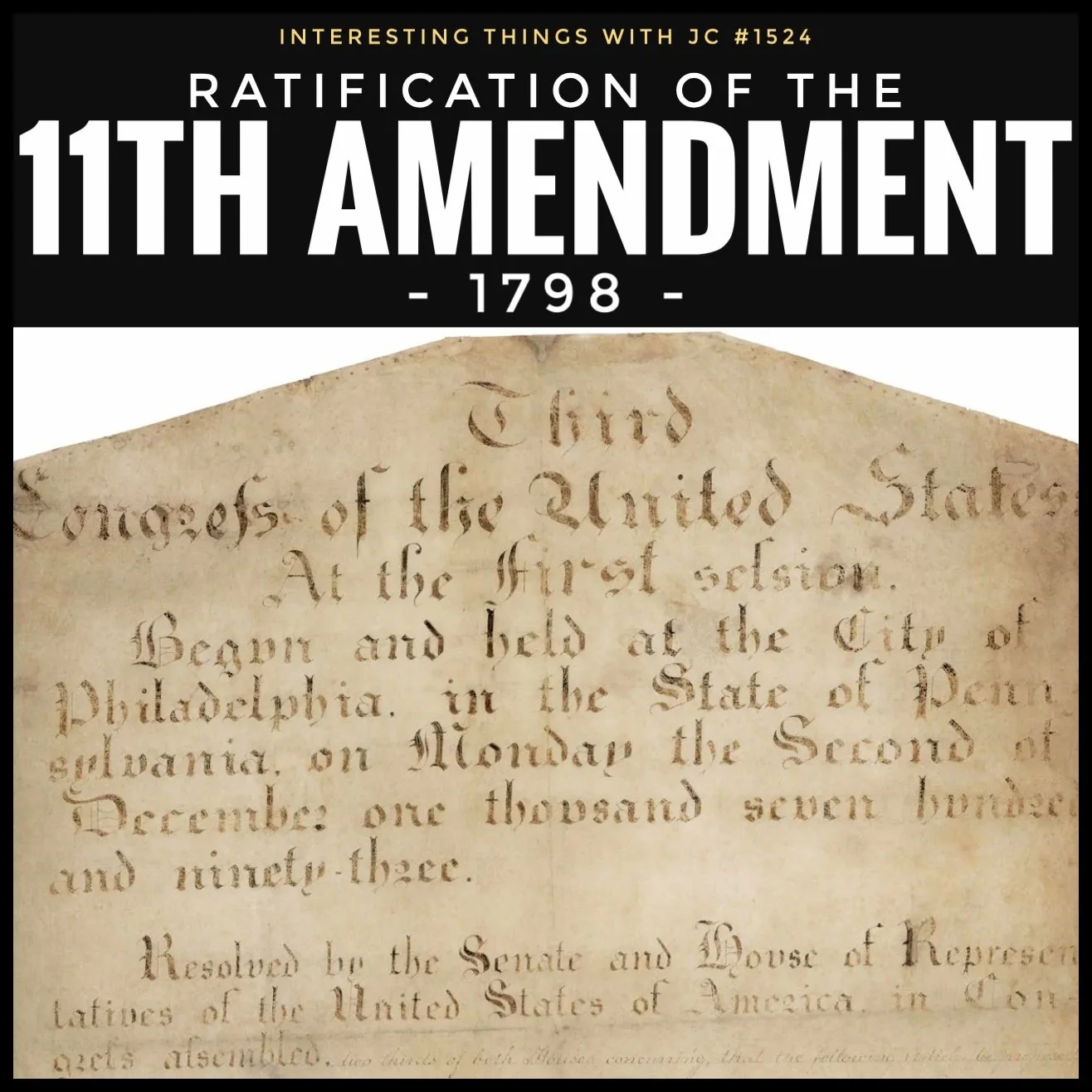
1524: "Ratification of the 11th Amendment (1798)"
Interesting Things with JC #1524: "Ratification of the 11th Amendment (1798)" – A guy from South Carolina sued Georgia and nearly blew up the Constitution. What came next? A fast-track amendment that pulled federal courts back in line.
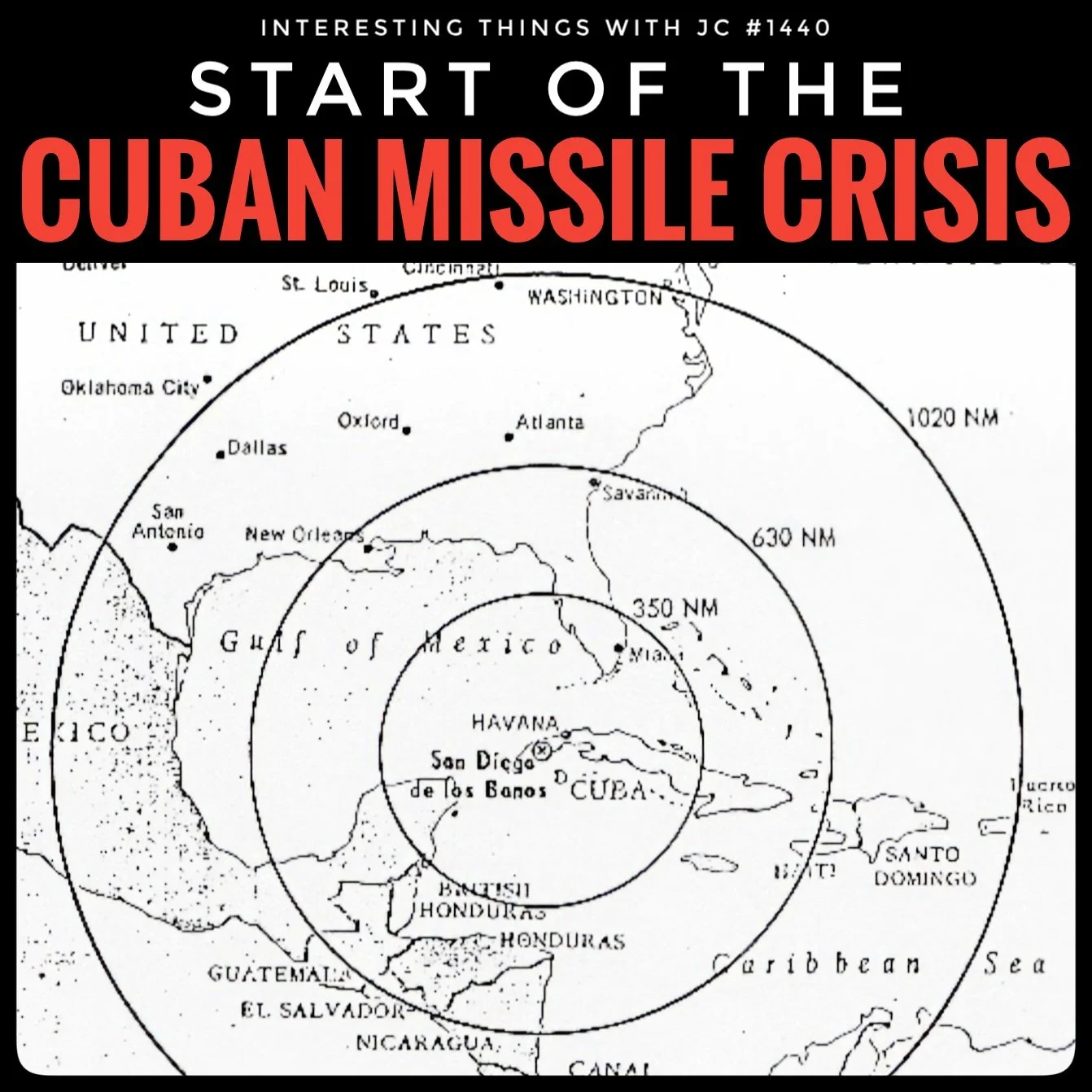
1440: “Start of the Cuban Missile Crisis”
Interesting Things with JC #1440: “Start of the Cuban Missile Crisis” – A single flight over Cuba revealed the weapons that nearly ended the world. Thirteen days, two superpowers, one narrow escape from nuclear war. How reason and restraint kept humanity alive.

1208: "The Eye on the Back of the US Dollar"
Interesting Things with JC #1208: "The Eye on the Back of the US Dollar" – The All-Seeing Eye has sparked endless speculation, but what’s the real story? Was it placed on the dollar by secret societies, or does its meaning go much deeper? This episode unravels the true origins of one of America’s most iconic symbols.

1156: "Erik the Red - A Legacy of Exploration and Connection"
Interesting Things with JC #1156: "Erik the Red - A Legacy of Exploration and Connection" - Turning exile into conquest, while founding Greenland, and forging a path for Norse exploration.

1021: "Faking or Forcing Joy"
Interesting Things with JC #1021: "Faking or Forcing Joy" - Explore the psychological and social effects of faking joy and why it's important to embrace authenticity in your emotions.

1000: "Happiness"
In "Happiness," we discuss how daily practices like friendships, self-care, and journaling lead to personal fulfillment and align with core values for increased satisfaction and resilience.

935: "David Bohm and The Holographic Universe"
Interesting Things with JC #935: "David Bohm and The Holographic Universe" - Delve into the mind of physicist David Bohm and his groundbreaking theories about reality and interconnectedness. Bohm's exploration challenges conventional notions of physics, intertwining with Eastern philosophy to redefine our understanding of existence.
828: "Homeless Veterans in the United States"
Interesting Things with JC #828: "Homeless Veterans in the United States" sheds light on the alarming reality of 67,495 veterans facing homelessness, comprising 10.6% of the total homeless population. Veterans, twice as likely to become homeless, grapple with post-service challenges, highlighting the need for comprehensive support.

710: "Trinity Site"
Interesting Things with JC #710: "Trinity Site" - Delve into the historical significance of the Trinity Site, where the world's first atomic bomb was detonated, shaping the course of history. Explore the remote location, witness the mushroom cloud, and reflect on the birth of the Atomic Age.
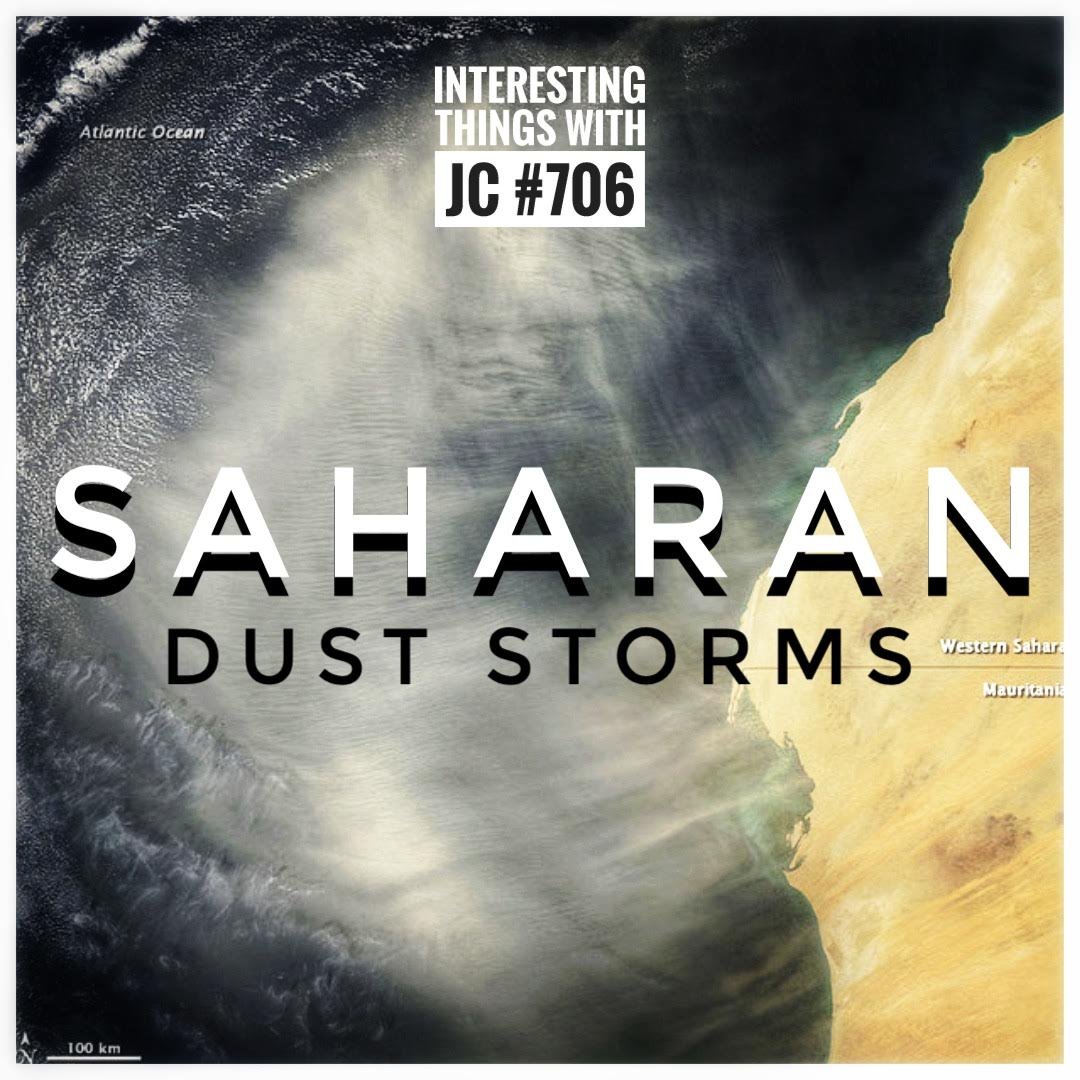
706: "Saharan Dust Storms"
Interesting Things with JC #706: "Saharan Dust Storms" - Discover the incredible journey of Saharan dust as it travels thousands of kilometers, impacting air quality worldwide. Learn about the health effects, climate impact, and fascinating facts surrounding these dust storms.

693: "Harmful Algae Blooms"
Interesting Things with JC #693: "Harmful Algae Blooms" - Learn about harmful algal blooms and their impact on our waters, health, and environment. Discover how these excessive algae growths can harm aquatic life, contaminate drinking water, and why it's important to avoid contact with them.

643: "Completion of the Transcontinental Railroad"
Interesting Things with JC #643: "Completion of the Transcontinental Railroad" - Did you know the completion of the Transcontinental Railroad in 1869 revolutionized transportation and commerce in the US, connecting the East and West coasts for the first time? Built by over 20,000 workers, including Chinese immigrants, it reduced travel time from months to days.

637: "Cinco de Mayo"
Interesting Things with JC #637: "Cinco de Mayo" is a holiday that commemorates the Mexican army's victory over the French at the Battle of Puebla in 1862.
It celebrates Mexican culture and heritage with traditional food, music, and dancing, and is a reminder of Mexico's rich history, resilience, and ongoing struggle for independence and freedom.

547: "The NASDAQ"
Interesting Things with JC #547: "The NASDAQ" - Invest in innovation! Discover the story of NASDAQ's 1971 debut as the first computerized stock exchange for fast & efficient trading.

433: "Hand Talk"
Interesting Things with JC #433: The name "Plains Indian Sign Language" (PISL), also known as "Hand Talk," "Plains Sign Talk," and "First Nation Sign Language," refers to a trading language used by several Plains Nations in what is now central Canada, the central and western United States, and northern Mexico.

419: "PBS - October 5th, 1970"
Interesting Things with JC #419: The Public Broadcasting Service (PBS) began broadcasting on October 5, 1970, when National Educational Television (NET) was renamed PBS.

323: "The Statue of Liberty"
Interesting things with JC #323: "The Statue of Liberty" - On July 4, 1884, a ceremony in Paris saw the Statue of Liberty given to Levi Morton, the American ambassador to France who would later become vice president. The finished statue, which stood 151 feet 1 inch (46 meters) tall and weighed 225 tons, was delivered to New York City in pieces in 1885. On October 28, 1886, President Grover Cleveland dedicated the statue, fully assembled on Bedloe's Island in New York harbor.

321: "Steens Mountain"
Interesting Things with JC #321: "Steens Mountain" Wilderness has grown to more than 170,200 acres since it was proclaimed by the US Congress in 2000. The Bureau of Land Management is in charge of overseeing all of this wilderness, which is situated in Oregon. It’s the largest physical feature in the northern part of the Great Basin.

241: "The Flying Scotsman"
Interesting Things with JC #241: “The Flying Scotsman” - Mr. Alan Pegler brought the "Flying Scotsman" with a train of three British passenger cars, to the United States in 1968, traveling from Coast to Coast as an exhibition to promote global British exports. The details of the trip would forever change Pegler, as the fate of the train was unknown at the time!