

A Short Story Podcast Series

Podcast Radio - Podverse - Headliner - Amazon - Apple - Audacy - Audible - Castbox - Deezer - fyyd - GoodPods - iHeartRadio - Instagram - JioSaavn - Listen Notes - Pandora - PlayerFM - PocketCasts - Podcast Republic - Podchaser - Spotify - Stitcher - Youtube
Link to Podcast Library or Scroll for Daily Feed
-
Interesting Things with JC is free to use for teaching and learning under fair use. Educators, homeschooling parents, librarians, and lifelong learners have broad rights to use the episodes and curriculum in any instructional setting. One exception applies to Episode #509: “Harry Chapin and Jim Connors”, which is not covered under this open educational permission.
Full curriculum support begins at Episode #1235: “Three Turns to Freedom”. Any earlier episode without curriculum can be prioritized by request. Educators may contact JimConnors LLC directly, and a matching curriculum module will be created and added to the site.
Teachers and homeschooling families are welcome to use, play, share, print, and adapt all eligible episodes and curriculum materials for lesson planning, instruction, student assignments, LMS uploads, and any other direct educational activity. No special approval is required for everyday classroom use. Crediting the show is appreciated when possible.
This permission does not extend to commercial activity. The episodes and curriculum may not be repackaged, resold, redistributed as a standalone program, or presented as original work by any third party. Any commercial or branded use requires prior written consent from JimConnors LLC. Episode #509: “Harry Chapin and Jim Connors” follows its own restrictions and is excluded from open educational use.
Educators may freely use the content in classrooms, homeschools, co-ops, tutoring programs, library settings, and adult education. They may revise or adapt curriculum pages, print transcripts, share episode links, or integrate materials into their lessons as needed. What is not allowed is turning the work into a paid course, selling derivatives, posting content under another brand, or redistributing the series as a separate product.
Summary:
Free for education.
Not for resale.
Not for commercial repackaging.
Episode #1235: “Three Turns to Freedom” and onward includes full curriculum.
Older episodes can receive curriculum by request.
Episode #509: “Harry Chapin and Jim Connors” is excluded.
All rights reserved © JimConnors LLC. -
Interesting Things with JC is available on the Podcast Radio format in the United Kingdom and the United States. Listeners can tune in on the radio in select cities or stream the station online from anywhere.
United Kingdom – Podcast Radio (UK)
Podcast Radio is a 24-hour all-podcast station based in London. It broadcasts on DAB+ digital radio across London and several other supported UK regions, with full worldwide access through its online stream.
Interesting Things with JC is included in Podcast Radio’s curated programming lineup.
Listeners in the United Kingdom can hear the station on DAB+ receivers in covered areas, through the Podcast Radio website, or through the station’s online and mobile streaming platforms.
United States – Podcast Radio US
In the United States, Interesting Things with JC airs as part of Podcast Radio US across four regional markets. The format is carried on HD Radio channels and FM translators.
Detroit, Michigan: WCSX 94.7 HD2 and 93.5 FM
Tampa Bay, Florida: 1010 WJBR AM
Charlotte, North Carolina: 94.7 FM and WSOC HD3
Fort Myers and Naples, Florida: WXKB HD2, 96.5 FM, 101.5 FM, and 105.1 FMNationwide listening is available through the station’s website at PodcastRadioUS.com.
Streaming Access
Podcast Radio UK and Podcast Radio US both offer live streaming through their official websites and mobile platforms, allowing listeners worldwide to hear Interesting Things with JC as part of the network’s curated programming.
The show is also available across major podcast and audio platforms, including Podcast Radio, Podverse, Headliner, Amazon, Apple, Audacy, Audible, Castbox, Deezer, fyyd, GoodPods, iHeartRadio, JioSaavn, Listen Notes, Pandora, PlayerFM, PocketCasts, Podcast Republic, Podchaser, Spotify, Stitcher, and YouTube.
In addition to audio platforms, listeners can follow and stream content on social media through Facebook, Instagram, X (Twitter), TikTok, and YouTube.
-
Start class with a short, clear story your students can follow from the first sentence. Play an episode of Interesting Things with JC and use the free curriculum to guide a full lesson with questions, activities, and applied learning.
Every episode from #1235 forward includes a modular micro lesson designed for a 30 to 45 minute class period. At the bottom of each episode page, you will find expandable sections that organize all curriculum materials for teachers, parents, and homeschool families.
Each lesson includes:
Lesson overview with title, grade band, subject area, and learning objectives
Key vocabulary with phonetic spelling and plain language definitions
Core story content created through the Precise Storytelling Framework
Full podcast transcript
Student worksheet with comprehension and writing activities
Teacher guide with pacing notes, strategies, and discussion tools
Quiz or quick check assessment with a scoring rubric
Standards alignment across multiple national and international frameworks
ADA compliant alt text for all instructional media
Links to approved primary sources used for fact checking
Guidance for homeschool adaptation and flexible scheduling
All curriculum materials are created through the Narrative Intelligence System to ensure accuracy, accessibility, and age-appropriate delivery. Lessons stay free of ideological frameworks and focus on academic content only.
Standards Alignment
Interesting Things with JC aligns each micro lesson with the following approved educational standards:
United States National Standards
Next Generation Science Standards (NGSS)
Common Core State Standards (CCSS) in English Language Arts and Mathematics
College, Career, and Civic Life Framework for Social Studies (C3 Framework)
International Society for Technology in Education Standards (ISTE Standards)
National Core Arts Standards (NCAS)
Career and Technical Education Career Clusters (CTE Career Clusters)
Association of College and Research Libraries Framework for Information Literacy (ACRL Framework)
Bloom’s Taxonomy for Cognitive Learning Objectives
Universal Design for Learning Guidelines (UDL Guidelines)
Additional United States Alignment Areas
Alignment to state and provincial academic standards when content applies
Media and Information Literacy standards
Social Emotional Learning and 21st Century Skills frameworks
Financial Literacy and Employability Skills standards
English as a Second Language and World Language vocabulary support when applicable
International Academic Equivalents (Content-Based Alignment Only)
United Kingdom National Curriculum, Key Stages 3 to 5
AQA, OCR, and Edexcel Examination Board Specifications
International Baccalaureate Primary Years Programme, Middle Years Programme, and Diploma Programme (IB PYP, MYP, DP)
Cambridge International General Certificate of Secondary Education and Advanced Subsidiary/Advanced Level (Cambridge IGCSE and AS/A Level)
Access, Use, and OER Licensing
All lessons are published as Open Educational Resources and may be used, printed, or shared for teaching and learning in classrooms, homeschools, and tutoring environments. Materials are provided for educational use under fair use and may not be resold or distributed commercially.
Episodes from #1235 forward include complete curriculum materials. If you find an older episode without a micro lesson, reach out and it will be moved to the front of the build queue. Starting with Episode #1307, each MP3 page in the RSS feed includes open text at the bottom of the page for quick access to transcripts and curriculum notes.
Teacher and homeschool feedback is always welcome to help improve clarity and layout.

192 - Interesting Things: Color Perception
It's the surface of an object that reflects some colors and absorbs all the others. We perceive only the reflected colors. Perceived color depends on how an object absorbs and reflects wavelengths. Human beings can only see a small portion of the electromagnetic spectrum, from about 400 nm to 700 nm, but it’s enough to allow us to see millions of colors!
191 - Interesting Things: Neocortex - The Robot Brain of Strawberry Farming
It's a sophisticated platform "brain", providing robots with real-time, agile, reactive control. When combined with robotics, the system provides 3D plant recognition and grasping, enabling robots to properly pick and pack sorted strawberry plants.

184: “Whale Heartbeat”
Interesting Things with JC #184: "Blue Whale Heartbeat" - A 2019 study unveiled surprising facts about the heartbeat of the blue whale, Earth's largest animal.

183 - Interesting Things: Nicolaus Copernicus
Nicolaus Copernicus was a 16th century Renaissance-era world famous Polish astronomer, who proposed that the Sun is the center of the solar system and that the planets circle the Sun. Copernicus also noted that Earth turns once daily on its own axis and that very slow long-term changes in the direction of this axis account for the precession of the equinoxes.

180 Interesting Things - 100,000 Beats
Depending on your beats per minute, your heart beats about 100,000 to 115,000 times a day. There are 60,000 miles of blood vessels in your body. That's enough to go around the world twice! A normal heart pumps about 4 tablespoons of blood with each beat.
176 Interesting Things - PEANUTS...are not Nuts?!
The peanut is a member of the bean or legume family and not a nut, studies suggest that people who eat peanuts or tree nuts frequently have lower rates of heart disease compared with people who don't eat them. While almonds grow on trees, they're actually not a nut either... They're a seed found inside the almond fruit!... But that's an interesting story for another time.
Please visit peanut-institute.com for more information on this amazing bean!!!

175 Interesting Things - Lobster Blood Is Blue
Lobsters have blue blood. Due to the presence of copper in the Hymocyanins, they give the color of the lobster blood bluish color. Invertebrates, like snails and spiders, also have blue blood due to hemocyanin. Did you know lobster blood is critical in emerging medical research?
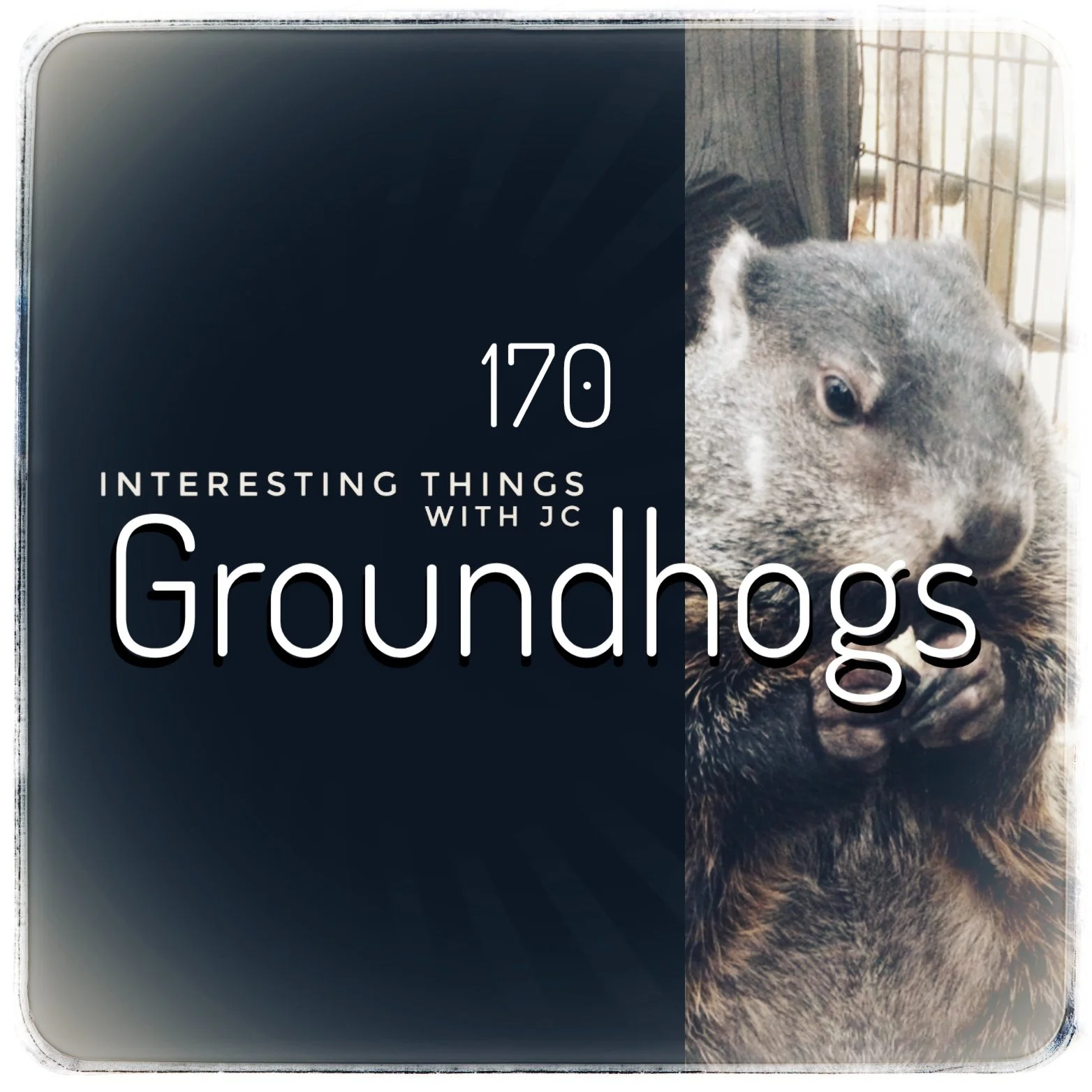
170 Interesting Things - Groundhogs
Groundhogs are the largest species in the squirrel family. Other names for groundhogs include woodchucks, whistle-pigs and land-beavers. On average groundhogs are 20" long with 6-7" tail, and weigh about 6-12 lbs. Their average lifespan in the Wild is 3-6 years.
Let's learn more!

168 Interesting Things - STS-107 Space Shuttle Columbia
STS-107 was the disastrous 113th flight of the Space Shuttle program, and the 28th and final flight of Space Shuttle Columbia. The mission launched from Kennedy Space Center in Florida on 16 January 2003 and during its 15 days, 22 hours, 20 minutes, 32 seconds in orbit.
On February 1st, Columbia began re-entry as planned, but the heat shield was compromised due to damage sustained during the initial ascent. The heat of re-entry was free to spread into the damaged portion of the orbiter, ultimately causing its disintegration and the loss of all on board.
Columbia was delivered to the Kennedy Space Center in March 1979. Two years later, April 12, 1981, it lifted off from the Kennedy Space Center to become the first shuttle to fly in orbit.
The crew of its final voyage were 3 Mission Specialists; David Brown, Kalpana Chawla, Laurel Clark, a Payload Specialist and Commander; Ilan Ramon and Michael Anderson, Shuttle Commander; Rick Husband, and Shuttle Pilot; William McCool.
Arlington National Cemetery is the home of a Columbia memorial which is dated and has an outline of a Shuttle.

165 Interesting Things - Falling Iguanas of South Florida
When temperatures dip into the 40s and 30s green iguanas in south Florida fall from the trees.. It's become such a concern that there are falling iguana warnings on the news! Iguanas can grow up to 6ft and 26lbs, so this isn't a small concern!! (3min audio)

163 Interesting Things - Pine Cones
Pine cones can stay on tree for more than 10 years before dropping to the ground. We can eat approximately 20 types of pine nuts. They are said to have a buttery taste. They are soft, white seeds found inside pine cones. Pine nuts aren’t usually eaten raw. They are toasted to make them crunchy. Only 20 varieties of pine tree worldwide produce cones with large enough pine nuts for harvesting.

162 Interesting Things - Cat Toes
Cats have fewer toes on their back paws. They have five toes on the front, their foreleg. One of these toes is the dewclaw which sits higher up on the foot and does not actually come into contact with the ground. Some cats can have more toes than you can count!

161 Interesting Things - Less Gravity in Canada
Hudson Bay has less gravity as compared to the rest of the world. You will officially weigh less than you would anywhere else in the world.

159 Interesting Things - The Ozarks and the Blue Man
The Ozarks are an incredible region of the United States, popularized by tourism and the Netflix series. It's home to a rich history as well as vast and unique population, with interesting local folklore. One such story is that of the Blue Man who is believed to have made this region home.

158 Interesting Things - S O U N D
The speed and the physical characteristics of sound vary with the change in its ambient conditions. Our ears are capable of hearing sound waves which lie in the range between 20 and 20,000 vibrations per second. Sound waves travel through solid matter, such as iron, stone, and steel, must faster than it moves through the air. Let's find out more!
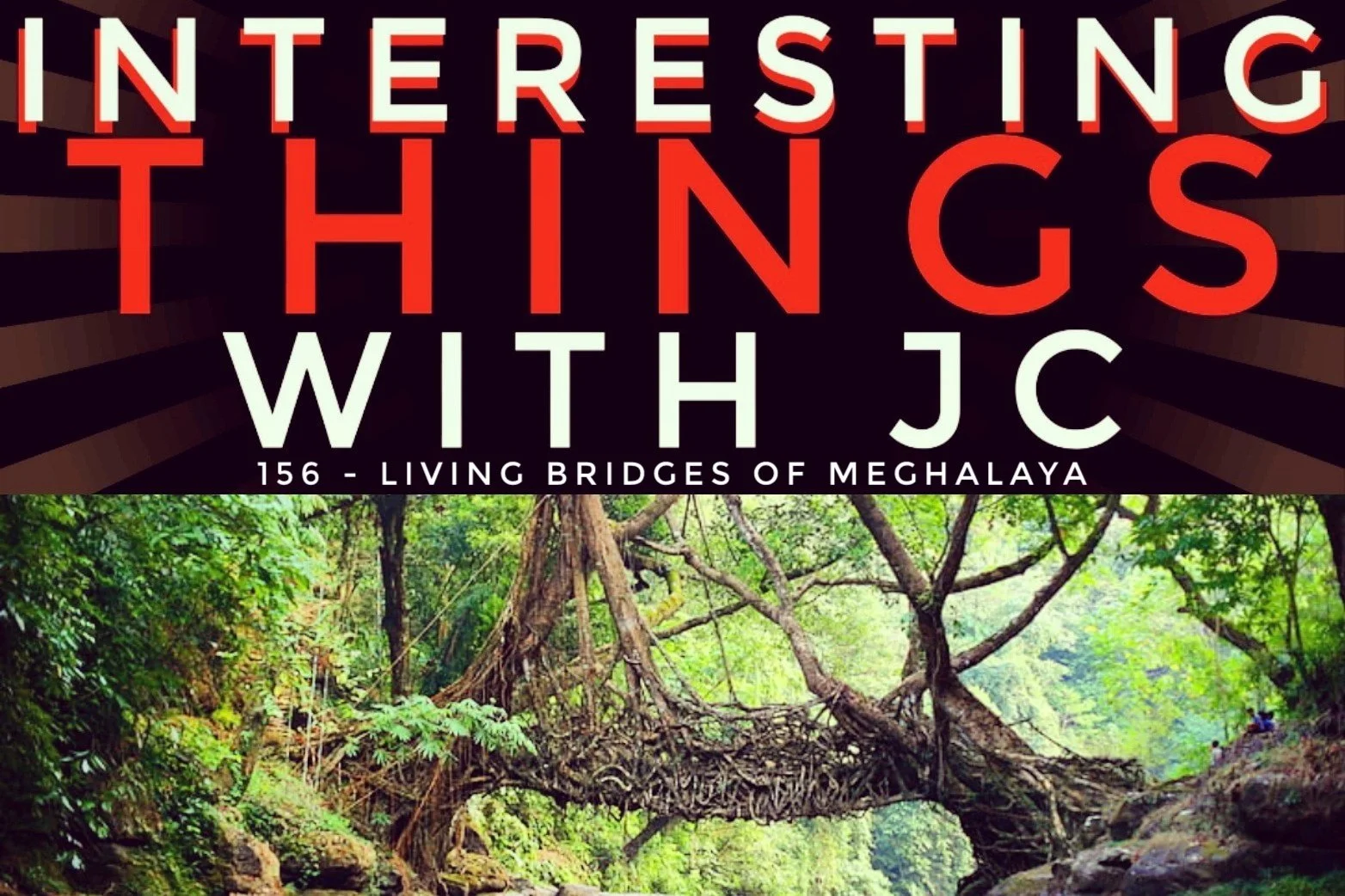
156 Interesting Things - Living Bridges of Meghalaya
The living root bridges of Meghalaya are a wonder of the world. The roots of rubber trees are put into hollow betel nut plant trunks and positioned to grow over rivers. Once to the other side, the roots are fortified and a natural bridge continues to grow!

153 Interesting Things - SnowFlakes
On average it takes about an hour for snow to leave its cloud and finally reach the ground. There are stories of giant snowflakes falling all over the globe, measuring anywhere from two to 15 inches across. (03:45)

151 Interesting Things - Sub Zero Football
When it's so cold your shadow freezes to the pavement, it might be a little bit tougher to play a game of football. Did you know that when temperatures drop below 10 degrees F, there is a 52% chance that there will be turnovers? Let's dissect football and the risk of sub zero temperatures!

150 Interesting Things - Hazel Eyes
Hazel is one of the rarest eye colors, Only 5% of people have Hazel Eyes. They're more frequent in people from Brazil, Europe, North Africa and Spain. People with blue eyes make up 8-10% of the world's population, while brown eyes account for 79%. Hazel is actually not a true color by itself!

148 Interesting Things - Brain Coral
The cerebral-looking organisms known as brain corals do not have brains, but they can grow six feet tall and live for up to 1000years. Thank you to tiktok creator and Influencer Marmaid808 for today's topic!