

A Short Story Podcast Series

Amazon - Apple - Audible - Castbox - Deezer - fyyd - GoodPods - Headliner - iHeartRadio - Instagram - JioSaavn - Listen Notes - Pandora - PlayerFM - Podcast Radio - Podcast Republic - Podchaser - Podverse - PocketCasts - Spotify - Stitcher - Youtube
Link to Podcast Library - or - Scroll for Daily Feed
-
Open Educational Use
Interesting Things with JC is made available for anyone to use in the service of education. Teachers, students, parents, homeschool families, librarians, tutors, and lifelong learners are free to download, copy, share, print, adapt, and reuse the episodes and curriculum materials in any way that helps people learn.
If it supports teaching, learning, or helping others understand the world better, it is allowed.
One exception applies: Episode #509, “Harry Chapin and Jim Connors,” is not included under this open educational permission.
Curriculum Availability
Full curriculum support begins with Episode #1235: “Three Turns to Freedom.” Earlier episodes without curriculum may be prioritized by request. Educators may contact JimConnors LLC, and a matching curriculum module will be created and added.
What You Are Free to Do
You may:
Download and store the audio, transcripts, and curriculum
Copy and share materials with students, families, or learning groups
Print, remix, edit, and adapt lessons for your own educational use
Upload content to learning management systems (LMS), class websites, or internal school platforms
Integrate the material into lessons, assignments, tutoring, homeschool programs, libraries, and community education
No permission is required. Credit to Interesting Things with JC is appreciated when possible, but the priority is helping people learn.
What Is Not Allowed
This openness is for education, not commercial use. The content may not be:
Sold, licensed, or packaged as a product or subscription
Rebranded or presented as original third-party work
Used as part of a paid course, monetized program, or commercial platform
Redistributed as a standalone product for profit
Any commercial, branded, or revenue-generating use requires prior written permission from JimConnors LLC. Episode #509 remains excluded from open educational use.
Rights and Intent
All content remains the intellectual property of JimConnors LLC. The intent is simple:
Use it freely to educate, teach, explain, and help people.
Just do not sell it, repackage it for profit, or claim it as your own.
Summary:
Use it.
Download it.
Copy it.
Share it.
Teach with it.
Adapt it for students, kids, classrooms, homeschools, libraries, and lifelong learning.
Click on the curriculum frame, copy the full merged curriculum standards, use them in your own GPT, iterate and improve them, and share back!
Just don’t sell it, rebrand it, or turn it into a product. Episode #509 is excluded. All rights reserved © JimConnors LLC.
-
Interesting Things with JC has previously been included in curated podcast programming on Podcast Radio formats in both the United Kingdom and the United States. Podcast Radio was launched as a 24-hour broadcast concept designed to showcase podcasts on digital radio and online streaming platforms.
In the United States, the Podcast Radio US brand continues to maintain an online presence and app availability, and has been associated with radio simulcasts on licensed AM and FM signals in selected markets, though live broadcast availability may vary.
Streaming Access
Podcast Radio US and related branded streams provide online listening through their websites and mobile applications, allowing audiences worldwide to hear selected podcast programming.On-Demand Platforms
Interesting Things with JC is available across major podcast directories, including Amazon Music, Apple Podcasts, Audacy, Audible, Castbox, Deezer, fyyd, GoodPods, iHeartRadio, JioSaavn, Listen Notes, Pandora, PlayerFM, PocketCasts, Podcast Republic, Podchaser, Podverse, Spotify, Stitcher, and YouTube.The series is also accessible through podcast apps that index the Apple Podcasts catalog and the open podcast directory ecosystem, including TuneIn, Podcast Addict, Overcast, Castro, Podcast Index–based apps, Podbean, iVoox, Podtail, Podyssey, Podcloud, Bullhorn, AudioBoom directories, and Breaker (legacy).
Social & Video Platforms
Listeners can also follow and view content on Facebook, Instagram, X (Twitter), TikTok, and YouTube. -
Classroom Use
Start class with a short, clear story students can follow from the first sentence. Play an episode of Interesting Things with JC and use the accompanying free curriculum to guide a complete lesson with questions, activities, applied reasoning, and independent analysis.
Every episode from #1235 forward contains a modular micro-lesson engineered for 30 to 90 minute instructional blocks, adaptable to secondary classrooms, international schools, homeschools, tutoring programs, and lifelong learning environments.
At the bottom of each episode page, expandable sections organize all instructional assets in a structured format for educators, parents, and independent learners.
Instructional Architecture of Each Episode
Each episode is designed as a self-contained instructional unit, integrating narrative, academic standards, assessment models, and accessibility requirements into a single deliverable.
Core Instructional Components
Lesson overview with instructional title, grade band, subject classification, and learning objectives
Vocabulary architecture with phonetic spelling, discipline-specific terminology, and plain-language definitions
Primary narrative content constructed through the Precise Storytelling Framework for coherence, sequencing, and conceptual layering
Full verbatim transcript for reading analysis, accessibility, and text-based instruction
Student learning activities including comprehension tasks, analytical writing, synthesis prompts, and evidence-based reasoning exercises
Teacher implementation guide with pacing models, instructional strategies, differentiation guidance, and discussion structures
Assessment instruments including quizzes, performance tasks, formative checks, and rubric-aligned evaluation tools
Standards crosswalks mapping content and skills across U.S., UK, and international academic frameworks
ADA-compliant instructional media with alt text, accessibility tagging, and inclusive design
Primary-source documentation linking directly to verified historical, scientific, legal, and academic references
Homeschool and modular scheduling guidance for flexible implementation
All materials are developed through the Narrative Intelligence System, ensuring factual integrity, instructional coherence, accessibility, and age-appropriate presentation. Lessons are non-ideological and restricted to academic content.
Unified Curriculum Integration Model
Every episode is constructed using a multi-framework integration model, in which:
Narrative structure
Disciplinary content
Cognitive skill development
Assessment design
Accessibility standards
Cross-curricular competencies
are deliberately merged into a single instructional object, rather than appended as afterthoughts. This means each episode simultaneously functions as:
A structured story
A content lesson
A literacy and reasoning exercise
A research and source-evaluation activity
An assessment artifact
A standards-aligned instructional unit
United States Curriculum Architecture (Full Integration)
National Frameworks Embedded
Next Generation Science Standards (NGSS)
Scientific practices, data analysis, modeling, systems thinking, evidence evaluation
Common Core State Standards (CCSS) – ELA & Mathematics
Close reading, argumentative writing, research synthesis, quantitative reasoning
College, Career, and Civic Life (C3) Framework
Disciplinary inquiry, historical sourcing, civic knowledge, geographic reasoning
International Society for Technology in Education (ISTE)
Digital citizenship, computational thinking, information fluency
National Core Arts Standards (NCAS)
Interpretation, critique, interdisciplinary expression, creative analysis
Career and Technical Education (CTE) Career Clusters
Applied technical knowledge, workplace reasoning, real-world problem solving
Association of College and Research Libraries (ACRL)
Research literacy, source evaluation, information ethics, academic inquiry
Bloom’s Taxonomy
Cognitive progression from comprehension to analysis, synthesis, and evaluation
Universal Design for Learning (UDL)
Multiple means of representation, engagement, and expression for inclusive instruction
Cross-Disciplinary U.S. Competencies Embedded in Every Episode
Academic literacy (reading, writing, argumentation)
Quantitative literacy and data reasoning
Media and information literacy
Digital and computational literacy
Civic knowledge and constitutional literacy (knowledge-based, non-ideological)
Research methodology and evidence verification
Critical thinking, analytical writing, and structured problem solving
Additional U.S. Integration Layers
State-level academic standards where applicable
Financial literacy and employability skills
Social-emotional competencies as academic behaviors (persistence, self-regulation, metacognition)
English language development and world-language vocabulary support
United Kingdom Curriculum Architecture (Full Integration)
National Curriculum Structure
Key Stage 3 (ages 11–14)
Key Stage 4 (GCSE)
Key Stage 5 (A-Level / Sixth Form)
Disciplinary domains mapped across episodes:
English language and literature (analysis, argument, rhetorical structure)
Mathematics (numeracy, quantitative interpretation)
Science (evidence, explanation, evaluation)
History and Geography (source criticism, contextual reasoning)
Citizenship (knowledge-based civic education)
Computing and digital literacy
Arts and humanities integration
Examination Frameworks
AQA
OCR
Pearson Edexcel
Assessment alignment includes:
Command terms and performance descriptors
Extended analytical writing
Evidence-based responses
Cross-disciplinary synthesis
International Academic Programmes Integrated
International Baccalaureate (IB)
Primary Years Programme (PYP)
Middle Years Programme (MYP)
Diploma Programme (DP)
Cambridge Assessment International Education
Cambridge IGCSE
Cambridge AS & A Level
Shared instructional architecture:
Inquiry-based learning
Conceptual understanding
Global context framing
Criterion-referenced assessment
Research projects and analytical writing
Cross-Curricular Frameworks Embedded by Design
Oracy across the curriculum
Literacy across disciplines
Numeracy across subjects
Digital and computational literacy
Citizenship and civic knowledge (non-ideological)
Research methodology and information literacy
Interdisciplinary synthesis
Global Academic Equivalency Structures
European Qualifications Framework (EQF) alignment for secondary and pre-university levels
OECD competency domains (literacy, numeracy, analytical reasoning, problem solving)
International standards-referenced assessment models used across secondary education systems
Pedagogical & Assessment Architecture
Knowledge-to-application curriculum sequencing
Evidence-based reasoning and academic writing
Primary-source analysis and citation practices
Formative, summative, and performance-based assessment models
Rubric-aligned evaluation and feedback structures
Universal accessibility and inclusive instructional design
Access, Use, and OER Licensing
All instructional materials are released as Open Educational Resources (OER) and may be used, printed, adapted, or shared for teaching in classrooms, homeschools, tutoring programs, and independent study environments. Materials are provided for educational use under fair use and may not be resold or redistributed commercially.
Episodes from #1235 forward include complete curriculum packages. Older episodes without micro-lessons can be prioritized for conversion. Beginning with Episode #1307, each MP3 page in the RSS feed includes open instructional text for direct access to transcripts and curriculum materials.
Educator and homeschool feedback is actively incorporated to refine instructional clarity, alignment, and usability. Please do not hesitate to reach out - or iterate upon these instructions to improve the framework. Please share open iterations back for continual improvement.

224: "The Sunken City of San Pedro"
The Sunken City is the name given to the site of a natural landslide which occurred in the Point Fermin area of the San Pedro neighborhood of Los Angeles. A slump in the land caused a huge portion of the city and beachside homes to slide into the ocean.

223: "The Santa Ana Zoo"
The Santa Ana Zoo opened in 1952 and has remained a beloved local destination for over 70 years. In 1949 Joseph Edward Prentice donated 16 acres of land for Prentice Park to the City of Santa Ana. He stipulated in his agreement that at least 50 monkeys, his favorite animal, be kept in the park at all times!

222: "The Château Laurier"
Interesting Things with JC #222: "The Château Laurier" is said to be haunted by the ghost of Charles Melville Hays, the president of the company that built the hotel. Hays died on the Titanic, 12 days before the hotel's opening. The Châteauesque rooflines of several federal government buildings in Ottawa, Canada were inspired by the commanding presence of this hotel.

221: "The Catford Cat"
Interesting Things with JC #221: "The Catford Cat" is iconic to the south east London suburb of Catford. You know you’ve entered Catford once you catch sight of the gigantic fibreglass feline. It is Catford’s landmark, perched atop the crowds in the center of town.

215: “Giant Tortoise of Seychelles”
Interesting Things with JC #215: “Giant Tortoise of Seychelles” - Historically, giant tortoises were found on many of the western Indian Ocean islands, as well as Madagascar, and the fossil record indicates giant tortoises once occurred on every continent and many islands with the exception of Australia and Antarctica.

214:”Seychelles”
Seychelles is located in the Indian Ocean off the east coast of Africa, it's an archipelago consisting of 115 islands and is neighbour to tourist destinations like Mauritius and Maldives. The beaches of the Seychelles are among the most beautiful beaches in the world, with turquoise blue water, powder-soft sand, and fascinating granite rocks.

213 - Interesting Things: 4 Leaf Clovers
The four leaf clover is one of the most common good luck symbols of the Western world. An independent study carried out by Swiss researchers looked at 5.7 million clovers and found that the likelihood of finding one four-leaf clover was one in 5,076.

210 - Interesting Things: Charles Loof and The Crescent Park Carousel
Charles Looff was a German master carver and builder of hand-carved carousels and amusement rides, who immigrated to the United States of America in 1870. During his lifetime, he built over 40 carousels, several amusements parks, numerous roller coasters and Ferris wheels, and built California's famous Santa Monica Pier. The Crescent Park Carousel was his crown jewel and is the largest and most elaborate carousel he ever constructed.

209 - Interesting Things: Daylight Savings & William Willet
Countries to the north and south of the tropics, see sunrise much earlier and sunsets much later in summer, than these regions do in winter. On most farms, this isn't a problem. People and animals just shift their habits as the hours of daylight shift. In most cities, the amount of energy used to make artificial light and heat becomes costly, if they don't shift their routines. This is where William Willett, the godfather of Daylight Savings comes in.

208 - Interesting Things: The Harp of Ireland
Ireland has a unique, and beautiful national symbol and it’s the harp. It is the only country in the world that uses a musical instrument as its symbol. The traditional instrument is featured on Irish coins, the Presidential Seal, the Irish passport and the Irish coat of arms. Scholars have found that the Irish harp’s popularity with the Irish people dates back to the 1500’s. Ireland’s national emblem is actually based on the Brian Boru Harp. Irish legend says Brian Boru played the harp the night before the Battle of Clontarf.

207 - Interesting Things: Restaurant Chiggeri
If you visit the Restaurant Chiggeri in the city of Luxembourg, you can take your pick from more than 2,200 different wines. A professional connoisseur is on-site to guide you with what food is best paired with each wine. The majority of the wines on the menu having been there for more than six months. The wine menu is said to resemble a telephone book!

206: “Corn Starch”
Interesting Things with JC #206: "Corn Starch" - Dive into the story behind corn starch, a versatile product invented in 1840. From food to cosmetics, discover its many uses!

205 - Interesting Things: Hungry Tree of Dublin
The Hungry Tree is located on the grounds of the King's Inns in Dublin Ireland. Its believed to be between 80 and 100 years old. Its a London Plane tree that’s currently in the process of devouring a cast iron bench! It cannot be stopped, the Hungry Tree does what it wants.

204 - Interesting Things: Battle of Britain Bunker
The Battle of Britain Bunker Exhibition and Visitor Centre is a 2,000 square metre complex on two levels. Its an underground operations room at RAF Uxbridge, formerly used by No. 11 Group Fighter Command during the Second World War. Fighter aircraft operations were controlled from there throughout the War but most notably during the Battle of Britain and on D-Day. The exhibition provides insight into how the Bunker worked, inside and out.
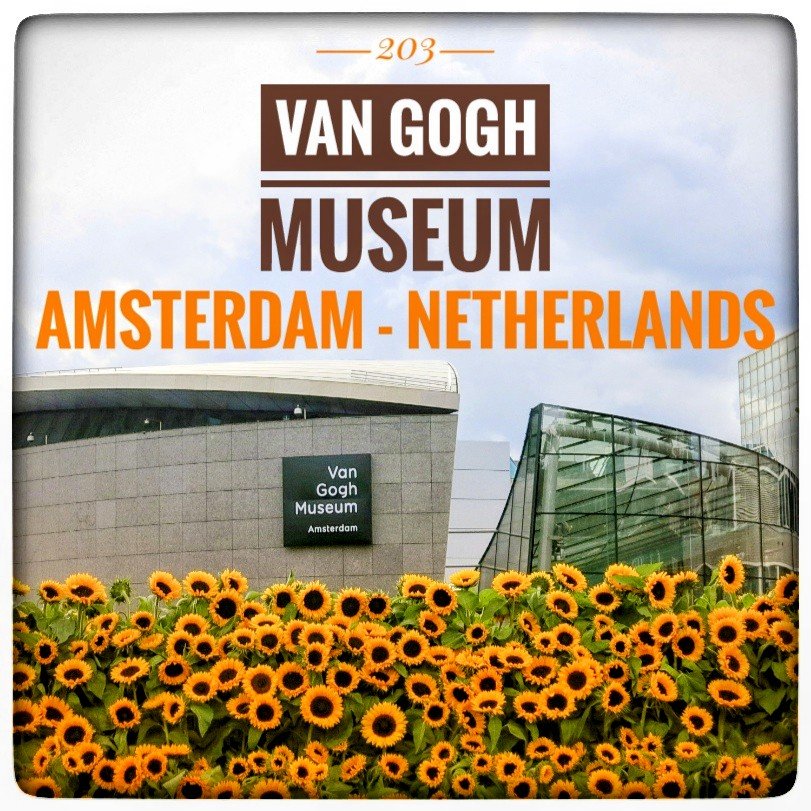
203 - Interesting Things: Van Gogh Museum in Amsterdam
The Van Gogh Museum in Amsterdam is a tribute one of the greatest artists ever to have lived. The exhibition hall opened June 2, 1973. The historical backdrop of the Van Gogh Museum design is intriguing. The primary structure, planned by Gerrit Rietveld, opened in 1973. Engineer Kisho Kurokawas presentation wing was finished in 1999. It is the most visited Van Gogh museum worldwide.

202 - Interesting Things: George Nissen and The Trampoline
March 6, 1945, George Nissen of Cedar Rapids, Iowa, received a patent for the first modern trampoline. He sold so many trampolines to the military, to help pilots experience weightlessness, that he had to postpone his enlistment in World War II to fulfill the orders. Interestingly, trampoline only became an Olympic sport during the 2000 Sydney Olympics.

198 - Interesting Things: Pancakes
The first official pancake recipe dates back to the sixteenth century. Pancakes were also associated with the Christian Lent. It was a way for people to use up their eggs, fats, and other ingredients not permitted during Lent. If you're ever in Severna Park Maryland, stop by the Breakfast Shop at 552 Richie Hwy for one of the best pancakes you'll find this side of sunrise!

197 - Interesting Things: Krewes
Each Mardi Gras Parade Krewe has a unique history and theme. Some have been around for decades, while others have been in existence for just a few years. The word Krewe is unique, it comes from French and means "tribe." What a Krewe does though is even more interesting!

196 - Interesting Things: Tom Thumb - Steam Power on the Railroad
On February 28th 1827 The Baltimore and Ohio Railroad became the first steam-operated railway in the United States to be chartered as a common carrier of freight and passengers. All thanks to Peter Cooper as well as the B&O railroad.

195 - Interesting Things: Ketchup was a Medicine
Ketchup was sold in the 1830s as medicine, it was later commercialized as a condiment. Did you know ketchup also has alleged values beyond condiment status today?