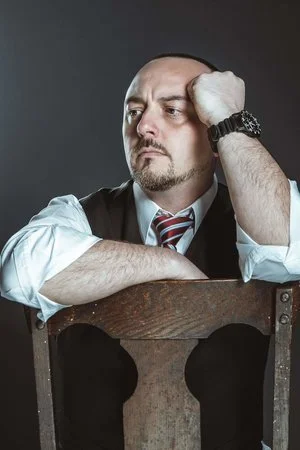
Interesting Things with JC #1531: "People Who Lie Without Knowing They’re Lying" – Some of the most convincing stories are told by people who fully believe them. This episode explores why memory bends, certainty grows, and truth shifts to protect who we think we are. Confidence feels solid, even when the facts underneath it are not.
Curriculum - Episode Anchor
Episode Title: People Who Lie Without Knowing They’re Lying
Episode Number: 1531
Host: JC
Audience: Grades 9–12, college introductory courses, homeschool learners, lifelong learners
Subject Area: Psychology, Neuroscience, Media Literacy, Sociology
Lesson Overview
This lesson uses psychological research and real-world examples to examine how humans can sincerely believe inaccurate stories about themselves and the past. Students explore how cognitive dissonance, memory reconstruction, and self-identity interact to shape belief, behavior, and decision-making. The episode encourages critical thinking about confidence, truth, and the reliability of personal narratives.
Learning Objectives
Students will be able to:
Define cognitive dissonance and explain its psychological function.
Compare accurate memory recall with reconstructed or altered memory.
Analyze why eyewitness testimony can feel trustworthy yet be unreliable.
Explain how self-belief influences persuasion, confidence, and social trust.
Key Vocabulary
Cognitive Dissonance (kog-nuh-tiv dis-uh-nuhns) — The mental discomfort experienced when actions or facts conflict with a person’s self-image or beliefs; often resolved by changing beliefs rather than behavior.
Memory Reconstruction (meh-muh-ree ree-kuhn-struhk-shuhn) — The process by which the brain rebuilds memories each time they are recalled, rather than replaying them exactly.
False Confidence (fawls kon-fi-duhns) — Strong certainty in a belief or memory that is inaccurate.
Eyewitness Testimony (ahy-wit-nis tes-tuh-moh-nee) — A legal account of an event given by someone who claims to have observed it directly.
Self-Identity (self ahy-den-ti-tee) — The internal narrative a person holds about who they are and why they act the way they do.
Narrative Core
Open
The episode opens with a familiar but unsettling experience: hearing someone tell a confident story that feels clearly wrong, yet sincerely believed.
Info
JC introduces decades of psychological research, including Leon Festinger’s work on cognitive dissonance, explaining why humans feel discomfort when behavior and self-image conflict.
Details
A classic experiment reveals that people paid very little to lie often end up believing their lie, because their minds rewrite the story to protect their sense of honesty and consistency.
Reflection
The episode connects this process to memory, eyewitness testimony, leadership, and persuasion, showing how belief can feel true even when it is not accurate.
Closing
These are interesting things, with JC.

Promotional image for “Interesting Things with JC #1531: People Who Lie Without Knowing They’re Lying,” showing a diverse group of adults talking and laughing together on a rooftop at sunset, suggesting confident storytelling and social conversation.
Transcript
Interesting Things with JC #1531: "People Who Lie Without Knowing They’re Lying"
We’ve all heard it. Someone tells a story about themselves with complete confidence. No hesitation. No exaggeration for effect. And you know something isn’t right. Not shaded. Not polished. Just… wrong.
The unsettling part is this. They’re not trying to fool you. They genuinely believe what they’re saying.
This isn’t a modern habit, and it isn’t rare. Psychologists have been studying it for decades.
In 1957, American psychologist Leon Festinger described something called cognitive dissonance. That’s the discomfort people feel when their actions don’t line up with how they see themselves. What he discovered was simple and uncomfortable. When that tension shows up, most people don’t change their behavior. They change the story.
In one well-known experiment, people were asked to lie about a boring task and say it was enjoyable. Some were paid twenty dollars. Others were paid one dollar. The ones paid twenty knew they were lying. They had a reason. The ones paid one dollar didn’t. So instead of seeing themselves as dishonest, many of them convinced themselves the task really was fun. They weren’t pretending. They believed it.
Their minds needed the story to make sense.
That same process plays out in everyday life.
Memory isn’t a recording. It’s a reconstruction. Each time you remember something, your brain rebuilds it. And it fills in the gaps with details that fit who you believe you are now.
That’s why people can be absolutely certain about events that didn’t happen the way they remember. It’s also why eyewitness testimony has proven unreliable. In the United States, roughly seven out of ten wrongful convictions later overturned by DNA involved eyewitnesses who were confident and sincere. They weren’t lying. They were sure.
There’s another layer to this. Believing your own story actually makes you more convincing. Studies show people who believe their version of events sound calmer and more trustworthy. Their bodies don’t show stress because, to them, there is no lie being told.
From a survival standpoint, that made sense. Early humans who projected certainty were better at leading and persuading. A stable sense of self helped hold groups together, even when accuracy slipped.
That’s why confronting someone like this rarely works. Facts feel like attacks. Evidence feels personal. You’re not challenging information. You’re challenging the story they live inside.
And here’s the part most of us don’t like admitting. This isn’t just about other people. Almost everyone does this in small ways. About decisions they made. About why things turned out the way they did. The difference isn’t whether it happens. It’s how far it goes.
Some of the most convincing false stories in history weren’t told by people trying to deceive. They were told by people who had already convinced themselves.
Which leaves us with a responsibility. To check our own stories once in a while. To ask whether confidence is coming from truth or comfort. And to remember that being sure doesn’t always mean being right.
These are Interesting Things, with JC.
Student Worksheet
In your own words, explain what cognitive dissonance is and why it feels uncomfortable.
Why did participants paid one dollar in the experiment often believe the task was fun?
How does memory reconstruction affect eyewitness testimony?
Describe one everyday situation where someone might unknowingly change their story to protect their self-image.
Why does believing a false story sometimes make a person more convincing?
Teacher Guide
Estimated Time
45–60 minutes
Pre-Teaching Vocabulary Strategy
Introduce vocabulary using short scenarios students can relate to, such as recalling an argument or retelling a personal story.
Anticipated Misconceptions
Students may assume false memories only occur in people who are dishonest or unintelligent. Clarify that this is a normal human cognitive process.
Discussion Prompts
Is confidence a reliable indicator of truth? Why or why not?
Should eyewitness testimony be treated differently in courts? How?
Differentiation Strategies
ESL: Provide sentence starters and simplified definitions.
IEP: Use graphic organizers to map belief versus evidence.
Gifted: Assign independent research on memory studies or legal cases.
Extension Activities
Analyze a historical event where leaders appeared sincere but were factually incorrect.
Conduct a class memory experiment using a short video clip.
Cross-Curricular Connections
Civics: Legal systems and wrongful convictions
Biology: Brain function and memory
Ethics: Responsibility, truth, and belief
Quiz
Q1. What is cognitive dissonance?
A. Forgetting important details
B. Discomfort from conflicting beliefs
C. Intentional lying
D. Emotional manipulation
Answer: B
Q2. Why did the one-dollar group believe the task was enjoyable?
A. They wanted more money
B. They misunderstood instructions
C. Their self-image needed consistency
D. They were pressured by researchers
Answer: C
Q3. Memory is best described as:
A. A perfect recording
B. A photograph
C. A reconstruction
D. A fixed archive
Answer: C
Q4. Why can eyewitness testimony be unreliable?
A. Witnesses are usually dishonest
B. Memory changes over time
C. Courts ignore evidence
D. Stress improves accuracy
Answer: B
Q5. Why are people who believe their own stories often persuasive?
A. They rehearse more
B. They appear calmer and sincere
C. They use better words
D. They exaggerate less
Answer: B
Assessment
Open-Ended Questions
Explain how cognitive dissonance can cause someone to unknowingly believe something untrue.
Describe why confidence should not always be treated as proof of accuracy.
3–2–1 Rubric
3 – Accurate, complete, thoughtful explanation using episode concepts
2 – Partial explanation with minor misunderstandings
1 – Inaccurate, vague, or unsupported response
Standards Alignment
CCSS.ELA-LITERACY.RI.9-10.2
Analyze central ideas of a text and how they develop over time.
CCSS.ELA-LITERACY.SL.9-10.1
Initiate and participate effectively in collaborative discussions.
C3.D2.Psy.2.9-12
Explain human behavior using psychological concepts and research.
ISTE 3b
Evaluate the accuracy and credibility of information sources.
UK National Curriculum – Psychology (A-Level)
Understanding cognitive processes including memory and belief formation.
IB Psychology – Cognitive Approach
Examine how cognitive processes influence behavior.
Show Notes
This episode explores why people can sincerely believe stories that are factually wrong, focusing on cognitive dissonance and memory reconstruction. Through classic psychological experiments and real-world consequences like wrongful convictions, JC shows how belief, identity, and confidence shape human behavior. In classrooms, the episode supports discussions about critical thinking, media literacy, ethics, and the limits of human perception, skills increasingly important in a world shaped by certainty without accuracy.
References
American Psychological Association. (2020, February 10). Improving eyewitness identification key to protecting the innocent—APA. https://www.apa.org/news/press/releases/2020/02/eyewitness-identification
Wise, R. A., Sartori, S., Magnussen, S., & Safer, M. A. (2014). An examination of the causes and solutions to eyewitness error. Frontiers in Psychiatry, 5. https://www.ncbi.nlm.nih.gov/pmc/articles/PMC4131297/
Challies, D. M. (2011). A behavioral account of the misinformation effect. PMC, 35(1), 1–15. https://www.ncbi.nlm.nih.gov/pmc/articles/PMC3213001/
Wixted, J. T. (2015). Initial eyewitness confidence reliably predicts eyewitness identification accuracy. American Psychologist. https://doi.org/10.1037/a0039510
APA. (2020, January 27). Should seeing be believing? Eyewitness identification and memory. https://www.apa.org/pubs/highlights/spotlight/issue-171
Zimbardo, P. (n.d.). The Festinger and Carlsmith cognitive dissonance experiment: Setup, results, and psychological insights. https://www.zimbardo.com/the-festinger-and-carlsmith-cognitive-dissonance-experiment-setup-results-and-psychological-insights/
Stratton, K. L. (2011). The effect of identification style on confidence inflation in eyewitness testimony. Colby Honors Theses. https://digitalcommons.colby.edu/cgi/viewcontent.cgi?article=1615&context=honorstheses