1665: "Grizz Chapman"
Interesting Things with JC #1665: "Grizz Chapman" – Grizz was working security when a friendship with Tracy Morgan led to a 30 Rock audition, and the nearly seven-foot bouncer became one of the calmest, warmest faces on TV while fighting kidney disease off-camera. He pushed past the roles Hollywood expected from a man his size.
Curriculum - Episode Anchor
Episode Title: Grizz Chapman
Episode Number: 1665
Host: JC
Audience: Grades 9–12, introductory college, homeschool, lifelong learners
Subject Area: Media studies, career readiness, health literacy, character education
Lesson Overview
Learning Objectives:
Identify how Grizz Chapman’s life story connects perseverance, career transition, health responsibility, and public service.
Analyze how first impressions, physical appearance, and typecasting can shape opportunity in entertainment and the workplace.
Explain how kidney disease, dialysis, transplantation, and organ donation affected Chapman’s life and public advocacy.
Evaluate how discipline, training, and professional responsibility helped Chapman turn an unexpected acting opportunity into a career.
Essential Question: How can a person’s full story challenge assumptions made from appearance, job title, or first impression?
Success Criteria: Students can summarize Chapman’s career path, explain the contrast between image and character, connect health challenges to civic responsibility, and support claims with evidence from the episode.
Student Relevance Statement: Students often face labels based on appearance, background, interests, or early performance; Chapman’s story shows how preparation and character can expand what others believe is possible.
Real-World Connection: The lesson connects media careers, workplace adaptability, chronic illness, organ donation awareness, and the importance of continuing training after a career break.
Workforce Reality: Entertainment work can be unpredictable, typecasting can limit opportunity, and long-term success requires reliability, skill-building, humility, and the ability to keep learning after being hired.
Key Vocabulary
Typecasting:(TYPE-kast-ing) Assigning an actor similar roles repeatedly because of appearance, voice, background, or previous roles.
Dialysis:(dy-AL-uh-sis) A medical treatment that filters waste and extra fluid from the blood when kidneys cannot do that work well enough.
Kidney Transplant:(KID-nee TRANS-plant) Surgery that places a healthy donor kidney into a person whose kidneys have failed.
Organ Donation:(OR-gun doh-NAY-shun) The act of giving an organ or tissue to help another person survive or improve health.
Recurring Character:(rih-KUR-ing KAR-ik-ter) A character who appears multiple times in a television series without necessarily being the main lead.
Entourage:(AHN-too-rahzh) A group of people who travel with or support a public figure.
Career Transition:(kuh-REER tran-ZIH-shun) A major shift from one type of work or professional identity to another.
Public Advocacy:(PUB-lik AD-vuh-kuh-see) Speaking or acting publicly to support awareness, education, or change on an issue.
Professional Discipline:(pruh-FESH-uh-nul DIS-uh-plin) Consistent habits, training, reliability, and responsibility used to improve performance at work.
Narrative Core
Open: A towering bouncer at a New York nightclub meets a rising comedian, and a friendship quietly opens a door that neither man could fully predict.
Info: Mack “Grizz” Chapman’s journey moved through basketball, security work, business, celebrity protection, acting, illness, and advocacy.
Details: Chapman became widely known through 30 Rock, where his size could have made him seem intimidating, but his calm humor and grounded presence made him memorable.
Reflection: His story asks students to look beyond first impressions and consider the unseen work behind opportunity: training, persistence, health battles, and professional growth.
Closing: These are interesting things, with JC.
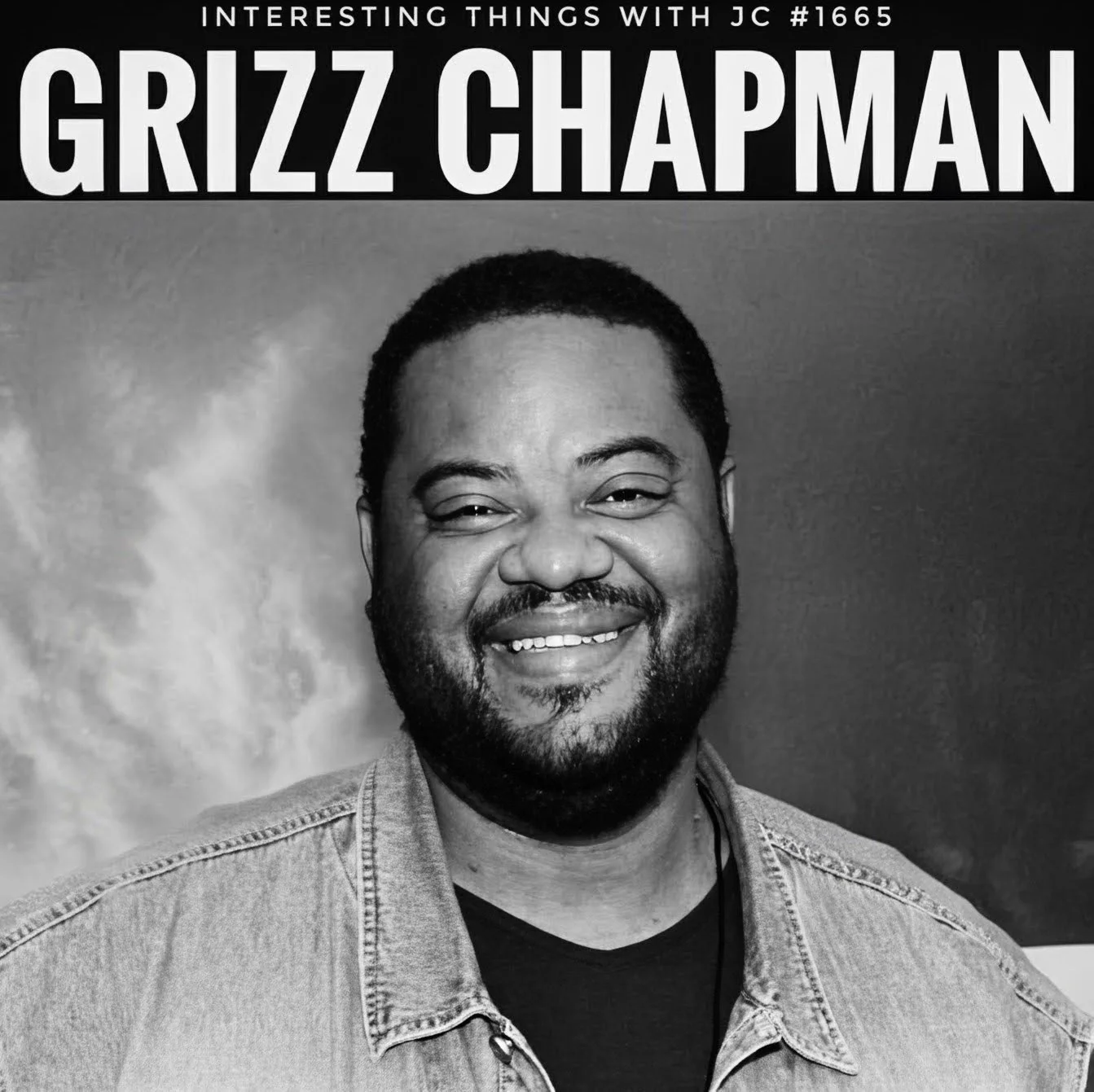
Black-and-white promotional image for Interesting Things with JC #1665 featuring Grizz Chapman smiling at the camera. Large text at the top reads “GRIZZ CHAPMAN,” with the episode number and series title above it.
Transcript
Interesting Things with JC #1665:
"Grizz Chapman"
A nearly seven-foot-tall bouncer stands at the door of a New York strip club around the year 2000, checking IDs and keeping the peace. One of the regulars walking through that door is a rising comedian named Tracy Morgan.
Neither man knows it yet, but that friendship is about to change a life.
Mack "Grizz" Chapman was born in Brooklyn in 1974. At 6 feet 11 inches tall, he used his size on the basketball court, playing junior college ball at Queensborough Community College and helping the team win back-to-back championships in the mid-1990s. When basketball ended, the hustle continued. He worked security in New York City's nightlife scene, managed music acts, owned a comic book shop, and later moved into celebrity protection, serving as a bodyguard for comedian Katt Williams in Los Angeles.
Then came the phone call.
While working security in California, Chapman was invited to audition for a new NBC comedy called 30 Rock. He had almost no acting experience. According to Chapman, the audition was disarmingly simple. He walked in, introduced himself as "Grizz," shook a few hands, and left.
He got the part.
His first day on set reportedly paid around $20,000 for less than an hour of work. Realizing this could be a real career, he immediately started taking acting classes and committed to learning the craft.
The role almost disappeared before the show ever aired. NBC reduced Tracy Jordan's entourage from four men to two, but Chapman survived the cuts and became half of the now-iconic Grizz and Dot Com pairing alongside Kevin Brown.
What made the characters beloved wasn't intimidation. It was contrast. In a show packed with chaos and larger-than-life personalities, Grizz often played the thoughtful, calm, grounded giant. That gentle presence turned the intimidating bodyguard into one of the show's most memorable recurring characters across all seven seasons.
Off-camera, Chapman faced a much tougher battle. He suffered from severe kidney disease and spent years on dialysis, often undergoing four-hour treatments three days a week while continuing to work. In 2010, he received a life-saving kidney transplant from a fan named Ryan Perkins, who stepped forward after Chapman publicly shared his need. Rather than hide the struggle, Chapman became a spokesperson for the National Kidney Foundation, encouraging awareness and organ donation.
He continued acting after 30 Rock, appearing in films such as The Cobbler and Money Monster, along with television series including Blue Bloods and The Blacklist. He was married to his wife Diana for more than two decades, and together they raised two children.
Chapman also pushed back against Hollywood's habit of typecasting exceptionally tall actors as little more than muscle. He believed a man his size could be far more than a bodyguard or enforcer, and throughout his career he proved it.
On May 22, 2026, Grizz Chapman died at age 52 after years of health complications. Friends and co-stars remembered him as kind, hardworking, and impossible to miss, not simply because of his height, but because of the warmth and humor he brought into every room.
The remarkable part of his story isn't that a nightclub bouncer became a television star. It's that he spent years grinding through jobs, side businesses, auditions, chronic illness, and setbacks before opportunity arrived. And when it did, he showed there was far more to Grizz Chapman than what people saw at first glance.
These are interesting things, with JC.
Student Worksheet
Comprehension Questions:
What jobs and roles did Grizz Chapman hold before becoming known on 30 Rock?
How did Chapman’s friendship with Tracy Morgan help create a new professional opportunity?
What made the Grizz and Dot Com pairing memorable on 30 Rock?
What health challenge did Chapman face while continuing to work?
How did Chapman use his health experience to help others?
Analysis Questions:
How does the episode challenge the assumption that Chapman’s size was the most important thing about him?
Why might acting classes have mattered after Chapman had already received the role?
What does Chapman’s experience reveal about typecasting in entertainment?
How does the story connect personal struggle with public responsibility?
Reflection Prompt: Write one paragraph explaining a time when someone’s first impression did not reveal the full person, skill, or story underneath. Connect your reflection to Chapman’s life.
Difficulty Scaling:
Support Level: Use three direct details from the transcript to complete a guided summary.
Standard Level: Write one claim-evidence-reasoning paragraph about perseverance or typecasting.
Advanced Level: Compare Chapman’s story to another public figure, athlete, performer, or worker who changed careers or challenged expectations.
Student Output: Submit a completed worksheet plus one paragraph of 6–8 sentences using at least two episode details.
Academic Integrity Guidance: Use your own words. Episode details may be referenced, but copying full sentences from the transcript should be avoided unless clearly marked as quoted evidence.
Teacher Guide
Quick Start: Begin with the podcast audio. Ask students to listen for three turning points: the nightclub friendship, the 30 Rock audition, and the kidney transplant.
Pacing Guide:
Podcast listening: 5–7 minutes
First-response writing: 4 minutes
Vocabulary review: 6 minutes
Comprehension questions: 8 minutes
Analysis discussion: 10 minutes
Assessment or exit ticket: 7–10 minutes
Bell Ringer: Before listening, ask: “What is one way a first impression can be incomplete or misleading?” Students answer in 2–3 sentences.
Audio Guidance: Students should listen for evidence of work ethic, career transition, health responsibility, and how Chapman was perceived by others.
Audio Fallback: If audio is unavailable, read the transcript aloud or assign paired reading with one student reading narration and another tracking turning points.
Time on Task: Standard lesson length is 40–45 minutes; shortened version can use audio, vocabulary, one analysis question, and exit ticket.
Materials: Podcast audio, transcript, worksheet, writing materials or LMS response form, projector or board for vocabulary.
Vocabulary Strategy: Pre-teach dialysis, typecasting, organ donation, recurring character, and public advocacy before the transcript analysis.
Misconceptions:
Students may assume Chapman’s success was sudden; emphasize the years of work before opportunity arrived.
Students may reduce his story to height; redirect to training, health, humor, professionalism, and advocacy.
Students may treat entertainment work as effortless; emphasize skill-building, uncertainty, and discipline.
Discussion Prompts:
What details show that Chapman kept working before opportunity arrived?
How did his role on 30 Rock use contrast rather than intimidation?
Why does public advocacy sometimes become powerful when it comes from personal experience?
What responsibilities come with being visible in media or entertainment?
Formative Checkpoints:
Students identify one career transition.
Students define typecasting correctly.
Students cite one detail about health responsibility.
Students explain one reason acting classes mattered.
Differentiation: Provide sentence starters for emerging writers, transcript highlighting for comprehension support, and comparison prompts for advanced students.
Assessment Differentiation: Students may respond through paragraph writing, oral explanation, audio reflection, or a claim-evidence-reasoning chart.
Time Flexibility: For a 25-minute version, use the audio, bell ringer, three comprehension questions, and exit ticket. For a 60-minute version, add a mini-research task on organ donation awareness or media typecasting.
Substitute Readiness: Play or read the transcript, have students complete comprehension questions independently, then collect the reflection paragraph as evidence of learning.
Engagement Strategy: Use the contrast frame: “What people saw first” versus “What the story reveals later.” Have students fill both columns during listening.
Extensions: Students can create a short career map showing Chapman’s movement from basketball to security to acting to advocacy.
Cross-Curricular Connections:
Health science: kidney disease, dialysis, transplant awareness
Media studies: character roles, casting, audience perception
English: narrative structure, theme, evidence-based response
Career readiness: adaptability, training, workplace discipline
SEL Connection: The episode supports empathy, self-awareness, responsible decision-making, and respect for people whose challenges are not immediately visible.
Skill Value Emphasis: Students practice listening comprehension, evidence selection, media analysis, health literacy, and respectful discussion.
Answer Key:
Chapman worked in basketball, security, music management, comic book retail, and celebrity protection before acting.
His friendship with Tracy Morgan helped connect him to the opportunity to audition for 30 Rock.
The Grizz and Dot Com pairing was memorable because it contrasted size and entourage expectations with calm humor, thoughtfulness, and grounded presence.
Chapman faced severe kidney disease, dialysis, and later transplant-related health challenges.
He became involved in kidney disease awareness and organ donation advocacy.
Acting classes mattered because getting a role did not replace the need to learn craft, professionalism, and performance skills.
Typecasting limited how exceptionally tall actors were often viewed, especially as bodyguards or muscle rather than complex characters.
The story’s main lesson is that visible traits rarely tell the whole story of a person’s effort, responsibility, or character.
Quiz
What was Grizz Chapman doing when he first became connected to Tracy Morgan?
A. Working as a nightclub bouncer
B. Teaching acting classes
C. Producing a network sitcom
D. Playing in the NBAWhat television show made Chapman widely recognizable?
A. Blue Bloods
B. The Blacklist
C. 30 Rock
D. The Good FightWhy did Chapman begin taking acting classes after getting the role?
A. He wanted to leave the show immediately
B. He realized acting could become a real career
C. He was required to become a director
D. He planned to stop working in televisionWhat medical challenge is central to Chapman’s story?
A. A broken leg
B. Severe kidney disease
C. Vision loss
D. A heart transplantWhat larger issue did Chapman push back against in Hollywood?
A. Silent films
B. Typecasting tall actors as only muscle or enforcers
C. Too many comedy shows
D. Actors learning new skills
Assessment
Open-Ended Questions:
Explain how Grizz Chapman’s life shows the difference between opportunity and preparation. Use at least two details from the episode.
How does Chapman’s story challenge assumptions based on appearance, job title, or physical size? Use evidence from the transcript.
3–2–1 Rubric:
3: Response gives a clear claim, uses two accurate episode details, explains the connection, and stays focused.
2: Response gives a mostly clear claim, uses at least one accurate detail, and includes some explanation.
1: Response is incomplete, unsupported, unclear, or mostly summary without explanation.
Exit Ticket: In 2–3 sentences, answer: “What is one responsibility that comes with receiving an unexpected opportunity?”
Standards Alignment
NGSS HS-LS1-2: Students connect organ function to body-system survival by explaining why kidney failure requires medical intervention such as dialysis or transplant.
NGSS HS-ETS1-3: Students evaluate real-world constraints by considering how health, work demands, training, and opportunity affected Chapman’s career decisions.
CCSS.ELA-LITERACY.RI.9-10.2: Students determine a central idea by tracing how the episode develops themes of perseverance, identity, and public responsibility.
CCSS.ELA-LITERACY.RI.11-12.3: Students analyze how a sequence of events shaped Chapman’s career transition from security work to acting and advocacy.
CCSS.ELA-LITERACY.W.9-10.1: Students write evidence-based arguments about typecasting, first impressions, or preparation using claims, evidence, and reasoning.
CCSS.ELA-LITERACY.SL.11-12.1: Students participate in structured discussion by building on others’ comments and citing episode evidence.
C3 D2.Civ.10.9-12: Students analyze civic responsibility by explaining how personal experience can lead to public advocacy, awareness, and community benefit.
ISTE 1.3 Knowledge Constructor: Students gather and organize accurate information from the episode and verified sources to explain a real-world issue.
CTE Career Ready Practice 2: Students apply effective communication by discussing career adaptability, workplace reliability, and professional growth.
Career Readiness: Students identify transferable skills such as persistence, training, reliability, self-advocacy, and ethical public communication.
UK National Curriculum KS4 English: Students practice listening, inference, evidence selection, and structured written response using a nonfiction biographical narrative.
IB MYP Individuals and Societies / Language and Literature: Students examine identity, perspective, audience, and context while evaluating how personal narratives shape public understanding.
Homeschool/Lifelong Learning: Learners connect biography, media literacy, health awareness, and career reflection through flexible discussion, writing, and independent extension work.
Show Notes
This classroom-ready episode explores the life of Grizz Chapman, best known for his role on 30 Rock, while focusing on perseverance, career transition, chronic illness, organ donation awareness, and the danger of judging people by first impressions. Students examine how Chapman moved from basketball and security work into television, continued learning after opportunity arrived, faced severe kidney disease, and used public visibility to support awareness. The lesson matters because it connects media, health, work ethic, empathy, and real-world responsibility in a story that is accessible, human, and discussion-rich.
References
Entertainment Weekly. (2026). Grizz Chapman, fan-favorite “30 Rock” star, dies at 52. https://ew.com/grizz-chapman-dead-30-rock-star-grizz-11982920
IMDb. (2026). Grizz Chapman: Biography. https://www.imdb.com/name/nm2445098/bio/
NBC New York. (2011). “30 Rock” star Grizz Chapman urges kidney disease prevention measures. https://www.nbcnewyork.com/local/30-rock-star-grizz-chapman-urges-kidney-disease-prevention-measures/2127813/
People. (2026). Grizz Chapman, “30 Rock” actor, dies at 52. https://people.com/grizz-chapman-dies-at-52-11982887
SheKnows. (2011). Kidney donor for 30 Rock’s Grizz Chapman. https://www.sheknows.com/health-and-wellness/articles/825873/kidney-donor-for-30-rocks-grizz-chapman/
The Guardian. (2026). Grizz Chapman, actor who played Grizz in 30 Rock, dies aged 52. https://www.theguardian.com/tv-and-radio/2026/may/25/grizz-chapman-actor-30-rock-dies-aged-52