

A Short Story Podcast Series

Amazon - Apple - Audible - Castbox - Deezer - fyyd - GoodPods - Headliner - iHeartRadio - Instagram - JioSaavn - Listen Notes - Pandora - PlayerFM - Podcast Radio - Podcast Republic - Podchaser - Podverse - PocketCasts - Spotify - Stitcher - Youtube
Link to Podcast Library - or - Scroll for Daily Feed
-
Open Educational Use
Interesting Things with JC is made available for anyone to use in the service of education. Teachers, students, parents, homeschool families, librarians, tutors, and lifelong learners are free to download, copy, share, print, adapt, and reuse the episodes and curriculum materials in any way that helps people learn.
If it supports teaching, learning, or helping others understand the world better, it is allowed.
One exception applies: Episode #509, “Harry Chapin and Jim Connors,” is not included under this open educational permission.
Curriculum Availability
Full curriculum support begins with Episode #1235: “Three Turns to Freedom.” Earlier episodes without curriculum may be prioritized by request. Educators may contact JimConnors LLC, and a matching curriculum module will be created and added.
What You Are Free to Do
You may:
Download and store the audio, transcripts, and curriculum
Copy and share materials with students, families, or learning groups
Print, remix, edit, and adapt lessons for your own educational use
Upload content to learning management systems (LMS), class websites, or internal school platforms
Integrate the material into lessons, assignments, tutoring, homeschool programs, libraries, and community education
No permission is required. Credit to Interesting Things with JC is appreciated when possible, but the priority is helping people learn.
What Is Not Allowed
This openness is for education, not commercial use. The content may not be:
Sold, licensed, or packaged as a product or subscription
Rebranded or presented as original third-party work
Used as part of a paid course, monetized program, or commercial platform
Redistributed as a standalone product for profit
Any commercial, branded, or revenue-generating use requires prior written permission from JimConnors LLC. Episode #509 remains excluded from open educational use.
Rights and Intent
All content remains the intellectual property of JimConnors LLC. The intent is simple:
Use it freely to educate, teach, explain, and help people.
Just do not sell it, repackage it for profit, or claim it as your own.
Summary:
Use it.
Download it.
Copy it.
Share it.
Teach with it.
Adapt it for students, kids, classrooms, homeschools, libraries, and lifelong learning.
Click on the curriculum frame, copy the full merged curriculum standards, use them in your own GPT, iterate and improve them, and share back!
Just don’t sell it, rebrand it, or turn it into a product. Episode #509 is excluded. All rights reserved © JimConnors LLC.
-
Interesting Things with JC has previously been included in curated podcast programming on Podcast Radio formats in both the United Kingdom and the United States. Podcast Radio was launched as a 24-hour broadcast concept designed to showcase podcasts on digital radio and online streaming platforms.
In the United States, the Podcast Radio US brand continues to maintain an online presence and app availability, and has been associated with radio simulcasts on licensed AM and FM signals in selected markets, though live broadcast availability may vary.
Streaming Access
Podcast Radio US and related branded streams provide online listening through their websites and mobile applications, allowing audiences worldwide to hear selected podcast programming.On-Demand Platforms
Interesting Things with JC is available across major podcast directories, including Amazon Music, Apple Podcasts, Audacy, Audible, Castbox, Deezer, fyyd, GoodPods, iHeartRadio, JioSaavn, Listen Notes, Pandora, PlayerFM, PocketCasts, Podcast Republic, Podchaser, Podverse, Spotify, Stitcher, and YouTube.The series is also accessible through podcast apps that index the Apple Podcasts catalog and the open podcast directory ecosystem, including TuneIn, Podcast Addict, Overcast, Castro, Podcast Index–based apps, Podbean, iVoox, Podtail, Podyssey, Podcloud, Bullhorn, AudioBoom directories, and Breaker (legacy).
Social & Video Platforms
Listeners can also follow and view content on Facebook, Instagram, X (Twitter), TikTok, and YouTube. -
Classroom Use
Start class with a short, clear story students can follow from the first sentence. Play an episode of Interesting Things with JC and use the accompanying free curriculum to guide a complete lesson with questions, activities, applied reasoning, and independent analysis.
Every episode from #1235 forward contains a modular micro-lesson engineered for 30 to 90 minute instructional blocks, adaptable to secondary classrooms, international schools, homeschools, tutoring programs, and lifelong learning environments.
At the bottom of each episode page, expandable sections organize all instructional assets in a structured format for educators, parents, and independent learners.
Instructional Architecture of Each Episode
Each episode is designed as a self-contained instructional unit, integrating narrative, academic standards, assessment models, and accessibility requirements into a single deliverable.
Core Instructional Components
Lesson overview with instructional title, grade band, subject classification, and learning objectives
Vocabulary architecture with phonetic spelling, discipline-specific terminology, and plain-language definitions
Primary narrative content constructed through the Precise Storytelling Framework for coherence, sequencing, and conceptual layering
Full verbatim transcript for reading analysis, accessibility, and text-based instruction
Student learning activities including comprehension tasks, analytical writing, synthesis prompts, and evidence-based reasoning exercises
Teacher implementation guide with pacing models, instructional strategies, differentiation guidance, and discussion structures
Assessment instruments including quizzes, performance tasks, formative checks, and rubric-aligned evaluation tools
Standards crosswalks mapping content and skills across U.S., UK, and international academic frameworks
ADA-compliant instructional media with alt text, accessibility tagging, and inclusive design
Primary-source documentation linking directly to verified historical, scientific, legal, and academic references
Homeschool and modular scheduling guidance for flexible implementation
All materials are developed through the Narrative Intelligence System, ensuring factual integrity, instructional coherence, accessibility, and age-appropriate presentation. Lessons are non-ideological and restricted to academic content.
Unified Curriculum Integration Model
Every episode is constructed using a multi-framework integration model, in which:
Narrative structure
Disciplinary content
Cognitive skill development
Assessment design
Accessibility standards
Cross-curricular competencies
are deliberately merged into a single instructional object, rather than appended as afterthoughts. This means each episode simultaneously functions as:
A structured story
A content lesson
A literacy and reasoning exercise
A research and source-evaluation activity
An assessment artifact
A standards-aligned instructional unit
United States Curriculum Architecture (Full Integration)
National Frameworks Embedded
Next Generation Science Standards (NGSS)
Scientific practices, data analysis, modeling, systems thinking, evidence evaluation
Common Core State Standards (CCSS) – ELA & Mathematics
Close reading, argumentative writing, research synthesis, quantitative reasoning
College, Career, and Civic Life (C3) Framework
Disciplinary inquiry, historical sourcing, civic knowledge, geographic reasoning
International Society for Technology in Education (ISTE)
Digital citizenship, computational thinking, information fluency
National Core Arts Standards (NCAS)
Interpretation, critique, interdisciplinary expression, creative analysis
Career and Technical Education (CTE) Career Clusters
Applied technical knowledge, workplace reasoning, real-world problem solving
Association of College and Research Libraries (ACRL)
Research literacy, source evaluation, information ethics, academic inquiry
Bloom’s Taxonomy
Cognitive progression from comprehension to analysis, synthesis, and evaluation
Universal Design for Learning (UDL)
Multiple means of representation, engagement, and expression for inclusive instruction
Cross-Disciplinary U.S. Competencies Embedded in Every Episode
Academic literacy (reading, writing, argumentation)
Quantitative literacy and data reasoning
Media and information literacy
Digital and computational literacy
Civic knowledge and constitutional literacy (knowledge-based, non-ideological)
Research methodology and evidence verification
Critical thinking, analytical writing, and structured problem solving
Additional U.S. Integration Layers
State-level academic standards where applicable
Financial literacy and employability skills
Social-emotional competencies as academic behaviors (persistence, self-regulation, metacognition)
English language development and world-language vocabulary support
United Kingdom Curriculum Architecture (Full Integration)
National Curriculum Structure
Key Stage 3 (ages 11–14)
Key Stage 4 (GCSE)
Key Stage 5 (A-Level / Sixth Form)
Disciplinary domains mapped across episodes:
English language and literature (analysis, argument, rhetorical structure)
Mathematics (numeracy, quantitative interpretation)
Science (evidence, explanation, evaluation)
History and Geography (source criticism, contextual reasoning)
Citizenship (knowledge-based civic education)
Computing and digital literacy
Arts and humanities integration
Examination Frameworks
AQA
OCR
Pearson Edexcel
Assessment alignment includes:
Command terms and performance descriptors
Extended analytical writing
Evidence-based responses
Cross-disciplinary synthesis
International Academic Programmes Integrated
International Baccalaureate (IB)
Primary Years Programme (PYP)
Middle Years Programme (MYP)
Diploma Programme (DP)
Cambridge Assessment International Education
Cambridge IGCSE
Cambridge AS & A Level
Shared instructional architecture:
Inquiry-based learning
Conceptual understanding
Global context framing
Criterion-referenced assessment
Research projects and analytical writing
Cross-Curricular Frameworks Embedded by Design
Oracy across the curriculum
Literacy across disciplines
Numeracy across subjects
Digital and computational literacy
Citizenship and civic knowledge (non-ideological)
Research methodology and information literacy
Interdisciplinary synthesis
Global Academic Equivalency Structures
European Qualifications Framework (EQF) alignment for secondary and pre-university levels
OECD competency domains (literacy, numeracy, analytical reasoning, problem solving)
International standards-referenced assessment models used across secondary education systems
Pedagogical & Assessment Architecture
Knowledge-to-application curriculum sequencing
Evidence-based reasoning and academic writing
Primary-source analysis and citation practices
Formative, summative, and performance-based assessment models
Rubric-aligned evaluation and feedback structures
Universal accessibility and inclusive instructional design
Access, Use, and OER Licensing
All instructional materials are released as Open Educational Resources (OER) and may be used, printed, adapted, or shared for teaching in classrooms, homeschools, tutoring programs, and independent study environments. Materials are provided for educational use under fair use and may not be resold or redistributed commercially.
Episodes from #1235 forward include complete curriculum packages. Older episodes without micro-lessons can be prioritized for conversion. Beginning with Episode #1307, each MP3 page in the RSS feed includes open instructional text for direct access to transcripts and curriculum materials.
Educator and homeschool feedback is actively incorporated to refine instructional clarity, alignment, and usability. Please do not hesitate to reach out - or iterate upon these instructions to improve the framework. Please share open iterations back for continual improvement.
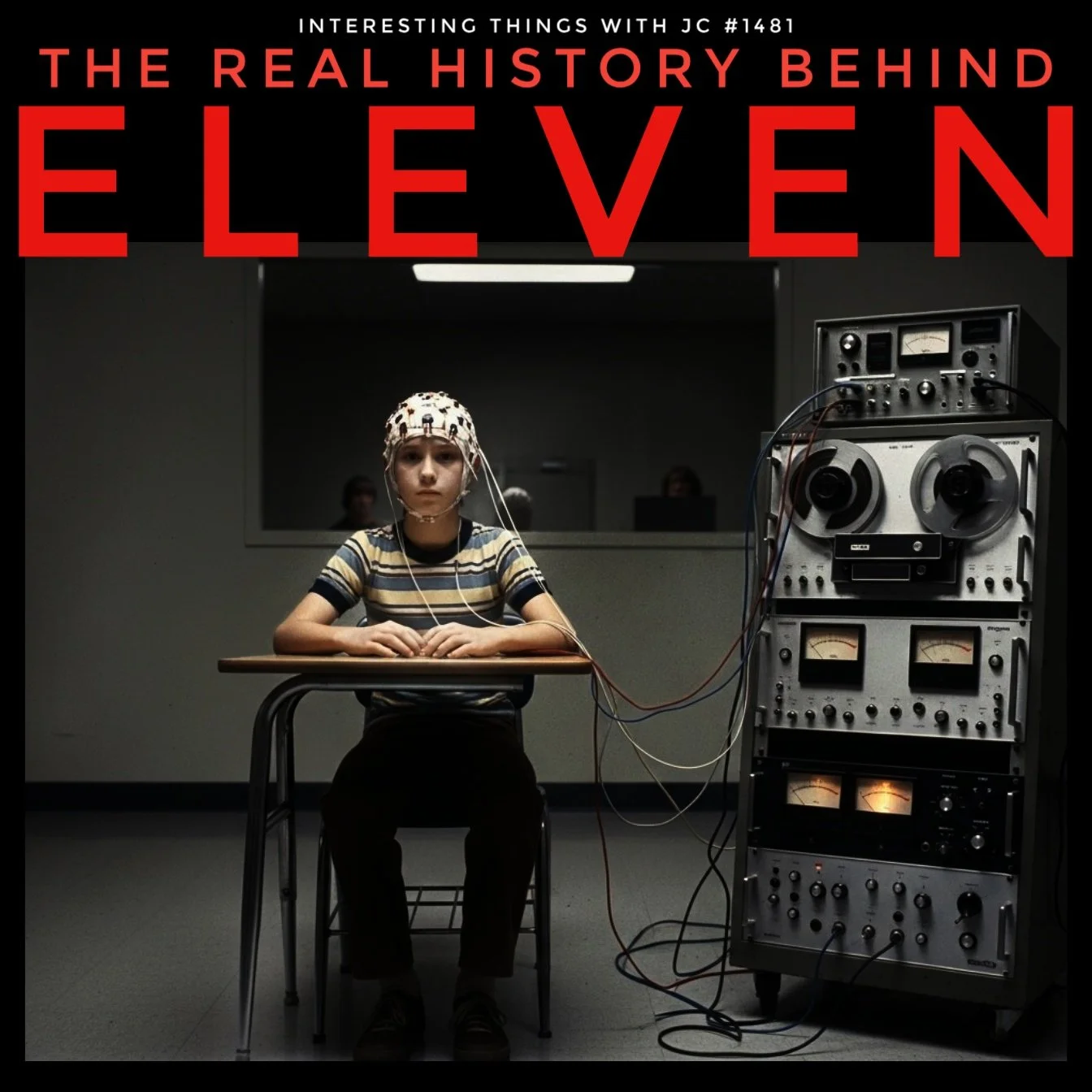
1481: "The Real History Behind Eleven"
Interesting Things with JC #1481: "The Real History Behind Eleven" – Behind Stranger Things is a darker reality: secret experiments, Cold War paranoia, and psychological tests on real kids. Eleven wasn’t invented. She was based on something real.

1480: "Nina Sergeyevna Kulagina"
Interesting Things with JC #1480: "Nina Sergeyevna Kulagina" – A woman in a Soviet lab, a compass that won’t stay still, and a Cold War desperate for proof of the impossible. Her story leaves one question hanging: what moved, and what only seemed to?

1479: "The Montauk Project"
Interesting Things with JC #1479: "The Montauk Project" – A Cold War outpost, sealed bunkers, and decades of denials form the fault line where rumor meets record. The mystery endures because the silence under Montauk feels louder than the facts.
1478: "Sensory Deprivation"
Interesting Things with JC #1478: "Sensory Deprivation" – When the world goes silent, the brain doesn’t shut down, it shifts. What happens when you take away all the noise? You start to hear yourself.
1477: "Telekinesis"
Interesting Things with JC #1477: "Telekinesis" – The claims were bold, the tests were careful, and each new setup revealed something the stories never mentioned. The mind is powerful, but not in the way people hoped.

1476: "Do Dogs Sweat?"
Interesting Things with JC #1476: "Do Dogs Sweat?" – You sweat. Your dog pants. But why? And what’s with those damp paw prints? A closer look at how dogs handle heat, when sweating just isn’t an option.
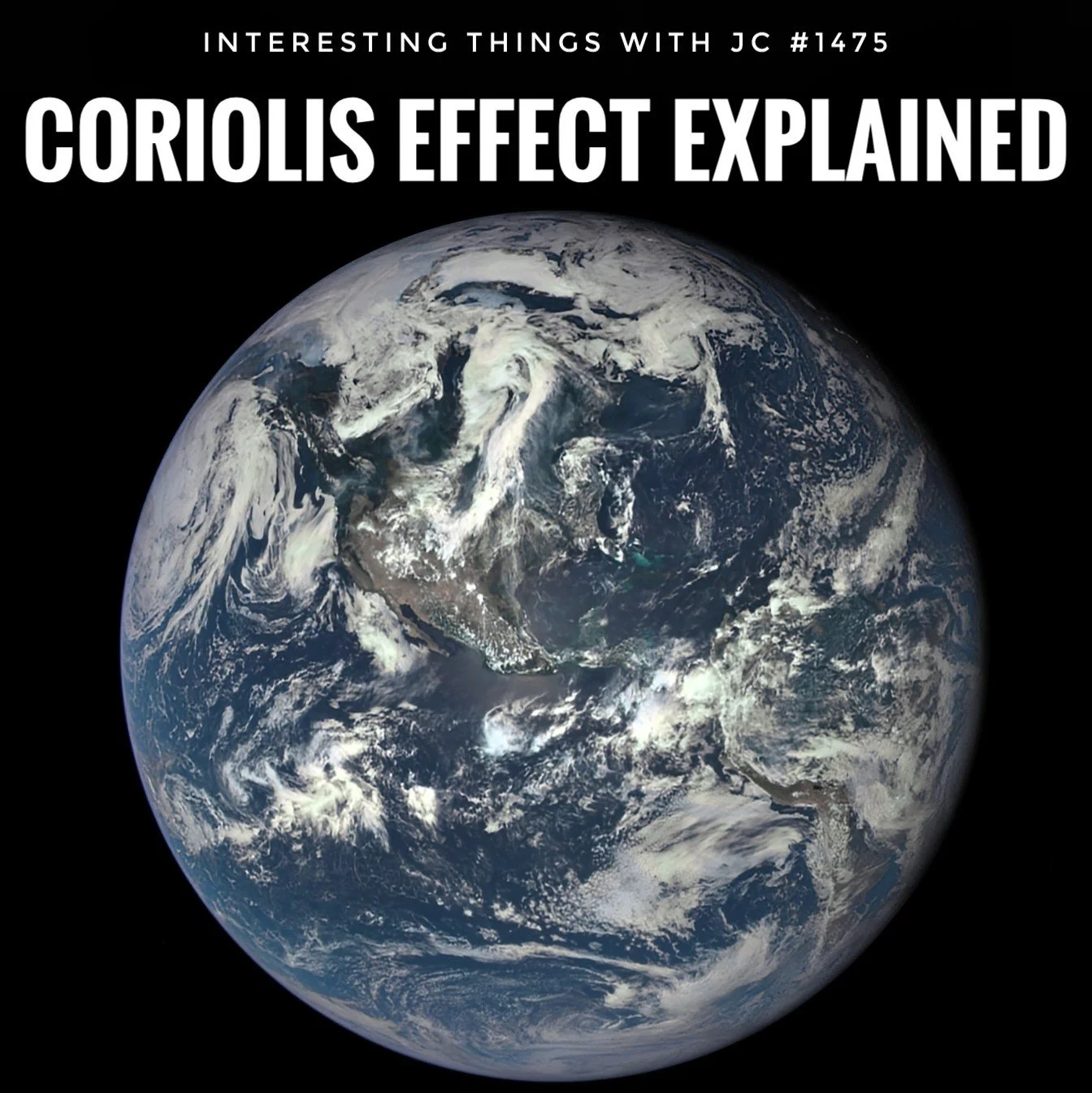
1475: "Coriolis Effect Explained"
Interesting Things with JC #1475: "Coriolis Effect Explained" – A breeze feels simple enough, but its path hides an influence turning just beneath our feet. A subtle shift in motion reveals how the planet gently redirects the world above it.

1474: "Do Hard Things"
Interesting Things with JC #1474: "Do Hard Things" – When you face one tough task, the mind shifts from threat to control. Hard work shrinks imagined problems and restores the world to its real size.
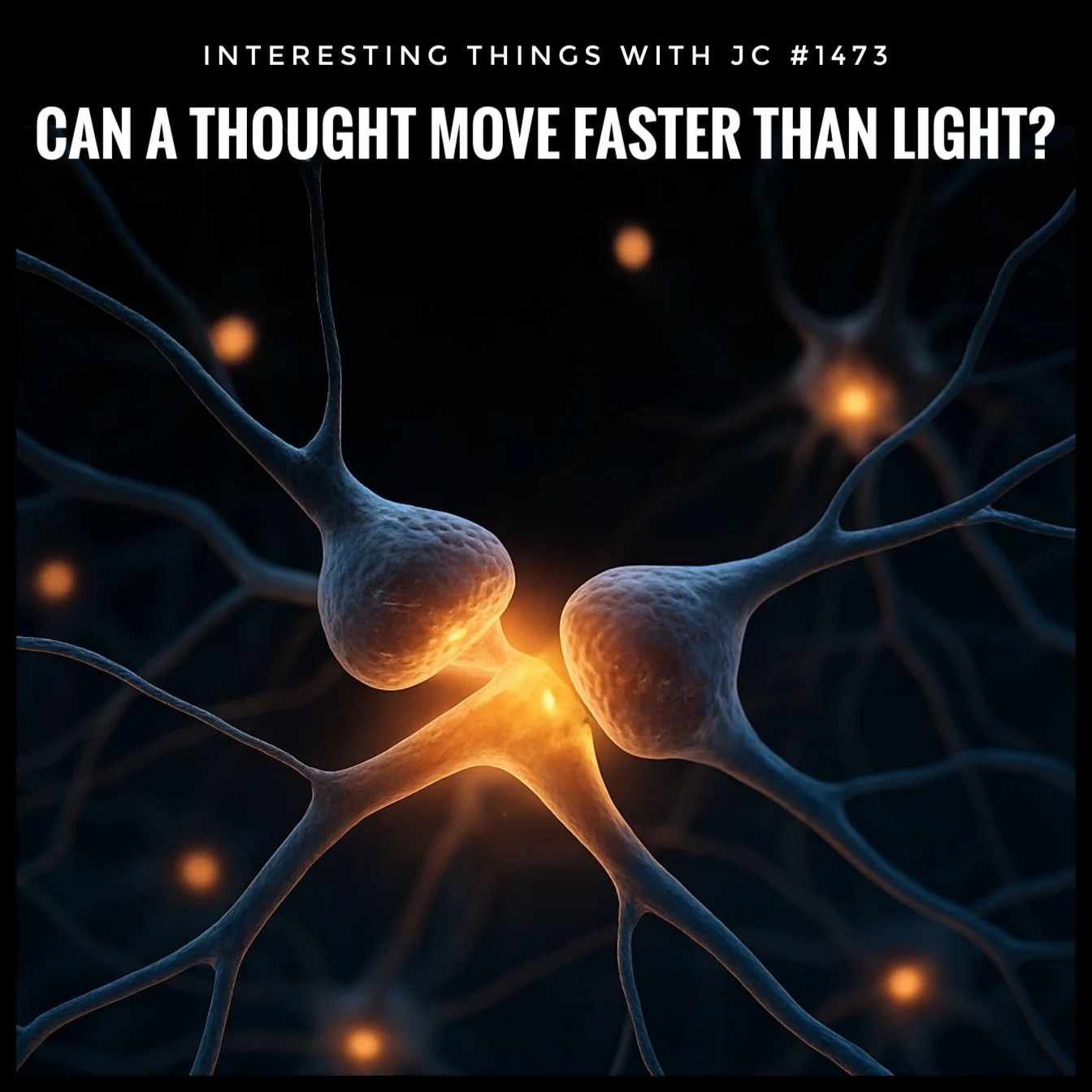
1473: "Can a Thought Move Faster than Light?"
Interesting Things with JC #1473: "Can a Thought Move Faster than Light?" – When nerve signals crawl at human speeds yet decisions feel instant, the mystery isn’t distance but design.

1472: "Rumi and Poetry"
Interesting Things with JC #1472: "Rumi and Poetry" – Rumi’s days ran the same for years until a stranger showed up and challenged everything he thought he understood. Then the man disappeared, and the fallout pushed Rumi into writing that still grips readers centuries later.

1471: "The Importance of Alpha and Gamma Brainwaves"
Interesting Things with JC #1471: "The Importance of Alpha and Gamma Brainwaves" – There’s a moment when your brain shifts gears, and it changes everything from how you calm down to how you solve a problem. Most people never notice it happening, but it’s running the whole show.

1470: "Forbidden City, Beijing"
Interesting Things with JC #1470: "Forbidden City, Beijing" – A palace built in fourteen years with quake-flexing timber, golden bricks that rang underfoot, and a cosmic axis meant to bind an emperor to the stars. Step inside and you find a city engineered to survive fire, war, and anyone who dared to cross its gates.

1469: "Subjectivity and Judging"
Interesting Things with JC #1469: "Subjectivity and Judging" – From courtroom rulings to puppet shows, we’re not as rational as we think. What shapes our gut reactions, and can we ever judge fairly?

1468: "The Hobbit of Flores"
Interesting Things with JC #1468: "The Hobbit of Flores" – A skull the size of two hands rewrites what endurance looks like. On an island no one could reach without crossing open sea, a small human lineage held on far longer than it should have, and left questions modern science still can’t answer.

1467: "History of the Electricians Wire Stretcher"
Interesting Things with JC #1467: "History of the Electricians Wire Stretcher" – A lost Roman tool. A Da Vinci sketch. A telegraph miracle. Across centuries, one device keeps reappearing... when wires come up short.

1466: "What is a Veteran?"
Interesting Things with JC #1466: "What is a Veteran?" – From ancient Rome to today’s armed forces, the word “veteran” has carried centuries of honor. What does it really mean to serve, to return, and to keep faith long after the battle ends?

1465: "250 Years of the Marine Corps"
Interesting Things with JC #1465: "250 Years of the Marine Corps" – Forged in a tavern, tested in war. From Tripoli to Iwo Jima to Kabul, the U.S. Marines built 250 years of elite grit where precision meets chaos.
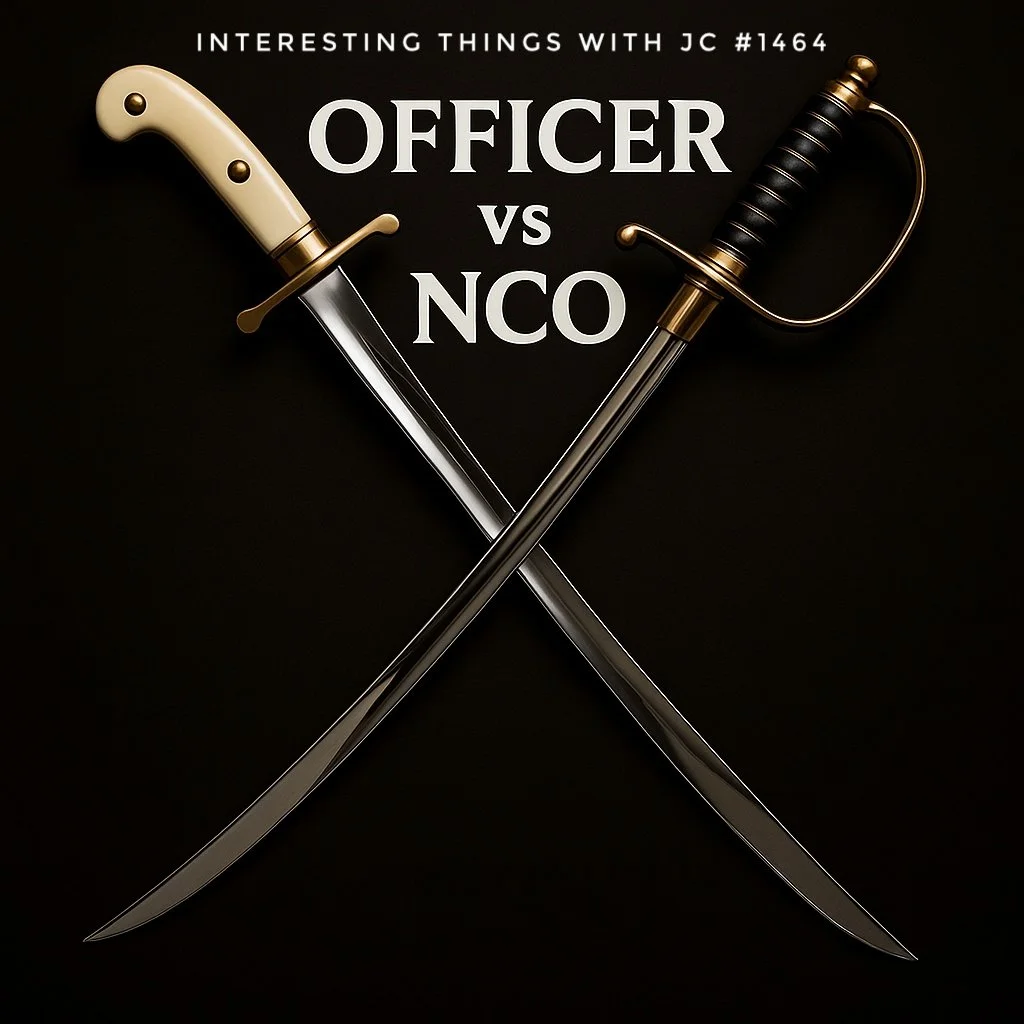
1464: "NCO vs Officer"
Interesting Things with JC #1464: "NCO vs Officer" – Two ranks, one mission. Officers chart the course; NCOs make it real. Where strategy meets grit and in the United States Marine Corps regardless of rank, every Marine is a Rifleman first.

1463: "The Red Ball Express"
Interesting Things with JC #1463: "The Red Ball Express" – In 1944, thousands of trucks raced across France to fuel an army on the move. Most were driven by Black soldiers who never got the glory, but kept victory alive.

1462: "Cream City Brick"
Interesting Things with JC #1462: "Cream City Brick" – Milwaukee didn’t get its look from a catalog, it got it from the land. Bricks made from ancient seafloor clay gave the city its warm hue, its strength, and its soul.